

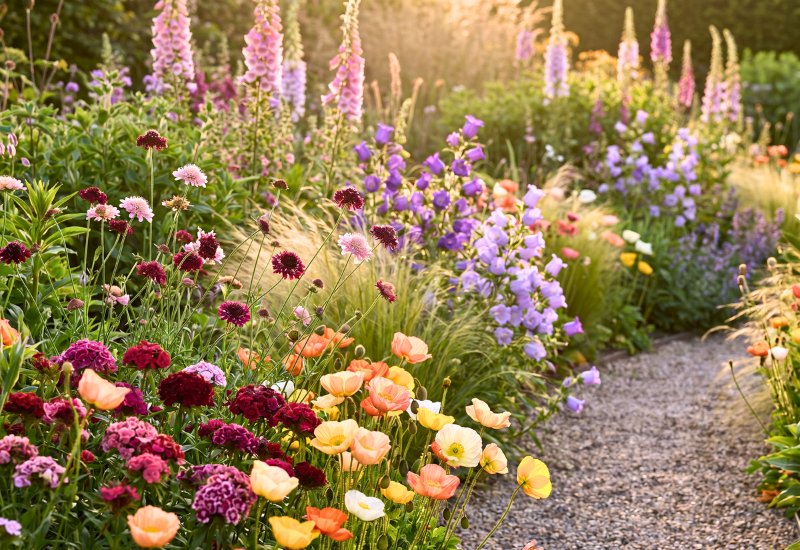
Most gardeners sow foxglove, hollyhock, and sweet william in spring, right alongside their annuals. That’s exactly why so many of them never bloom. These are biennials — sow them in spring, and all you get by autumn is a rosette of leaves and a long wait for a flower that never shows up, because the plant needed last summer’s growth, not this one.
The actual window is now. June and July is when these seeds need to go in, so the rosette has enough time to bulk up before the cold sets in. Push it past mid-July and that rosette goes into winter too small and too weak — and a weak rosette either fails outright or limps into spring with a fraction of the bloom it should have had.
The pattern is the same across every biennial on this list: sow now, grow a rosette through summer and fall, overwinter as that low clump, then bolt and flower next spring. One full year of patience for one spectacular spring. Skip the window, and you’re not getting a smaller version of that bloom — you’re getting none of it.
Here are 12 biennials still worth sowing this week, while there’s time left to get it right.
1. Foxglove (Digitalis purpurea)

Ever stood in front of a bare fence line or a shaded corner and assumed nothing dramatic would ever grow there? Foxglove is the plant that proves you wrong. It thrives in the dappled, half-shaded spots most other tall flowers refuse to touch, and right now — while the soil’s still warm from early summer — is exactly when it needs to go in.
Scatter the seed directly onto the surface and resist every urge to bury it; foxglove needs light to germinate, and a covering of soil is the single fastest way to end up with an empty tray. Keep the surface just barely damp while it sprouts, and within a couple of weeks you’ll have a low cluster of soft, slightly fuzzy leaves settling in for the season — unremarkable now, but doing exactly what it should.
Then next spring, that quiet rosette sends up towering flower spikes, sometimes five feet tall, dense with bell-shaped blooms in soft pink, cream, and deep purple, each one freckled on the inside like it was hand-painted.
Plant it where it can rise behind something lower and steadier — the broad leaves of hosta work well, or the airy texture of ferns, both of which hide foxglove’s slightly bare lower stem while letting those spires take center stage. It’s also one of the few tall spring bloomers that bumblebees seem to prefer over almost anything else in the garden, so don’t be surprised if the spikes are humming by the time they’re fully open.
2. Hollyhock (Alcea rosea)

If you’ve got a bare wall, an old fence, or a stretch of garden that needs height and nothing you’ve tried has worked, hollyhock solves that problem better than almost anything else you can sow this month. It’s one of the few flowers that can turn a flat, boring backdrop into something that actually draws the eye upward.
Sow it directly where you want it to grow, because hollyhock sends down a long taproot early on, and any plant disturbed or transplanted later tends to sulk rather than thrive. Press the seed in lightly, water it deeply but not often — frequent shallow watering just trains the roots to stay near the surface instead of driving down — and by fall you’ll have a sturdy rosette of broad, slightly rough leaves anchoring itself in for winter.
Come next summer, that rosette sends up a single towering stalk, sometimes reaching seven or eight feet, lined top to bottom with ruffled, papery blooms in shades of deep maroon, soft pink, and buttery yellow — the kind of flower that looks almost too dramatic to have come from such a plain first-year plant.
Give it room to breathe against a fence or wall, both for the support and for the airflow; hollyhock is famously prone to rust if it’s crowded or damp too long, so a little distance from its neighbors goes a long way. Plant it behind something shorter and full, like salvia or daisies, to hide the lower stem once the leaves start looking a bit tired by midsummer. Bees and hummingbirds both treat the open blooms as one of the better stops on their route.
3. Sweet William (Dianthus barbatus)
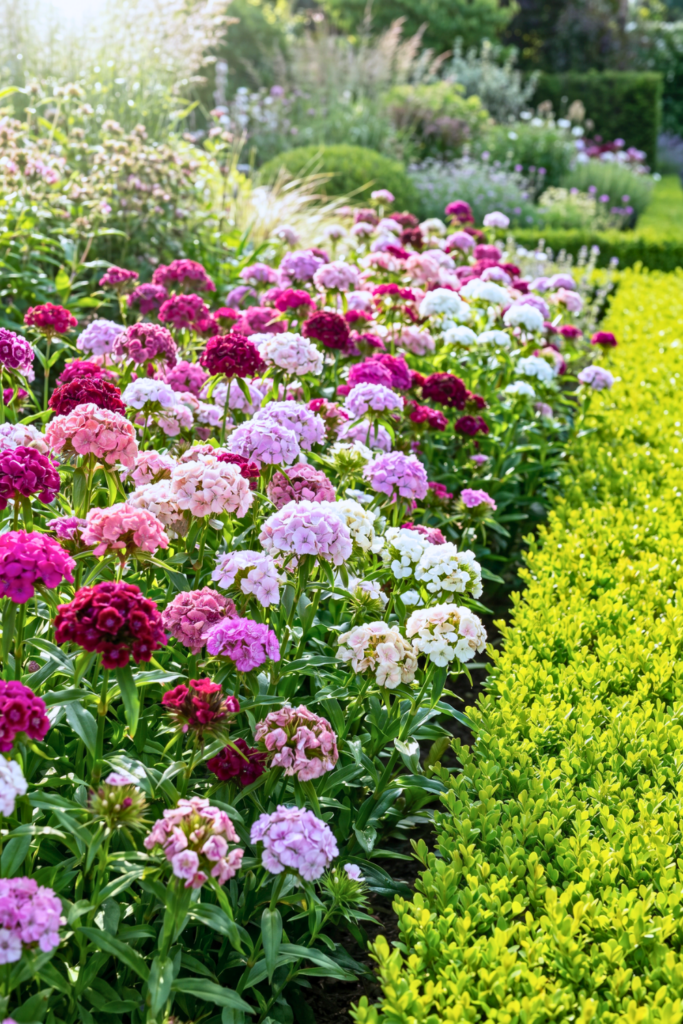
Forget every fussy seed-starting rule on this list so far — sweet william doesn’t need precise light, careful spacing, or a delicate touch. It’s the one biennial here that’s nearly impossible to get wrong, which makes it the right pick if you want a guaranteed result alongside the trickier ones.
Sow the seed shallow, just barely covered, and keep it consistently moist while it sprouts. Within a week or two you’ll have small, grassy rosettes forming dense little clumps, low and tidy through summer and fall, asking for almost nothing in return.
Then next spring, those clumps send up clusters of tightly packed, fringed flowers in deep crimson, soft pink, and white, often with a contrasting eye at the center — and the fragrance is strong enough to notice from several feet away, somewhere between cloves and fresh-cut grass.
Plant it toward the front of a border, since it stays compact, and let it edge taller biennials like foxglove or hollyhock so the scent carries right at nose height as you walk past. It’s also one of the better cut flowers on this list — the blooms hold for over a week in a vase — and bees and butterflies treat a patch of it like a rest stop.
4. Wallflower (Erysimum cheiri)

While everything else on this list waits until late spring to put on its show, wallflower jumps the line — it’s often the very first biennial blooming, sometimes weeks before the others even start to bolt.
That early start means it needs steady attention now: full sun, and soil that doesn’t dry out while the rosette is establishing. A stalled rosette going into winter comes out smaller on the other side, so consistency through summer matters more here than with most of the others. By fall you’ll have a low, sturdy clump of narrow leaves, tougher than it looks, needing only a light mulch to get through the cold.
Come early spring, that clump erupts into dense spikes of small, four-petaled flowers in warm shades of orange, deep red, and golden yellow, paired with a sweet, almost honeyed fragrance that drifts further than you’d expect from a plant this size.
Tuck it near a path or doorway where that scent gets noticed, and pair it with later-blooming tulips so the two overlap right as wallflower starts to fade — handing the color off instead of leaving a gap. Bees show up for it earlier than for almost anything else here, since it’s often one of the first real nectar sources after winter.
5. Canterbury Bells (Campanula medium)
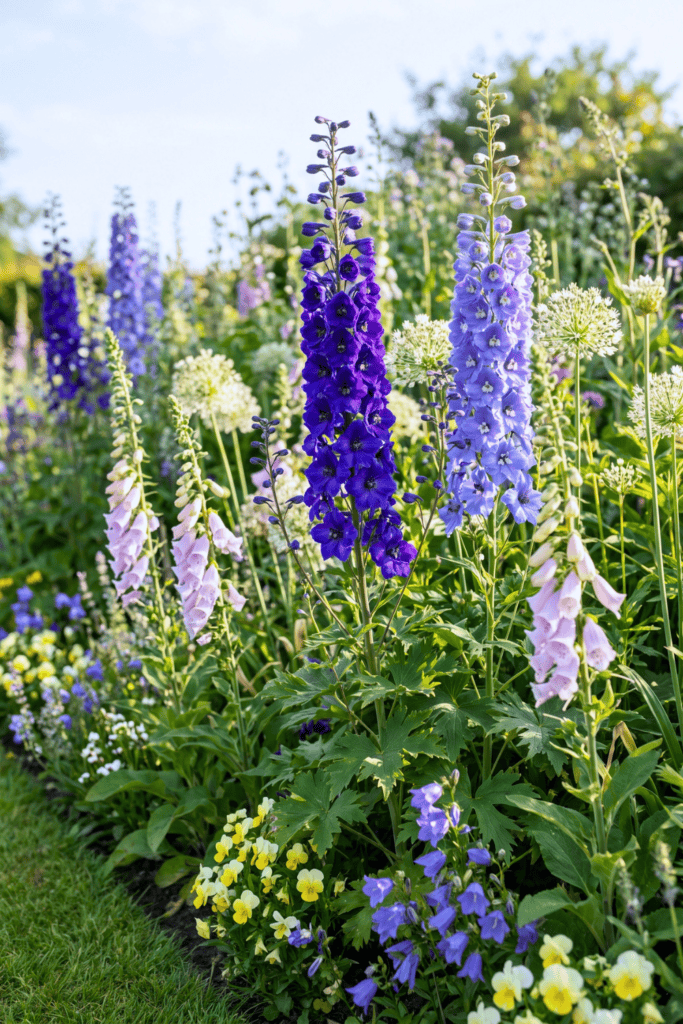
Most flowers reward warmth and pampering. Canterbury bells does the opposite — it actually needs a stretch of real winter cold before it’ll bloom at all, which is exactly why so many gardeners who try to baby it indoors end up disappointed.
Sow it now in a spot with decent drainage, and don’t be tempted to bring it inside or give it extra protection once the rosette forms — that chill period through winter is doing essential work, not just sitting there. Keep seedlings thinned with a bit of space between them, since crowded rosettes hold moisture against their leaves and invite mildew before they’ve even had the chance to flower.
By next early summer, that unassuming clump sends up tall, sturdy spires lined with large, bell-shaped blooms in rich violet-blue, soft pink, and white — each flower wide enough to fit a fingertip inside, with a slightly papery texture that catches light beautifully.
Give it a spot with morning sun and some afternoon relief, paired with lower, mounding companions like lamb’s ear or catmint that can hide the bare lower stems once the spires take over. Bees work the open, tube-shaped blooms hard, and the flowers hold remarkably well as cut stems too.
6. Honesty (Lunaria annua)

Here’s a flower most people end up growing for a reason that has nothing to do with the flower itself. Honesty produces a perfectly nice purple bloom in spring, but its real claim to fame comes months later, when the seed pods dry into thin, papery discs that look almost like coins of pressed silver — prized in dried arrangements long after the petals are gone.
It’s also one of the least demanding plants on this list. Sow it now in any decent soil, even something a little poor or neglected, and don’t worry too much about precise watering — honesty tolerates erratic conditions better than most biennials, though it won’t forgive sitting in soggy ground. By fall you’ll have a rough-edged rosette of leaves, unremarkable to look at, settling in for winter with little fuss.
Next spring, that rosette sends up branching stems topped with clusters of small, four-petaled purple or white flowers — pleasant enough on their own, but really just the warm-up act for what follows. As the blooms fade, those translucent seed pods take over, catching light in a way that makes them look almost lit from within.
Let it self-seed where it’s planted, since it does so readily and will often fill in gaps on its own the following year. Plant it where afternoon sun can backlight those pods once they form — near a path or a window is ideal — and save a few stems to dry indoors, since they’ll hold their look for months in a vase.
7. Stock (Matthiola incana)

The fragrance test is simple: brush past stock in full bloom and you’ll understand why florists have used it in bouquets for over a century. It carries one of the heaviest, sweetest scents of any flower on this list — closer to cloves and spice than anything floral — and a single stem can fill a room.
The seed is fine, almost dust-like, so the same rule applies here as with foxglove: press it onto the surface rather than burying it, and water with a gentle hand or mist rather than a heavy stream, since a hard spray will just wash the seed away or bury it unevenly. Damping off is the real risk at this stage — keep air moving around the seedlings rather than crowding them, and let the surface dry slightly between waterings instead of keeping it constantly wet.
By fall, you’ll have a low rosette of grey-green leaves, slightly fuzzy to the touch, holding steady through the cold months. Next spring, that rosette sends up dense, upright spikes packed with ruffled, almost double-looking blooms in soft lavender, deep rose, and creamy white — each spike lasting well as a cut flower, which is exactly why it’s stayed a florist staple for so long.
Plant it somewhere close to a path or seating area so the scent actually reaches you, and pair it with looser, airier companions like cosmos or sweet william so stock’s stiffer, more formal shape has something relaxed to play against. Cut a few stems for indoors as soon as the lower buds open — the fragrance carries just as well in a vase as it does in the bed.
8. English Daisy (Bellis perennis)

Skip the soil prep lecture for this one — English daisy is about as low-maintenance as a biennial gets, content in average ground without much fuss, which makes it a good pick if you’re running low on time before this window closes.
Sow it now, just barely covering the seed, since burying it too deep is the most common reason it fails to come up at all. Keep seedlings thinned with a little breathing room between them, since crowding invites rot at the base more than almost anything else on this list. By fall you’ll have flat little rosettes of spoon-shaped leaves hugging the ground, tough enough to shrug off frost with barely any winter protection.
Next spring, those rosettes send up short stems topped with small, densely packed flowers — usually white or soft pink with a yellow center, sometimes fully double — in numbers thick enough to look like a low carpet rather than individual blooms.
Use it as an edging plant along a path or border front, where its low height works in its favor rather than against it, and let it run alongside other early spring color like wallflower for a layered look at different heights. It’s an easy win for anyone who wants reliable color without babying anything through winter.
9. Iceland Poppy (Papaver nudicaule)

Hold one of these blooms up to the light and you’ll see exactly why it earns a spot on this list — the petals are so thin and papery they almost glow, like stained glass caught mid-breeze, in colors far more saturated than a flower this delicate has any right to produce.
Sow it now in well-drained soil, since soggy ground over winter does more damage to this plant than cold ever will. Press the seed lightly onto the surface rather than burying it, and keep it just barely moist while it germinates. By fall you’ll have a low rosette of soft, slightly hairy leaves, unassuming and easy to overlook — which makes the spring transformation feel even more dramatic.
Next spring, that rosette sends up slender, wiry stems topped with single, crinkled blooms in the most electric oranges, hot pinks, sunshine yellows, and pure whites — often several colors blooming side by side from the same batch of seed, each flower lasting only a few days but replaced constantly through the season.
Plant it somewhere it gets full sun and sharp drainage, like a raised bed or a gravel border, and let it mingle with other low growers rather than burying it behind taller plants — its color does the work, it doesn’t need height to compete. Bees move through a patch of these steadily on any warm spring day.
10. Rose Campion (Lychnis coronaria)
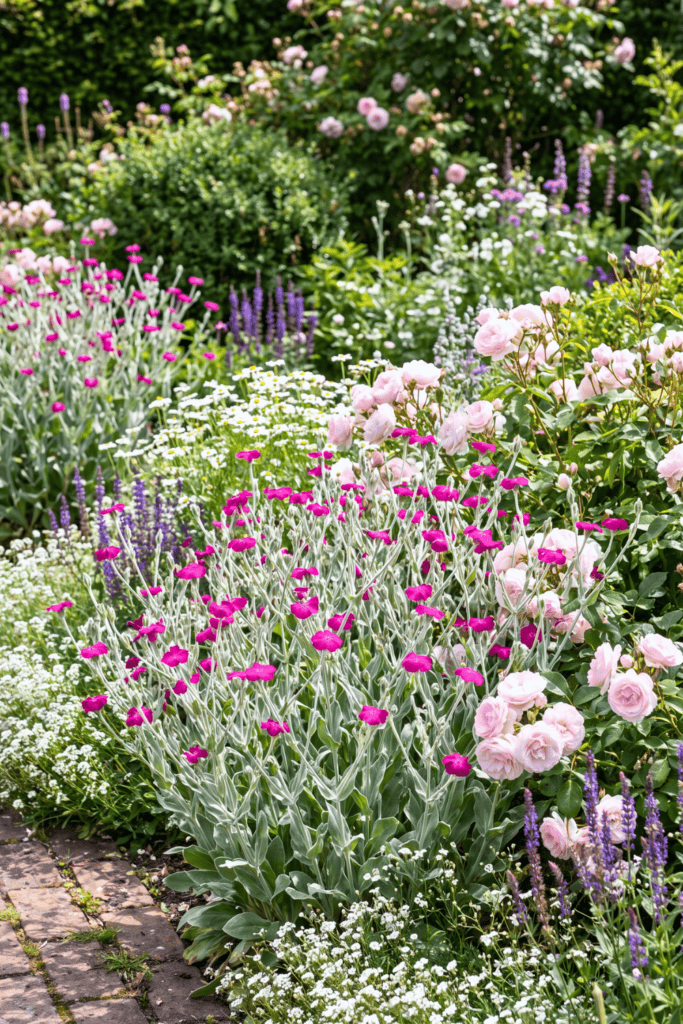
The Greek name for this plant translates to “lamp” — a nod to how its woolly, silver leaves were once used as actual wicks for oil lamps, centuries before anyone grew it for the flowers at all. That history tells you something useful: this is one of the rare entries on this list where the first-year rosette isn’t just something to wait out.
Sow it now in well-drained soil with full sun; like most plants on this list, it fails far more often from sitting wet than from being too dry, so err toward lean ground over rich. By fall you’ll have a rosette of soft, felted, silvery-grey leaves that actually earns its place in the border on looks alone, holding that color and texture right through winter with barely any protection needed.
Next summer, branching stems rise straight out of that silver foliage, carrying a long succession of small, five-petaled blooms in an intense magenta-pink — vivid enough that the contrast against the grey leaves does most of the visual work without any help from neighboring plants.
That contrast is exactly why it earns a spot near the front of a border rather than tucked behind taller things: let the silver foliage sit against darker greens nearby, and use the magenta as a recurring accent color through the bed rather than a single big block. It tolerates poor, dry soil better than almost anything else here, self-seeds reliably enough that you’ll likely never need to resow, and is generally left alone by deer and rabbits — one of the lower-maintenance picks on this entire list once it’s established.
11. Clary Sage (Salvia sclarea)

Most flowers put all their color into the petals. This one barely bothers — the real show happens in the bracts, the papery structures wrapping around each small bloom, and they’re often more striking than the flower itself.
Sow it now in well-drained soil with full sun; clary sage tolerates poor, dry ground far better than rich, damp soil, which tends to encourage rot rather than growth. By fall you’ll have a large, coarse rosette of grey-green, slightly wrinkled leaves — noticeably bigger than most other biennials on this list, since clary sage grows large from the very start.
Next summer, that rosette sends up branching spikes, often three to four feet tall, where the true flowers are almost an afterthought next to the long-lasting, vividly colored bracts in dusky pink, lilac, and cream wrapped around them — and that color holds for weeks longer than a typical bloom would.
Give it space at the back of a dry border, since it grows as wide as it does tall, and let a few spikes dry in place toward late summer for a second life as a striking dried arrangement indoors. Bees work the open flowers steadily through summer, and brushing the leaves releases a strong, herbal scent that’s part of the appeal too.
12. Sweet Scabious / Pincushion Flower (Scabiosa atropurpurea)

Every biennial on this list so far has leaned the same way — tall spikes, columns of blooms stacked up a single stem. This one breaks that pattern completely. The flowers sit on their own slender stems, domed and densely packed with tiny florets, looking exactly like their nickname suggests: a pincushion bristling with color.
Sow it now in well-drained soil with full sun; like most of the others here, it handles dry, lean ground far better than anything rich or waterlogged. By fall you’ll have a low rosette of soft, slightly toothed leaves, unremarkable for now and easy to mistake for a weed if you forget where you planted it.
Next summer, that rosette sends up wiry stems topped with rounded blooms in deep maroon, dusky lavender, and near-black burgundy — colors closer to velvet than to anything typically floral — each one ringed with tiny protruding stamens that give the whole flower a slightly bristled texture up close.
Plant it where that unusual shape and depth of color can stand on its own, ideally near the front of a border where it won’t get lost behind taller neighbors, and let it mingle with paler companions like Iceland poppy so the contrast does some of the visual work. Bees and butterflies are drawn to it constantly through summer — it’s one of the more reliable pollinator magnets on this entire list.

Which ones in this list are deer resistant?
Rose Campion (Lychnis coronaria)