


A healthy raised bed is easy to fill with lush leaves and colorful blooms; a chemically toxic one a bit less, especially in spring! And if you want a perfect vegetable combination for texture, structure and foliage all year round, but you have little space to separate them… You may think it is a big problem! But it isn’t, really… There are varieties that tolerate close planting, and even love it, and at the same time, they are completely safe together!
And I am not just talking about plain peas or simple lettuces; there are exotic ones as well, like stunning fennel! A closely planted garden does not need to be a barren one! And when we say toxic combinations, we also mean roots fighting with other colors, like pale green, or turning yellow, or brown…
So, give life to your garden all year round, with green foliage full of life, stunning flowers and even fruits! There are some really wonderful close-quarters tolerant pairings waiting for you – and quite a few surprises as well!
All fascinating, all beautiful and all close-quarters tolerant, these spring combinations range a lot in personality, though, and we can start our selection with a very deceptive variety indeed!
1. The Underground Rivalry You Never Saw Coming

They look like the perfect spring duo — crisp white bulbs pushing up through cool soil right alongside delicate, climbing peas reaching for the trellis. It’s the kind of pairing that ends up all over gardening Pinterest boards. But beneath the surface, onions are quietly waging chemical warfare. Alliums release sulfur compounds through their roots that actively interfere with the nitrogen-fixing bacteria that peas depend on to grow. Without those bacteria, peas can’t pull nitrogen from the soil the way they’re designed to — and the result is stunted vines, poor pod set, and a harvest that never lives up to its promise.
The garden looks beautiful in April. By June, you’re wondering what went wrong. The cruelest part? Both plants thrive in the same cool spring temperatures, same moisture levels, same sun exposure — so every instinct tells you they belong together. They don’t.
2. The Beautiful Bully of the Herb Garden

Fennel looks like it was made for a spring garden bed with its tall, feathery, and elegant fronds drawing the eye immediately. When planted alongside soft lettuces and tender spring greens, the whole arrangement looks intentional, curated, and gorgeous. However, fennel is one of the most aggressively allelopathic plants in existence, releasing toxic compounds through its roots, leaves, and even the surrounding air. These chemicals are especially devastating to young seedlings like spinach and arugula, which are often stunted or killed before they can even establish themselves.
The damage doesn’t vanish once the plant is pulled, as fennel’s toxins linger in the soil to sabotage the next round of seeds you sow. It creates a striking visual in your garden but refuses to share its space with anyone else. While the bed may look lush at first glance, the yellowing edges and failed germination nearby tell a much darker story of a plant that simply does not play well with others.
3. The Sunny Neighbor With a Dark Secret

Nothing says spring optimism like sunflower seedlings shooting up bold and fast alongside freshly planted beans. It’s a cheerful, colorful combination that makes any gardener feel like they’ve mastered the art of companion planting. Yet, underneath that bright, open face lies a deeply territorial nature. Sunflower roots continuously push allelopathic compounds into the soil that are potent enough to suppress seed germination and choke the root development of nearby beans during their most vulnerable growth stages.
This pairing is particularly deceptive because the visual harmony above the soil suggests everything is fine. While the two plants grow side by side and appear healthy to the naked eye, the beans are silently struggling to fix nitrogen and establish a foothold. The real damage plays out in the root zone where no gardener thinks to look, leaving you with an underperforming bed that never reaches its full potential despite the sunny facade.
4. The Herb Garden Romance That Always Ends Badly

Lavender and mint together sound like a fragrant dream, offering contrasting colors and textures that fit the cottage garden aesthetic perfectly. Every design guide points toward this combination as a sensory masterpiece for a spring bed. But mint is not interested in sharing territory; it spreads aggressively through underground runners, claiming soil space faster than the slow-growing lavender can keep up. Before you know it, the mint has colonized the root zone, stealing moisture and nutrients from the lavender’s delicate system.
Beyond physical crowding, mint releases strong oils and chemicals into the soil that actively suppress its neighbors. While the bed looks charming through April, the lavender will be visibly struggling by midsummer—appearing sparse, weak, and slowly disappearing. Meanwhile, the mint remains completely unbothered, continuing its relentless spread toward the next unsuspecting plant in the garden.
5. The Spring Border Combination Everybody Gets Wrong
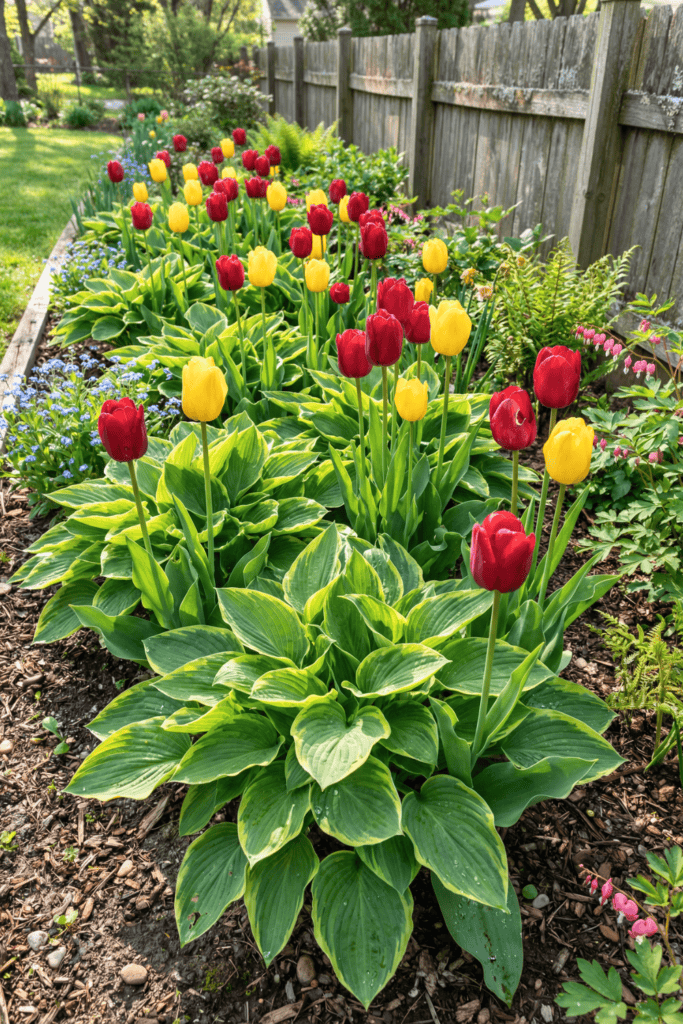
Tulips and hostas are a staple of spring garden inspiration, with bold blooms rising over soft, unfurling leaves in a way that looks effortlessly designed. Garden centers even sell them as a package deal, encouraging gardeners to layer them for a lush, full look. However, beneath this picture-perfect surface, both plants are locked in a quiet struggle for survival. Because they are both “hungry” plants that peak at the exact same time in the spring, they compete directly for the same nutrients and moisture in the same root zone.
The result is a subtle, season-long underperformance where neither plant truly wins. Tulip blooms open smaller than they should, and hostas emerge thinner and slower than expected. Most gardeners mistake this for poor soil quality or improper sun exposure, never realizing that the true issue is a silent resource war happening right through the heart of the growing season.
6. The Companion Flower That Secretly Betrays Your Garden

Marigolds are often hailed as the ultimate heroes of the garden, famous for repelling pests and being exceptionally low-maintenance. Planting them alongside spring squash and zucchini feels like a smart, protective move that every beginner guide recommends. But marigold roots release chemicals that can actually slow or stop the germination of nearby seeds. For squash and zucchini, which need a strong start in early spring, these chemicals act as an invisible barrier to growth.
The irony is that while the marigolds are busy repelling harmful insects, they are also interfering with the very crops they were meant to protect. Seeds take longer to sprout and seedlings establish slowly, pushing your entire harvest back before the season has even truly begun. A little distance between the two makes all the difference, but the “package deal” advice rarely mentions the danger of planting them too close.
7. The Vegetable Bed Mistake That Poisons Its Own Soil

Broccoli and cauliflower look completely natural together, sharing the same family, cool-weather requirements, and growing habits. It feels efficient to fill a single bed with these “cousins,” and even experienced gardeners often group them together without a second thought. However, brassicas have a self-destructive habit: broccoli leaves behind allelopathic residue in the soil that other cruciferous plants like cauliflower and kale are uniquely sensitive to.
As the plants grow, this residue builds up in the shared root zone, leading to shrunken yields and sluggish growth. Because the damage accumulates slowly, most gardeners blame the weather or a lack of fertilizer rather than the planting layout. The problem never announces itself clearly because the plants look so similar above ground, but they are quietly making life harder for each other all season long.
8. The Nightshade Neighbors That Share Everything — Including Disease

Tomatoes and potatoes seem like a practical pairing because they share the same planting window, watering needs, and soil preferences. Using one well-managed bed for both crops feels like a great way to maximize limited garden space. But being in the same family means they share more than just nutrients—they share a vulnerability to the same devastating diseases. Fungal issues like late blight can jump from a single potato leaf to an entire tomato patch in a matter of days.
Since both plants are establishing themselves at the same time in early spring, they haven’t built up the resistance needed to stop a rapid outbreak. What starts as a minor issue quickly escalates into curling leaves and collapsing stems. By the time the damage is obvious, it is usually too late to save either crop, proving that convenience in the garden can sometimes come at a very high price.
9. The Herb That Quietly Ruins Your Root Vegetables

Dill and carrots are a visual delight when planted together, their feathery textures layering softly to create a beautiful, productive spring bed. Since dill attracts beneficial insects and carrots utilize the soil, it seems like a win-win on paper. However, these two are botanical cousins in the Apiaceae family, and that close relationship is exactly what leads to trouble. They cross-pollinate aggressively, which can ruin the crop you are currently trying to grow.
This cross-pollination, combined with dill’s ability to stunt the growth of nearby seedlings, results in carrots that are bitter and woody rather than sweet and tender. The plants will look perfectly healthy above ground throughout the spring, hiding the chemical and genetic conflict below. You won’t realize anything is wrong until harvest time, when you pull up a crop that looks perfect but is essentially inedible.
10. The Pollinator Trap Hiding in Your Herb Garden

Planting rosemary and sage near cucumbers sounds like textbook companion planting, using aromatic herbs to shield your vegetables from pests. It’s a combination found in countless beginner guides that promises an efficient, self-protecting system. But there is a major flaw: the same intense oils that drive away bad bugs also scare off the good ones. Bees, which are essential for cucumber pollination, will often avoid areas saturated with the heavy scents of these herbs.
Your cucumber vines may look lush and healthy, producing plenty of flowers right on schedule, but without the bees, those flowers will simply drop off without ever becoming fruit. Most gardeners spend weeks checking their soil and water levels to figure out why they have no harvest. The whole time, the “protective” herbs sitting just a few feet away are the silent reason the garden feels so empty.
