

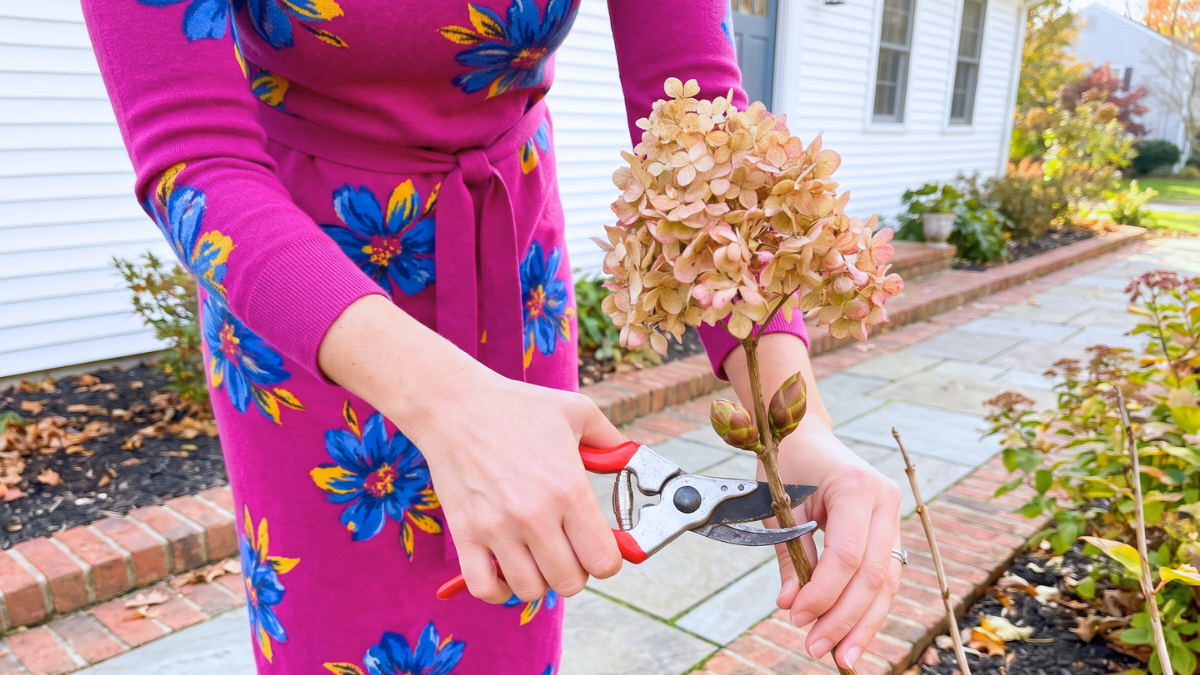
Many people often prune hydrangeas in fall to make everything nice around the house, only to discover next year, that now it is already July, and their plants are large and lush but do not bear any flowers whatsoever! It is extremely sad! The fertilizers must be bad, or maybe the winter had done something terrible, right? Well… maybe… maybe not!
No, there is absolutely nothing wrong with it, nor fertilizers or the weather! The problem lies nine months in the past… At least that’s what one reader explained to the columnist of a well-known gardening magazine, after losing his/hers big leaf hydrangea flowers each year, regardless of regular pruning, once it started changing color…
Fall pruning works well for certain species, but not for others, since some hydrangea bushes produce buds of next year’s flowers on old growth stems, just below current year’s faded flowers.
Thus, before pruning, determine whether the plant belongs to such varieties. Currently, when the foliage is green and visible, it shouldn’t be difficult!
What’s Actually Hiding on Those “Dead” Stems

Hydrangeas known as old wood have one peculiarity: they begin setting their buds for the coming season starting with September. Hence, all extension horticulturists advise finishing all pruning work no later than the beginning of August.
By late October, the process ends, with all flower buds securely packed inside old stems!
Want to check…?? Just trace each stem towards a dried flower cluster till the nearest leaf bud, and you’ll notice plump buds there!
Trimming will not kill the shrub. It is sure to put lots of new shoots in the spring; yet those will have absolutely NO flowers!
October Is the Best Month to Figure Out Which One You Have
As soon as the plants drop all their leaves, there is basically no way to distinguish between different types of hydrangeas anymore…
Except for now…!!
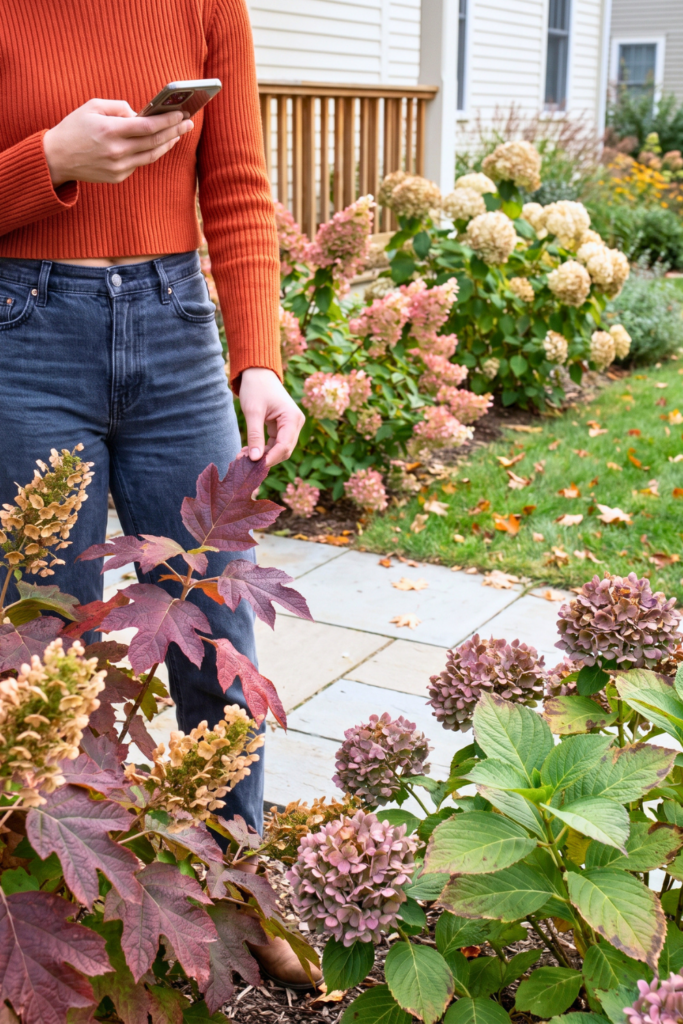
Start analyzing from leaves: if you see that they become red-burgundy due to deeply cut lobes, congratulations – you have an oak leaf hydrangea native to Southeastern USA!
Otherwise, look for big glossy leaves with rounded clusters of white flowers known as mopheads, or flat-headed flowers known as lace caps… They indicate a big leaf hydrangea species, and the pruning problem!
Finally, the flowers themselves tell the tale: panicle hydrangeas feature pyramid-like flower clusters which bloom with creamy-white or light green coloration, changing gradually to pink shades. Finally, smooth hydrangea has big balls resembling softball, also with pure white flowers.
Still confused? Make pictures of them now, skip this year’s pruning work and monitor their development next summer…
When to Prune Each Type
Knowing already which type you are dealing with, let’s learn how each one responds to fall pruning treatment…
1. Bigleaf Hydrangeas – Time For Pruning Passes In Summer
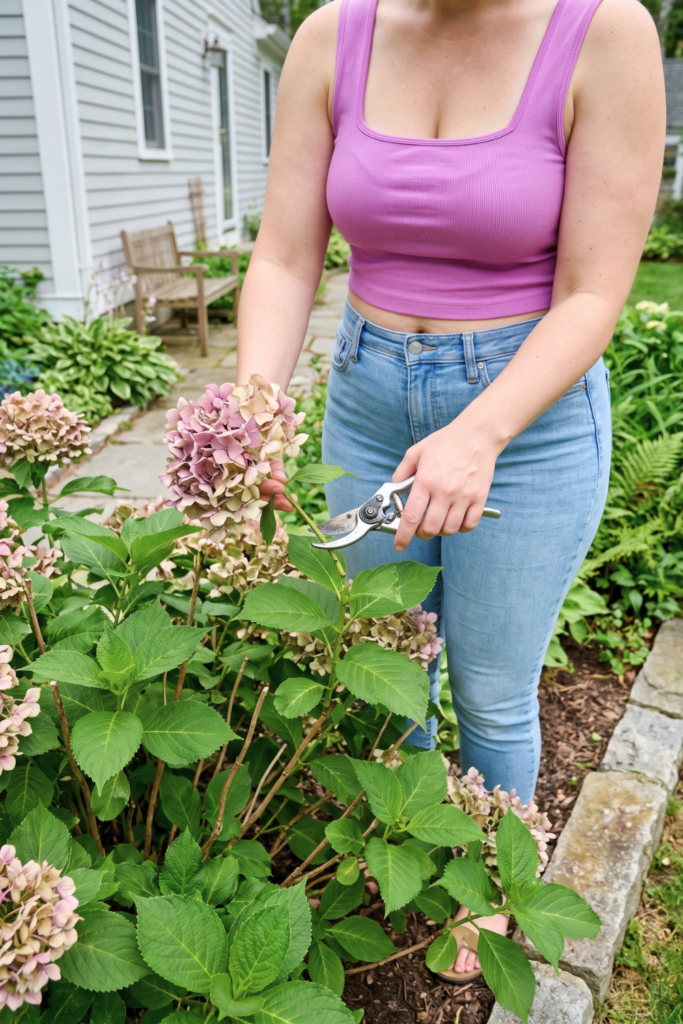
The correct timing for pruning mophead and lace cap varieties was missed back in the summer period, when flowers fade. As Clemson University Extension suggests, pruning must occur immediately after bloom finishes. According to Walter Reeves – a well-known garden expert – the date for this procedure should be July 4…
Until then, pruning consists exclusively of trimming dead wood, which can be performed in spring. In fact, once new growth starts appearing and old stems die off, simply remove them in springtime.
An adult, large shrub requires renovation pruning… However, as mentioned previously, flowering buds set on last year’s wood, so cut no more than one third of old stems after they finish blooming…
2. Oakleaf Hydrangeas: The Easiest Shrub to Leave Alone
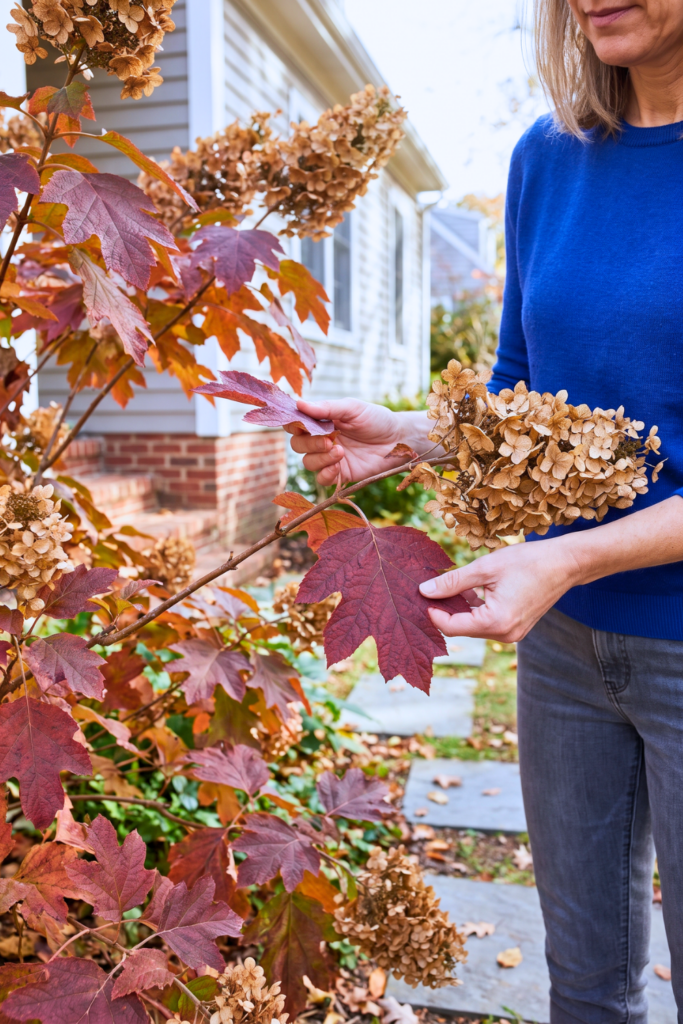
Among all hydrangeas in your garden, oakleaf hydrangea needs minimum care and effort. It is unique thanks to its beautiful foliage that changes color from burgundy-red into reddish-brown shades…
However, remember that like its close relative, it sets its buds in fall, hence, all pruning must happen well before then. It should occur shortly after blooming finishes in early summer… Also, it is limited by cutting old flower heads and rubbing branches only!
Leave papery dried flowers till spring. They tend to dry and drop by themselves when new growth occurs.
3. But Mine’s an Endless Summer, So It Doesn’t Matter
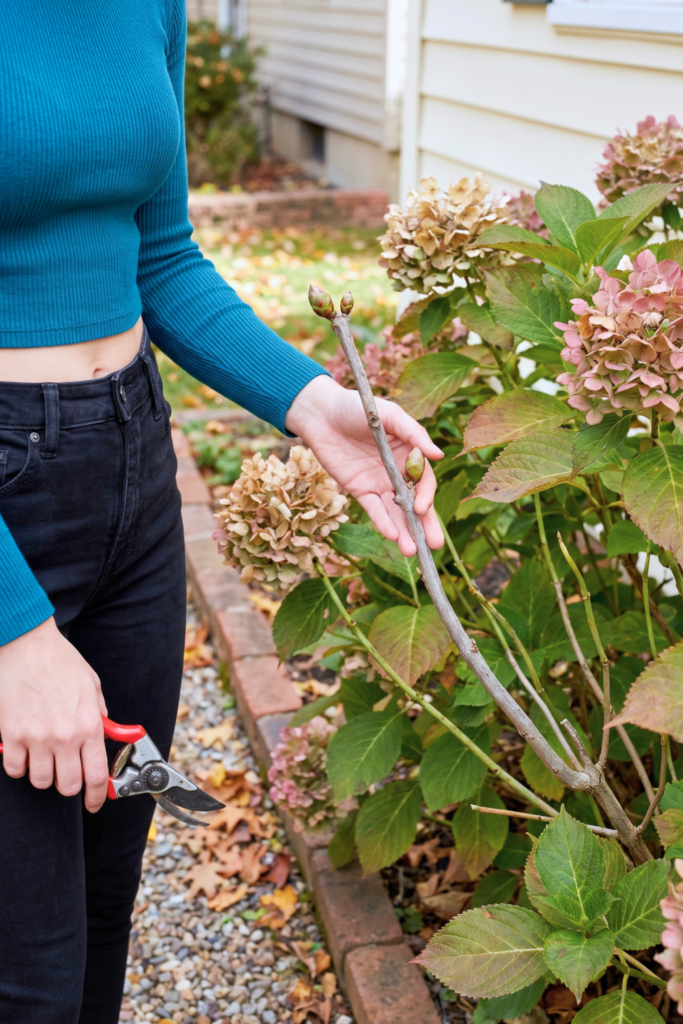
Surely, this is a common remark seen in all posts related to pruning hydrangeas, especially ‘endless summer’ and alike… Although it is true, to some degree. Reblooming big leaf hydrangeas indeed produce buds on both old wood and recent growths. Still, they also respond to fall pruning negatively, just like regular varieties.
Rutgers Horticulturalists confirm that when last year’s growth freezes to death or gets trimmed, fresh shoots fail to produce flowers! Only live old wood provides the necessary stimulus. Thus, avoid fall cutting, even for reblooming varieties, Lorraine Ballato claims.
One Ohio gardener had her endless summer plants trimmed almost down to their rootstocks in late autumn, and the result wasn’t expected… In addition to enormous new growth the next year, her shrubs produced late-blooming tiny inflorescences which didn’t open until late in the fall…
This provoked one grower on an internet botanical community to joke about endless summer becoming endless bummer!
Warmth also affects their flowering ability negatively. Growers confirm that rebloomers might stop flowering if the night air remains rather hot after pruning…
Therefore, apply the recommendations made earlier regarding all types of big leaf hydrangea pruning!
4. Panicle and Smooth Hydrangeas: Safe to Cut, but Better to Wait
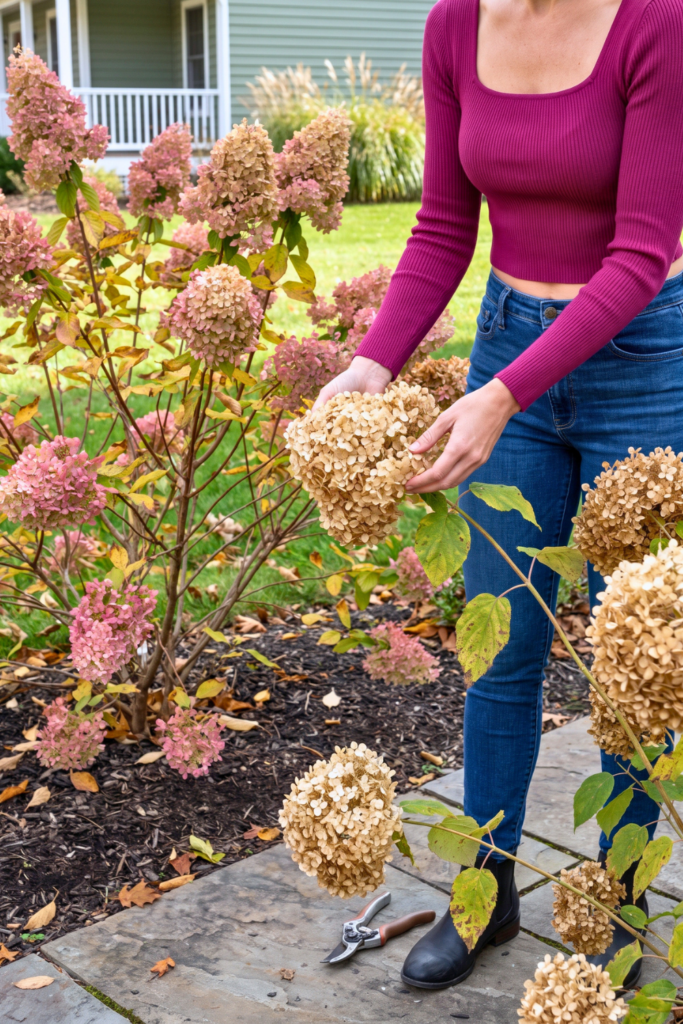
This news may cheer you… Since these varieties are called new wood bloomers, pruning won’t impact next year’s blooming negatively, as their flowers develop on new annual growth.
Nevertheless, pruning during fall is never a preferred solution. Gardeningknowhow warns about potential winter injuries associated with such trimming… On top of this, dried inflorescence adds beauty to your winter landscape.
Spring is preferable time, prior new growth appearance… As regards panicle hydrangeas, remove no more than one-third and one-half of the total plant volume… Smooth hydrangeas tolerate rather severe cutting, and they should be shortened up to six-twelve inches from soil level, or half of their entire height. Otherwise, floppy branches may break from the weight of raindrops!
Already Cut Yours Back? Here’s What Happens Next
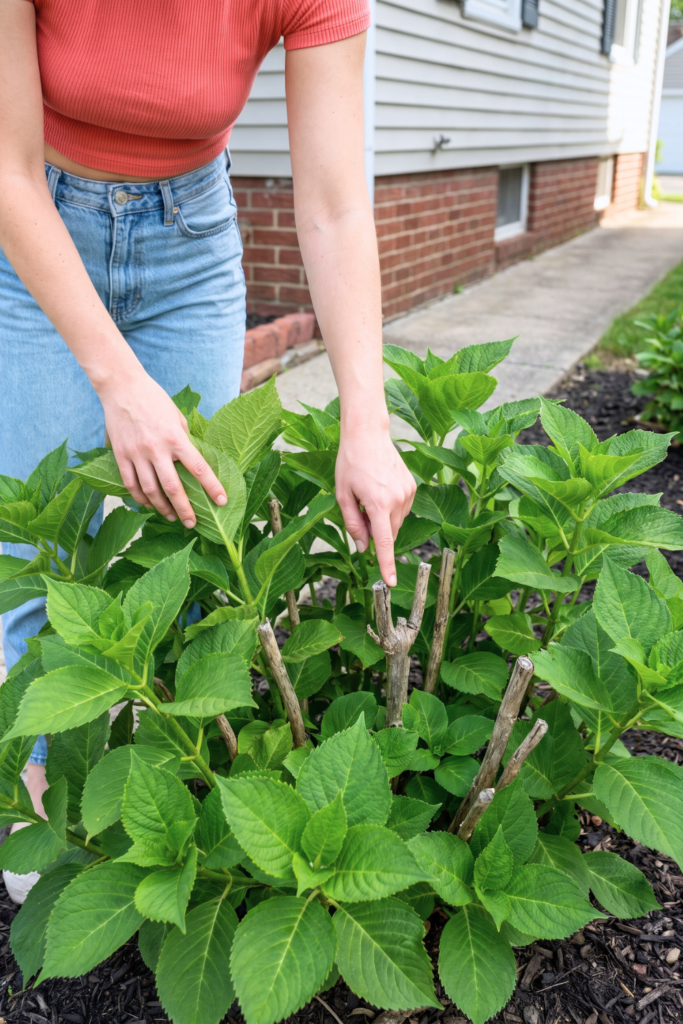
If the pruning occurred already, do not panic! Your hydrangea bush lost flower buds, not roots or living cells, so you will observe green shoots emerging next year! Nevertheless, it means you should not expect any flowers on them!
Traditional types will provide only leafy foliage, whereas rebloomers might still manage producing flowers… Late in fall or next season…
Forget fertilization… An experienced grower on a popular gardening online forum warned not to use fertilizers with added nitrogen, which leads to excessive foliage production…
Finally, perhaps, it was the lawn service personnel, hired for trimming… As happened to a new homeowner who discovered all hydrangeas cut almost completely… They had healthy bushes of green shoots without any sign of blooms. Just give your employees instructions not to prune them at all in late fall and winter!
It Might Not Be Your Pruners at All
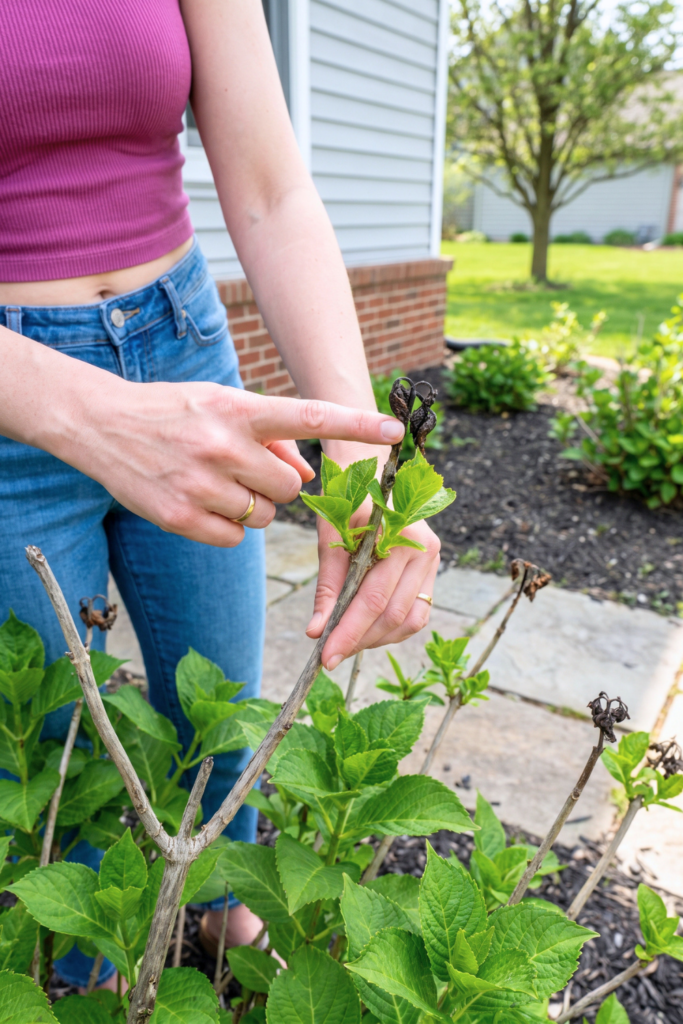
Sometimes, pruning is far away from becoming problematic. Old buds must survive a harsh winter, unprotected… If they manage doing so, flowering occurs, otherwise, you have a leafy, bloom-less plant…
A harsh winter can kill the flower buds, and let leaf buds remain untouched! That explains lack of flowers on shrubs with beautiful foliage! Another factor that can ruin flower production includes unusual warm weather in early spring, awakening buds prematurely. One experienced grower, moved to Michigan, noticed how her mopheads stopped blooming due to early freezing weather damaging the flower buds formed in fall!
At last, shade plays a critical role, too! Big leaf hydrangea requires at least five hours of direct sunlight to produce flowers!
What to Do in October Instead
Not everything depends on pruning… Here are several procedures to complete in October to guarantee a beautiful bloom season next year!
Cut out any obvious signs of dying and sick parts… Avoid touching green living parts! Also, deep irrigation will preserve moisture underground. Finally, add mulching to protect the soil from frost…
Consider leaving your dried inflorescences as they are. Some gardeners trim off flower balls because they spoil appearance; some prefer them as they protect dormant buds inside. Once upon a time, one blogger confessed she lost all chances of flower appearance because her meticulous fall pruning ruined all chances of flowering!
Add additional protection measures for your bigleaf varieties in northern climate… Install a ring of wire around them, filling it up with oak leaves!
