


Ask gardeners what September means, and they probably wouldn’t answer with blooms. This is the month when the harvest begins, when the garden is cleaned up, when gardeners should plan for frost dates rather than blooming dates. Nevertheless, I have seen some really beautiful flower beds that began not in spring, but right now, in the middle of autumn, when all other people are busy doing something else.
The answer lies underground because the weather conditions in fall are ideal for developing roots even though the plant stops growing upwards. In such a way, the seed planted this month will spend the time before winter preparing the roots, and after the winter rest period, it will just continue growing with the established root system. Meanwhile, the seedlings planted in spring will have to develop their roots from scratch. So, they are already lagging behind before even opening the true leaves.
All this is true for people living in gardening zones 6-9. Here you can find 8 flowers perfect for this autumn planting.
1. Larkspur (Consolida ajacis )
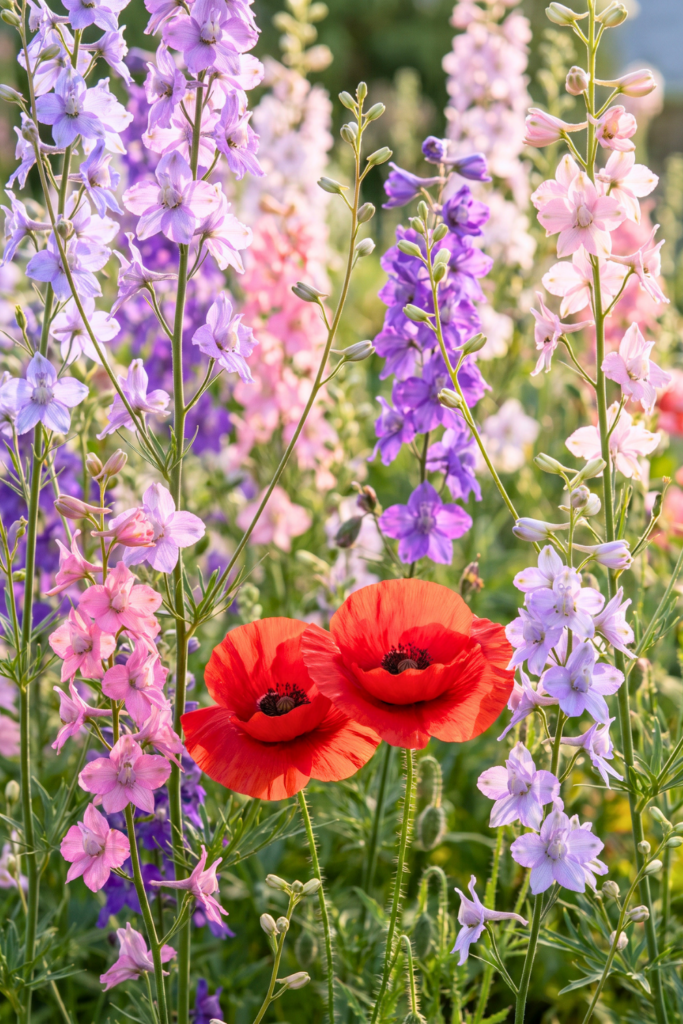
There is no better example of why you should consider fall planting than this one flower. Actually, larkspur seeds sprout better in cold conditions than warm ones; just plant it and don’t pay any attention to it because it hates transplanting as much as summer temperatures. Larkspur plants can be planted directly outside only; when planted indoors, it will grow very poorly.
When to plant: zone 6 – mid or late September, before the first frosts; zone 7-8 – late September to October; zone 9 – October to early November after nights become cool.
What will happen in winter: seedlings will sprout in the form of rosettes in a couple of weeks and remain dormant during the period of maximum colds. Cold temperatures won’t be harmful but necessary because germination of larkspur seeds may be poor without a cold snap.
Benefit: come springtime, larkspur grown from seeds planted in autumn starts growing rapidly and bloom weeks earlier than any other spring-planted one, reaching up to three feet high with airy spires in blue, violet, pink, and white colors, which may be used as cut flowers.
2. Sweet Peas (Lathyrus odoratus )
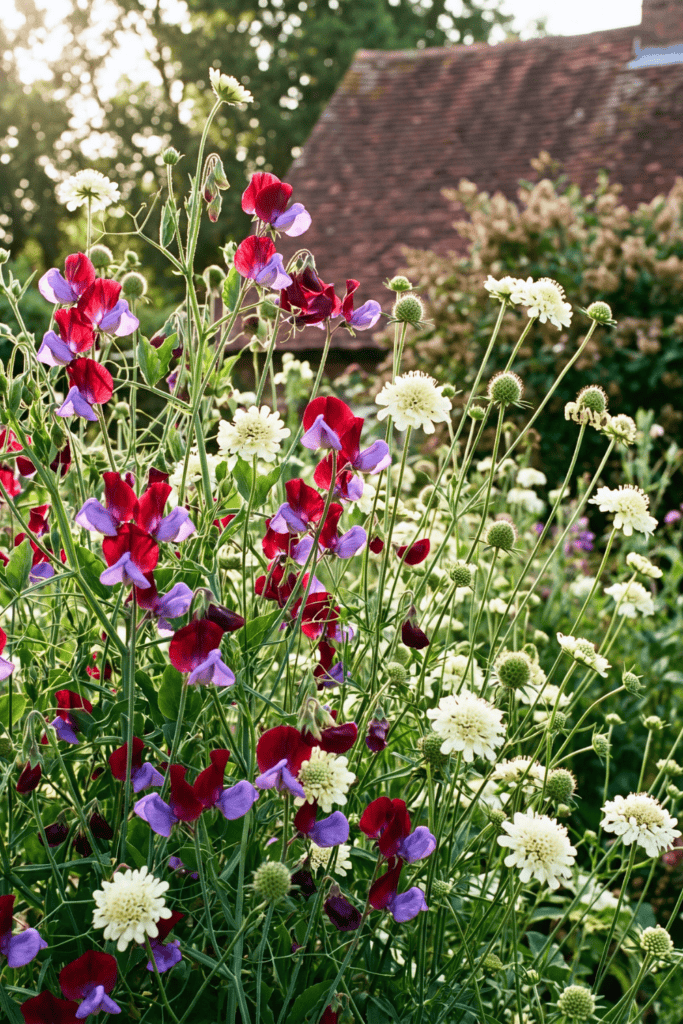
Sweet peas reward exactly the kind of patience most gardeners don’t have in September — plant them now, and you’re trading a few impatient months for the earliest, most fragrant bloom of your spring garden. Nick or soak the seed before sowing to soften the hard coat, then direct-sow where the vines will climb; sweet peas have long taproots that hate disturbance, so skip transplanting entirely.
When to sow: Zone 7-9, sow directly in fall for the earliest possible bloom, ideally 6-8 weeks before your first hard frost. Zone 6 gardeners are on the edge of reliable overwintering — a thick mulch layer over the crowns can carry them through, but many gardeners in this zone treat sweet peas as an early-spring sowing instead, as soon as soil can be worked.
What happens over winter: Fall-sown vines put on modest top growth before cold sets in, then hunker down, focusing energy into the root system rather than pushing new shoots. That quiet root work is what lets them explode into growth the moment temperatures rise.
The payoff: Fall-sown sweet peas typically bloom a full month or more ahead of spring-sown vines, with sturdier stems and a longer bloom window before summer heat shuts them down — sweet peas notoriously stop flowering once temperatures climb, so every early week counts.
3. Bells of Ireland (Moluccella laevis)
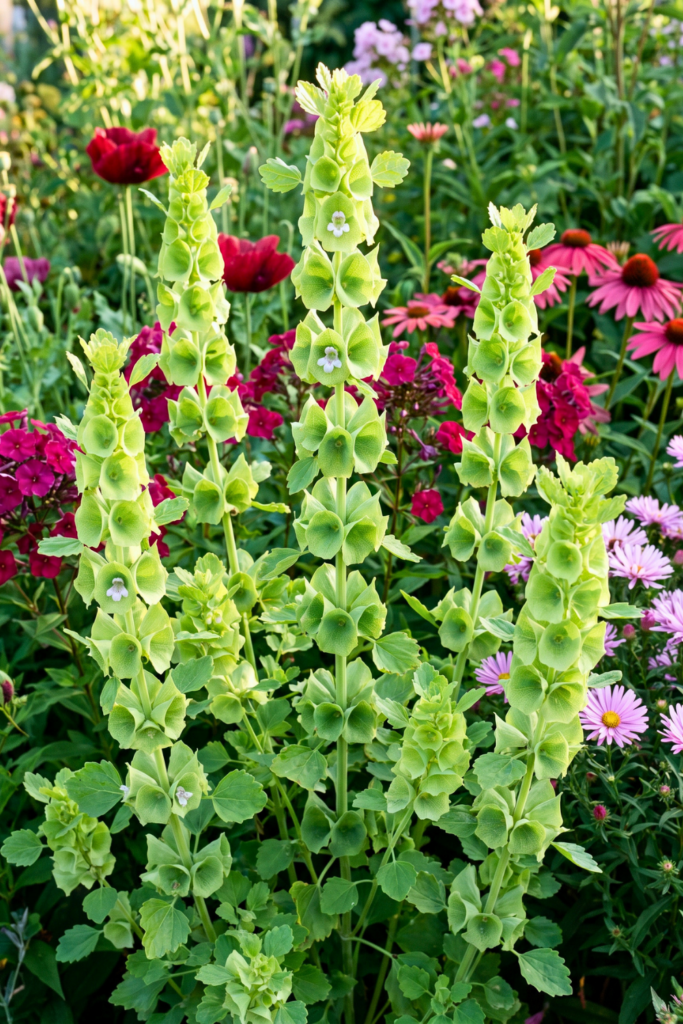
There is no doubt that one flower proves the necessity to sow in the fall season more than any other one. Larkspur seeds even germinate better in the soil if it is cool rather than warm; you just need to lightly scatter the seeds and ignore them, since the plant hates transplantation and the warm summer season equally.
How to sow: In Zone 6, sow during mid- or late September before the first frost; in Zone 7-8 – from late September till October; in Zone 9 – October-early November after the nights got colder.
What will happen in the winter season: Seedlings will emerge as rosettes in several weeks and remain dormant until spring. The cold temperature is not an obstacle but, on the contrary, a requirement for growing the larkspur plants, since their seeds often germinate badly if there is no cold period at the beginning.
The result: Come April-May, you’ll have larkspur shoots that germinated from the fall sowing. Your larkspurs will grow very rapidly and bloom several weeks before any spring-sown plants, often reaching three feet height with their impressive spikes of blue, violet, pink or white color.
4. Bachelor’s Button / Cornflower (Centaurea cyanus)
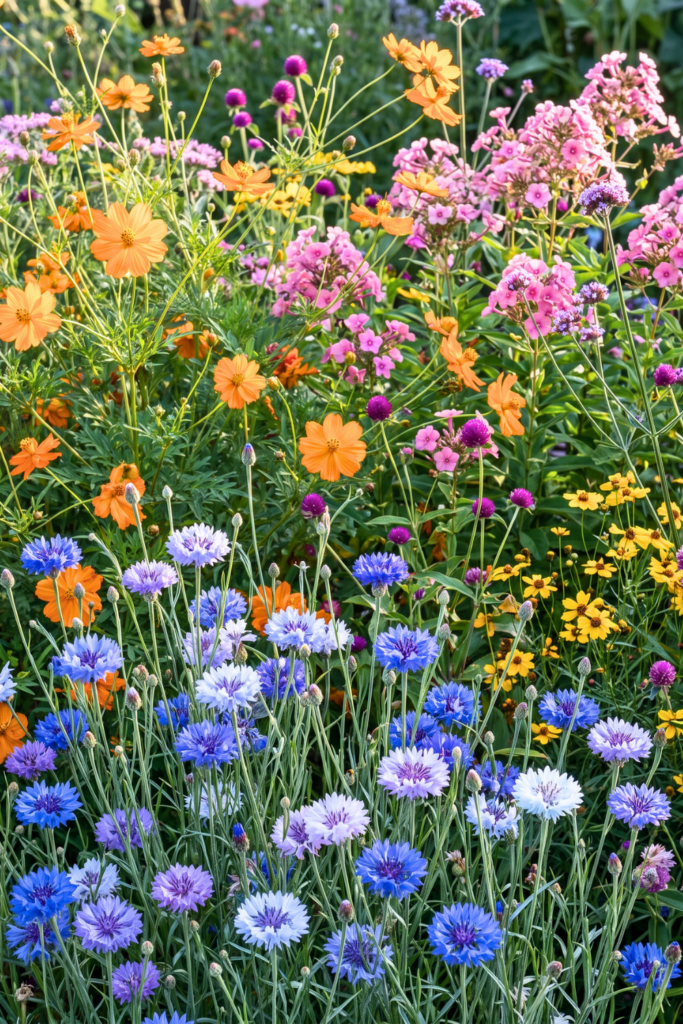
For those who need just one flower from this list that is virtually foolproof in terms of fall seeding, here it is. There can’t be anything easier to deal with than Cornflower. Not only does it tolerate poor soils well, but it is also quite indifferent to the range of temperatures and doesn’t have any particular requirements for hardiness in Zones 6-9. It would be a perfect choice if you are just learning how to sow plants in autumn.
When to sow: Zone 6, mid-September – early October; Zone 7-8, late September – mid-October; Zone 9, October – November.
What happens during the winter: Seedlings stay at the rosette stage throughout the winter and resume their growth as soon as warm days come.
Why bother: In fact, fall-sown Cornflower starts blooming sooner and blooms longer than spring-seeded one and displays the beautiful cobalt blue, pink, white, or maroon flowers with characteristic fringe weeks before the expected blooming time.
5. Calendula (Calendula officinalis)

Calendula is an excellent choice for planting in the fall for its versatility – it can be eaten, used medicinally, act as a deterrent against insects when planted with vegetables, and flowers profusely. It’s hardy throughout Zones 7-9, but those gardening in the cooler areas of Zone 6 would be wise to plant it only marginally without extra care, since a prolonged hard freeze in winter without mulch will damage any non-hardy plants.
Time to plant: Zone 7-8, late September through October; Zone 9, October through November. Those gardening in Zone 6 should plant their calendula as early in September as possible and give it extra mulch, or save some of the seeds to plant them in early spring instead.
Over winter: Established plants grow into thick rosettes and, in the milder areas of the region, produce sporadic flowers throughout the winter season, prior to blooming in earnest in the spring.
The rewards: Fall-planted calendula flowers earlier and more frequently than spring-planted plants, and the added advantage is that it’s ready and waiting for early pollinators to appear from early on.
6. Nigella / Love-in-a-Mist (Nigella damascena)

The ornamental quality of Nigella comes from its delicate, feathery leaves and its blossoms, which are light blue, white, or pink and surrounded in a mist of threadlike bracts, followed by decorative seed pods that make excellent dried arrangements. Nigella thrives in Zones 7-9 and grows easily from a fall sowing; while not as often planted in Zone 6 as larkspur, it is nevertheless possible to grow it successfully if seeds are planted early enough to allow them to become established before winter.
When to plant: Zone 7-8, late September through October; Zone 9, October through November; Zone 6, mid-September at the latest.
What happens during winter: Just like larkspur, Nigella does not like being transplanted and should be sown directly in the garden; the seedlings will develop rosettes of foliage that survive through winter and resume growing as soon as the soil starts to warm up.
Reward: The plants grown from fall sowing flower earlier than spring-sown specimens and also tend to grow more bushy and bloom more profusely.
7. Shirley Poppy (Papaver rhoeas)

Like larkspur, shirley poppy is a direct-sow only hardy annual that has seeds so fine that they must come in contact with light in order to germinate; therefore, the seed should be sprinkled over the soil and pressed just slightly into the soil surface and should never be planted underground. It is very reliable throughout the entire Zone 6-9 range without any conditions whatsoever.
Sow time: Zone 6 – mid to late September; Zone 7-8 – late September to October; Zone 9 – October to November.
Winter activity: Seedling starts developing and tolerates frosty conditions well; it quickly resumes growth after temperatures become favorable.
Reward: Fall-sown shirley poppy flowers appear earlier and abundantly than those sown in spring, producing beautiful flowers with crepe-paper-like petals in shades of red, pink and white.
8. Corn Cockle (Agrostemma githago)
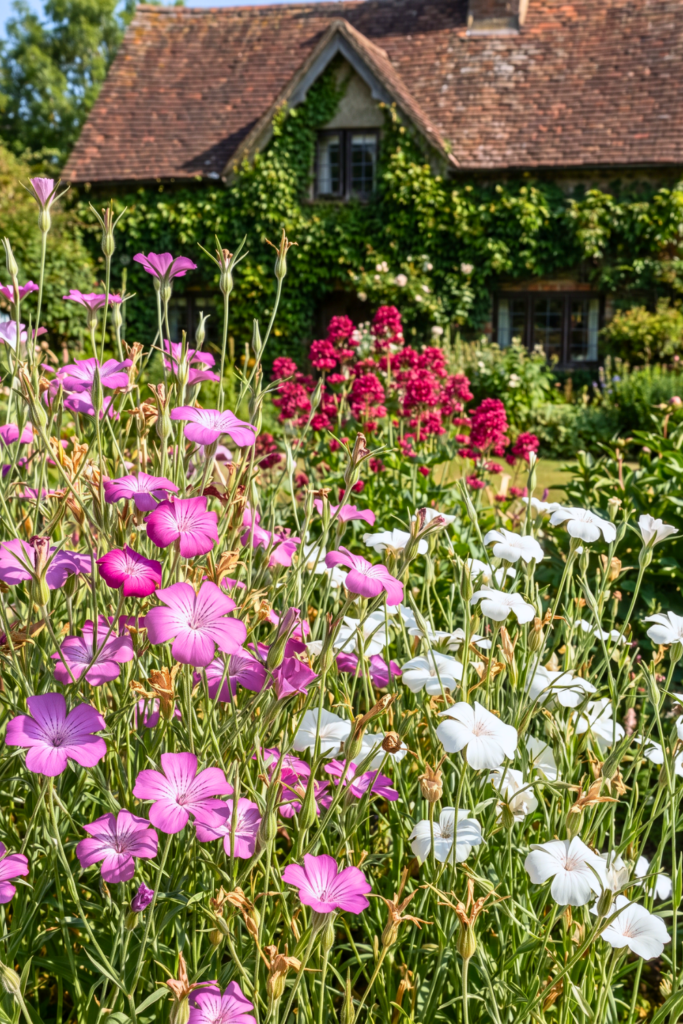
Corn Cockle is a plant not commonly found in contemporary seed catalogs but once used to be a staple of cottage gardens, which explains its renewed popularity among gardeners. Tall wiry stems with magenta-pink, delicate five-petaled flowers and silvery-gray foliage make for an eye-catching combination of features, especially taking into account the fact that Corn Cockle is quite an uncomplicated annual plant tolerating poor soils.
When to sow: Zone 6, mid to late September; Zone 7-8, late September through October; Zone 9, October through November.
Over winter: Seedlings develop rosettes that endure cold winter temperatures well; all you need to do is to provide them with direct-sowing just as it was done with larkspur and Shirley poppies.
The reward: In contrast to a spring sowing, a fall sowing results in a plant that will be taller and more profuse with flowers. It starts flowering relatively early, filling the mid-spring gap that most gardens lack, and after that, it will easily self-sow on its own schedule year after year.
