


Butterflies flying above a meadow filled with native wildflowers… It sounds wonderful, doesn’t it? That is what I thought when I tried planting wildflower seeds for the first time… I remember checking daily the area planted months before, where nothing grew, while weeds appeared abundantly. And I had no idea why this happened, until I finally understood the main principle behind these beautiful flowers!
The answer? Timing! Most of the wildflower seeds, which are native to our region, fall on soil during the autumn period, because they need freezing temperatures, rains, melting and lots of moisture on the soil. They require time, and they won’t sprout immediately! Planting seeds during spring, when conditions were already favorable for growing will leave them dormant. It’s useless!
Thus, these days I wait for the end of the year, allowing Nature to handle this natural phenomenon, and save myself time and frustration while saving a significant amount of money. All it takes is knowing when to act! And the result is priceless – meadows covered with blooming wildflowers and teeming with bees!
Here are my top 8 picks, that I always plant in autumn!
1. New England Aster (Symphyotrichum novae-angliae)
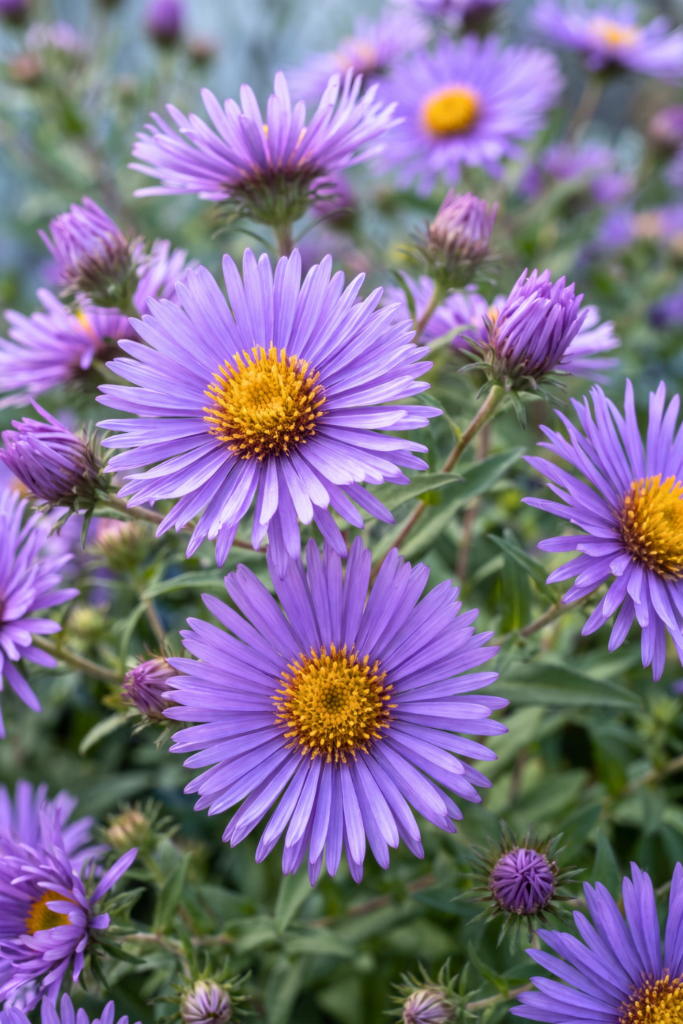
New England aster makes a great addition to any shady border, coming alive in autumn, just as other plants go dormant… Its violet purple daisies with golden orange centers appear from August until October and feed those bumblebee queens preparing for winter dormancy, as well as monarch butterflies flying southwards to Mexico! Isn’t that beautiful?
This species has quite fussy seeds: they require around 60 days of chilling stratification in order to germinate… Luckily enough, this is precisely provided when planted out late in fall, in full sun and part shade, preferably in moist but well-draining medium humidity soils. Just sprinkle the seeds on surface, without covering, pressing slightly. The first blooms will be ready in the following season, after hardening in zone 3-8… These plants become quite tall – up to 3 ft, becoming prone to flopping! That is why you should prune them down to half of their height in mid June.
2. Prairie Smoke (Geum triflorum)
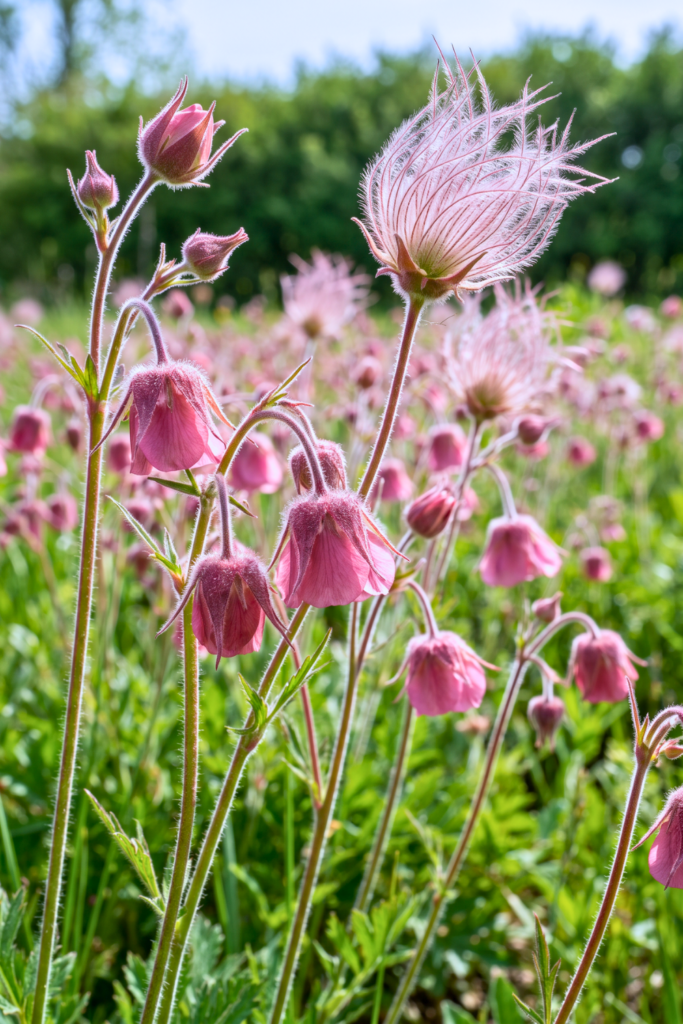
It definitely lives up to its title – only in bloom! Nodding pinkish-purple blooms appear from April and onwards until early June, in clusters of three above delicate, fern-like leaves. Petals usually remain closed most of the time, thus forcing bumblebees to literally unbutton each flower to get access to pollen within, making the species indispensable source of food for queens emerging from hibernation! After blooming finishes, feathery seedheads emerge to decorate your garden until fall, and in autumn, the foliage becomes intense reddish…
Regarding planting: according to seed vendors, the germination requires 30 to 60 days of cold, moist stratification period; thus, fall seeding naturally provides this condition. Just scatter seeds on the soil surface in full Sun exposure and in dry-medium, well drained soil in USDA hardiness zones 3 to 7 and rake gently. Although drought resistant once established, young specimens require regular watering, since one home gardener even lost one after planting nursery stock due to lack of sufficient moisture.
3. Great Blue Lobelia (Lobelia siphilitica)
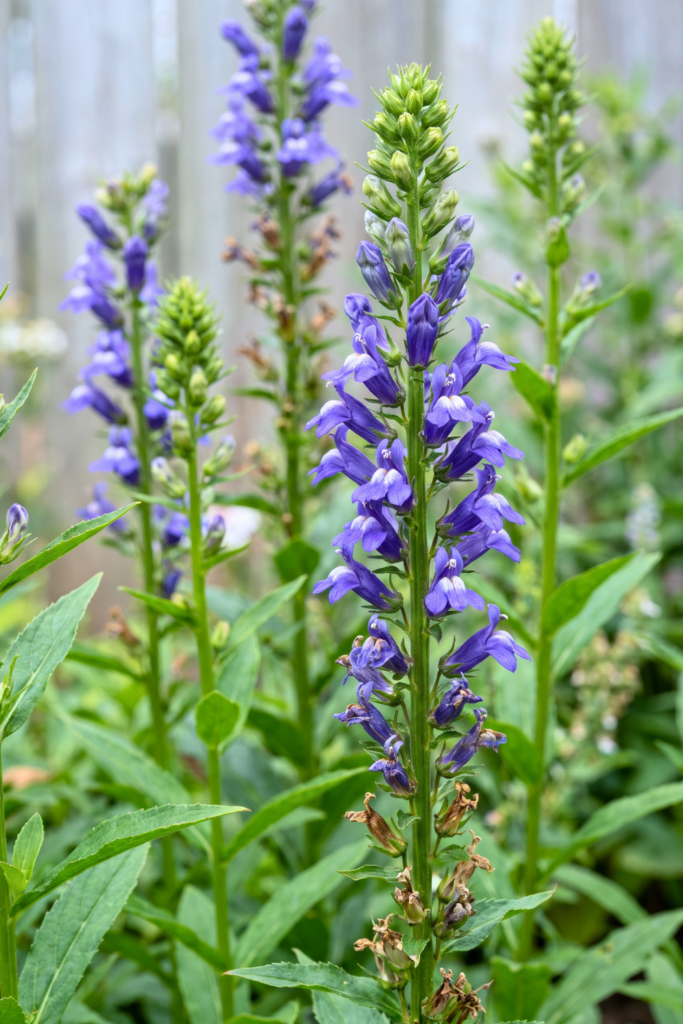
True blues are not seen frequently in late-summer gardens, but great blue lobelia is here to prove the contrary in a stunning way… Tall spikes of tubular flowers, streaked with white stripes… From August until October… And the bees love this display of flowers for sure!
These little seeds require around 60 days’ cold and moist stratification, along with light conditions for germination; therefore, just sprinkle them directly in autumn on the soil’s surface, without covering them with earth. You should choose sunny to partially shady locations with constantly moist soils; USDA plant hardiness zones 4-9 will do well. One extension agent from the Illinois extension office stated once: “If planted in sunny, hot and dry spots, expect to lose your plants”.
But you won’t miss out, as this plant will reseed freely; hence, leaving some dried spikes will ensure its presence for subsequent years…
4. Wild Columbine (Aquilegia canadensis)
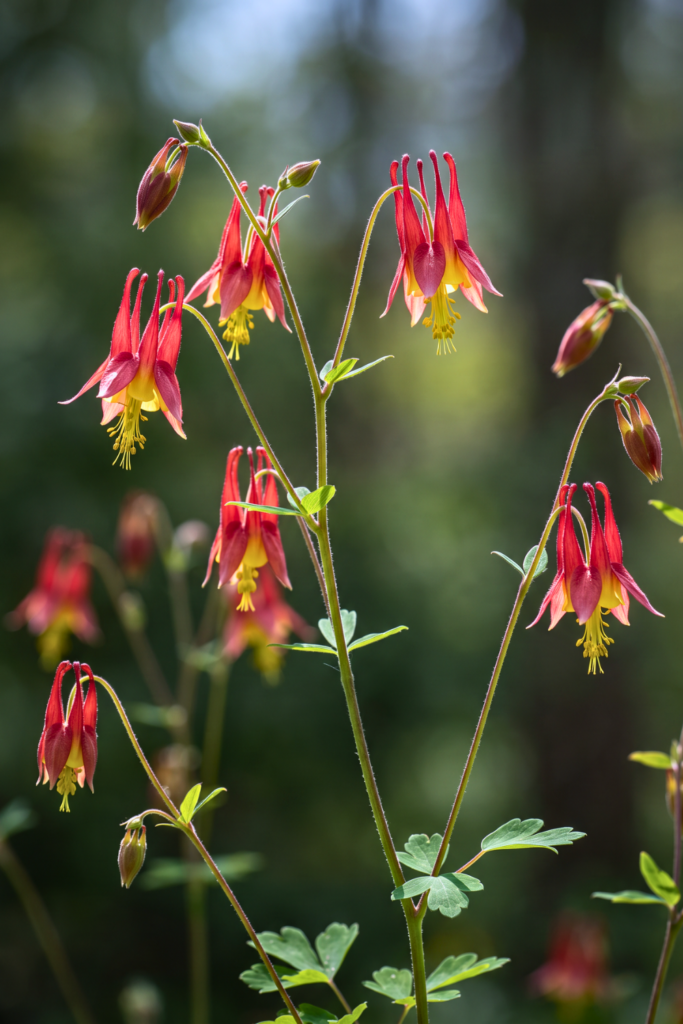
Wild Columbine flowers from spring to June, coming into bloom in April in most parts of the South, just in time for the ruby-throated hummingbirds’ migration back from Mexico. The nodding red and yellow bells have nectar at the top of very long upward-curving spurs designed to fit the bill of the hummingbird. The flower serves as host for the columbine duskywing butterfly.
The seed requires 30 to 60 days of cold moist stratification with light to germinate; therefore, a surface planting in late fall works best. It can be scattered in filtered sunlight on well-draining soil in Zones 3-8 and will begin blooming the following spring. The plant lasts only 3 to 5 years, but it reproduces itself through self-seeding. It is reported by Wisconsin Extension to resist the leaf miners that destroy garden columbine hybrids. However, avoid growing it near hybrid columbines as it crosses freely.
5. Butterfly Milkweed (Asclepias tuberosa)
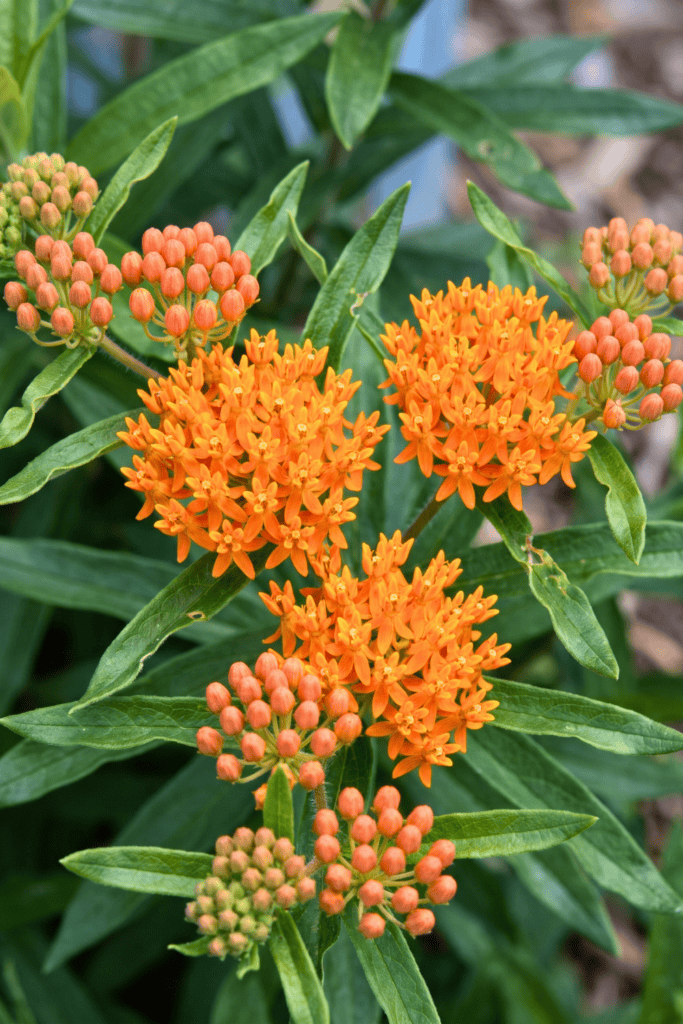
So, if you are looking to attract some wonderful Monarchs into your garden, here is what they want… As all types of milkweeds are monarch hosts and food sources, butterfly milkweed is no exception! Orange flowering spikes will produce nectar-rich blooms for you, bees, butterflies and all other useful insects in your garden during six whole weeks through summer, making it a wonderful addition for any meadow-like landscaping design. However, unlike common milkweed it will stay smaller, reaching 2 feet height at maturity without any problems!
It is easy enough and you can start with fresh seeds planted in late fall – cold, wet stratification period lasts around 30 days! Just sow them where they are supposed to grow, because once it is established, your butterfly milkweed won’t tolerate transplanting due to a long tap root! It will start blooming after second year of growth; moreover it emerges exceptionally late during spring. Late emergence caused an experienced Ohio State Extension gardener to lose several plants as he had simply assumed that they had died off…
6. Showy Goldenrod (Solidago speciosa)
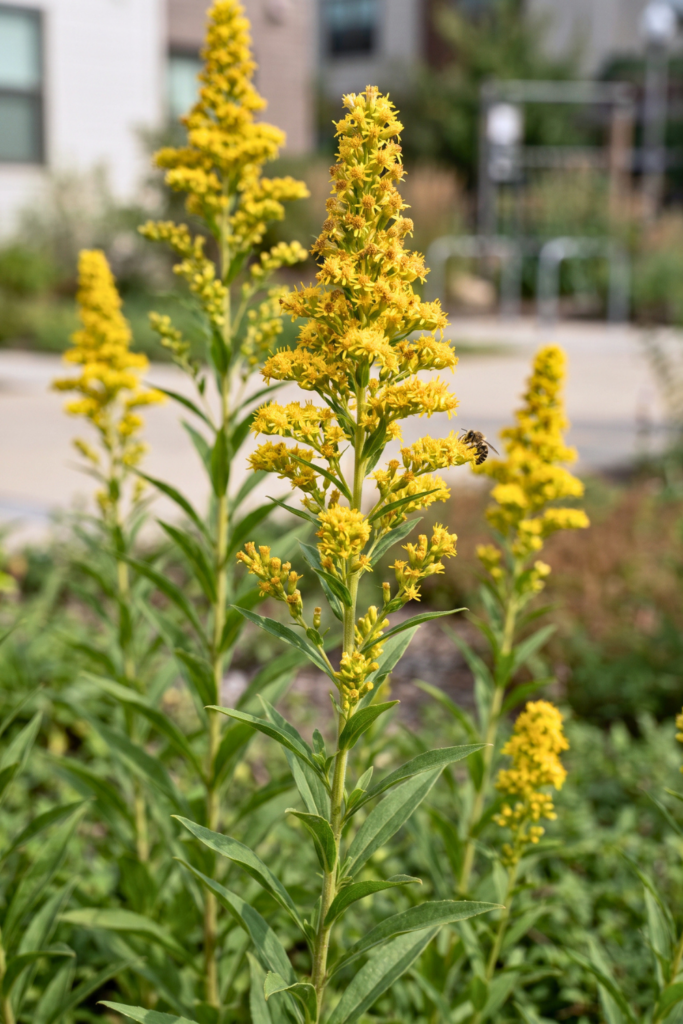
Despite what many people believe, goldenrods do not make anyone sneeze during autumn; ragweeds are guilty here… But there is no chance you can mistake these two! While ragweed has inconspicuous flowers, goldenrods have beautiful spikes that attract many beneficial pollinators like bees or migrating monarch butterflies… But what makes this one unique? It is blooming between August and November and feeds the migrating birds and goldfinches with its seeds!
This perennial will need 60 days of stratification and light in order to germinate. So, simply sprinkle its seeds on the ground surface before winter starts! And although the majority of goldenrods prefer sunny spots in dry soil, this one will thrive in partial shade as well. You should try growing it in Zone 3 through 8; however, bear in mind that you should never confuse the invasive types like Canada goldenrod that spreads aggressively using underground runners…
Showy goldenrod forms neat clumps in any place except extremely moist areas, and that’s precisely what I mean by tidy behavior!
7. Virginia Mountain Mint (Pycnanthemum virginianum)
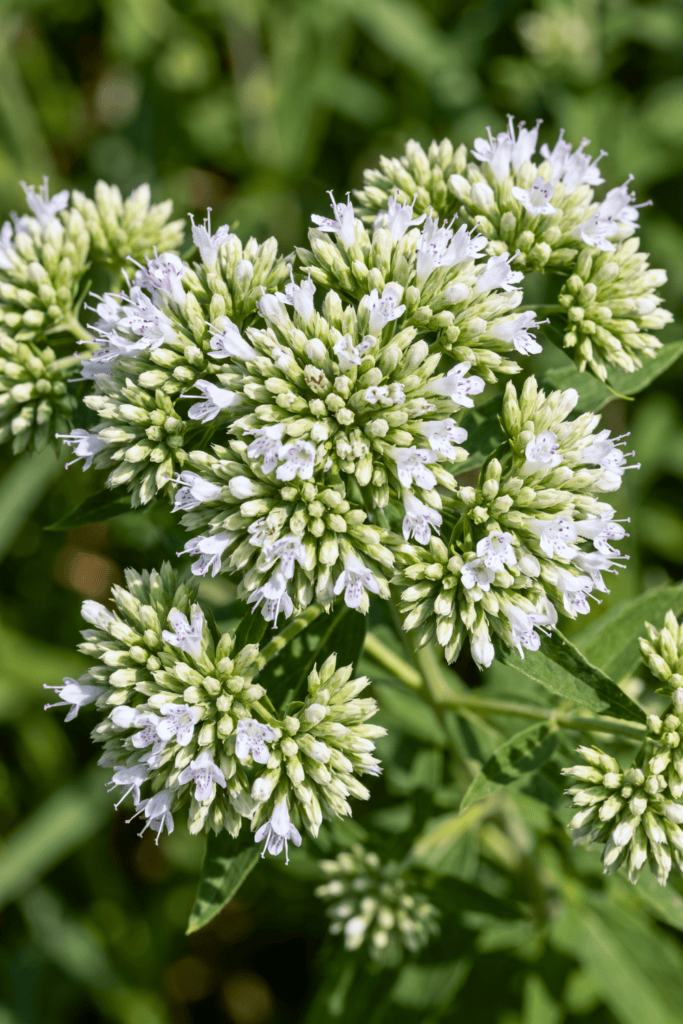
Well, you will probably discover this plant with its scent rather than sight! You will brush against narrow leaflets, releasing a very strong mint odor, but this one will actually deter deer and rabbits. On the other hand, flat white flower heads with a bit of purple will attract many insects: bees, wasps, flies, beetles, and smaller butterflies from midsummer to early autumn… Wow!
It takes approximately 30 days for cold and wet stratification, as recommended by many seeds suppliers, and, of course, light is necessary for germination, so surface sow the seeds at the end of fall without covering. This plant will enjoy full sun or partial shade and will thrive in ordinary to wet soils in zones 3 to 7. However, do not allow it much freedom, because Virginia mountain mint belongs to the very aggressive spreading varieties in its genus, according to Boston Globe gardening columnist. So, cut off the rootstalks in early spring!
8. Mexican Hat (Ratibida columnifera)
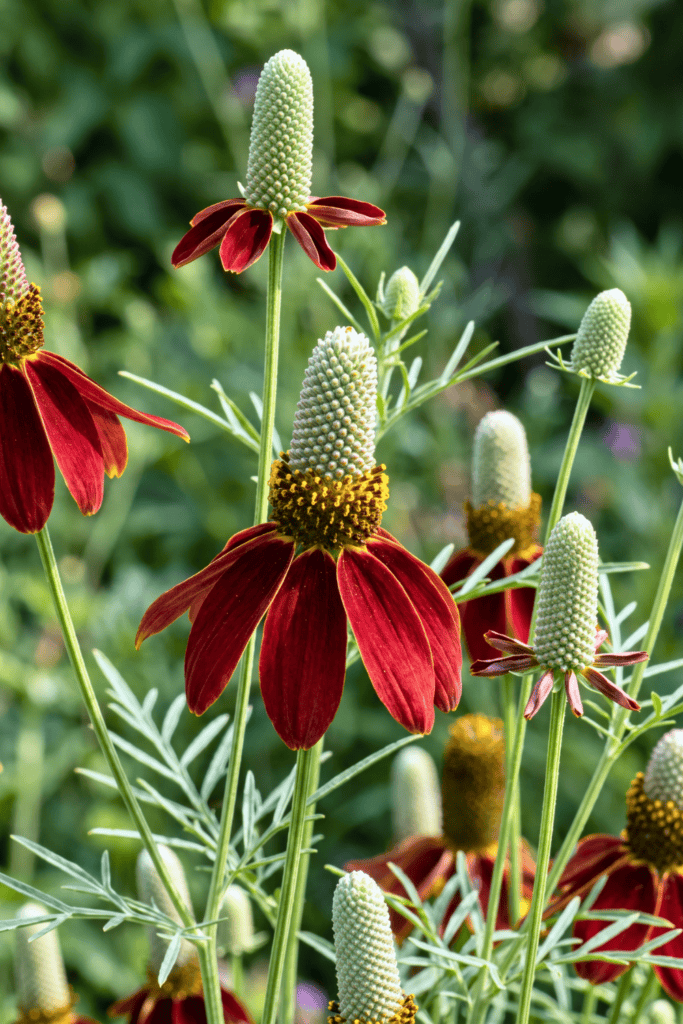
No wildflower looks as good as its name! With mahogany red petals bordered with gold, this pretty flower will remind you of drooping hats… Sombreros! And yes, these will start blooming early in summer and continue doing it until the frost appears! The insects, birds and butterflies will be happy about that, since you get to see beautiful and delicate flowers all throughout the season!
According to a study published in HortScience, most of the seeds from different lots show optimal germination rates 30-60 days after moist and cold stratification treatment. Which means fall is an excellent planting time… Simply place the barely covered seeds under direct sunlight and in well draining soils of any type, across the entire hardiness zone 3-9. Once its tap root gets established properly, it doesn’t mind periods of drought at all! Short lived but self seeding plants, which can flop… but only when planted individually in groups.
