


October, I’m sorry, but you’ve been receiving all the praise for a job that needs to be done in September.
Most of the commonly available tips about bulb planting concern not botany but logistics and are entirely wrong from the biological point of view. The truth is, bulb development does not depend on calendar date; it depends on soil temperature. In September, when the soil is still warm enough (60°F or higher), the process that determines whether you will have a good-looking spring garden or not takes place: root growth.
In other words, when planted, a bulb does not develop leaves or flower buds at once. First, it develops roots, which is crucial, because the bigger the root system, the bigger carbohydrate storage will be in the beginning of growth in the spring, and that means that a plant with good-size and colored leaves and stems will survive way beyond the end of May when the weather gets warmer. Planting in September instead of October provides six-eight additional weeks of developing root system before the ground turns too cold.
But there is another clock in addition to the biological one: specialists selling authentic varieties get rid of the best of their stock much earlier than October comes and they become filled with cheap leftovers.
Here are fifteen bulbs to plant in September.
1. Tulip (Tulipa spp.)

A tulip bulb was worth more than a skilled craftsman’s yearly earnings in 17th century Holland. The Tulip Mania may have burst the bubble of that market rather quickly, but its reputation as the star of spring would remain forever.
Natively from the mountains of Central Asia and appreciated in the Ottoman Empire way before they made it to the Netherlands, the tulip is one of the most varied spring bulbs – solid-colored, striped, fringed, flame-colored – growing on strong stems throughout early-to-late spring depending on the type. And here is the exception in this entire article: if you plant the tulip bulbs too soon, the warm September soil might cause them to rot. Wait until the soil becomes cool – around 40s to 50s°F – typically in October or November, and plant them 6 to 8 inches deep in the ground. Zones 3-8 hardy; many people in warmer zones just grow them as annuals.
2. Common Camas (Camassia quamash)
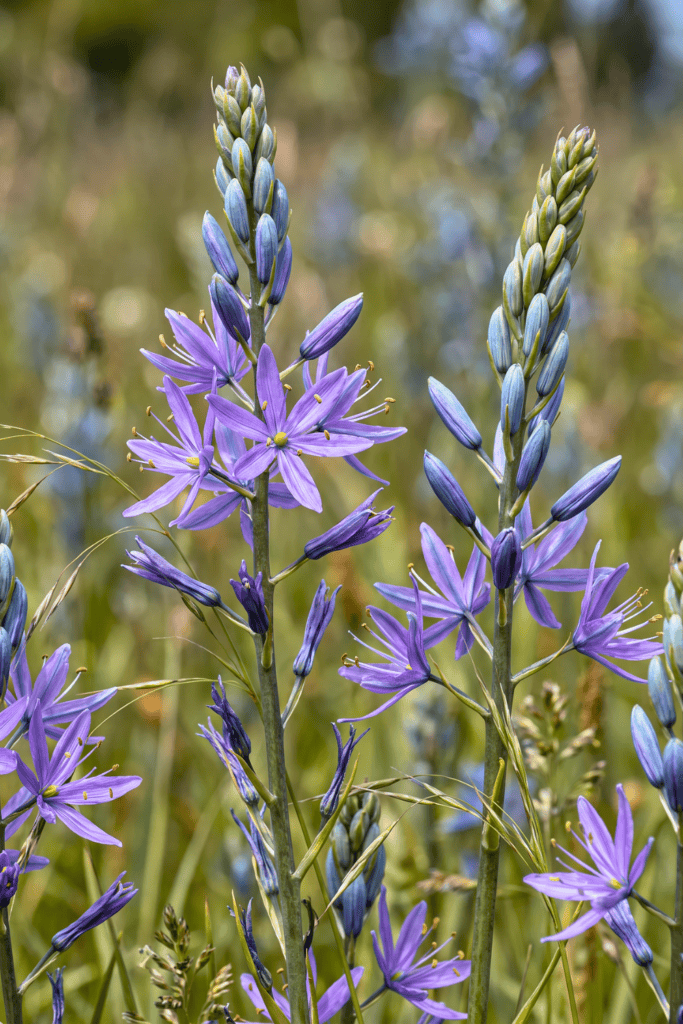
Prior to the near starvation of Lewis and Clark in their journey across the Bitterroot Mountains, it was camas root that saved them from it — an herb known in great abundance in the meadows by the Indigenous people of the Pacific Northwest for generations. Such is the heritage of plants that are not part of most garden bulbs.
Today, however, the camas bulb is a beautiful bulb, famous for its gorgeous appearance: the tall and loose spikes full of flowers that are star-shaped and so intensely blue that they could almost be said to be purple in color; they bloom from the base of the spikes gradually upwards, which means they last several weeks, from April until June. It thrives in conditions where other bulbs do not — moist soil. It is thus one of the few true bulbs that can be planted in a rain garden. Planted 4–6 inches in September. Hardy Zones 4-8.
3. Daffodil / Narcissus (Narcissus spp.)
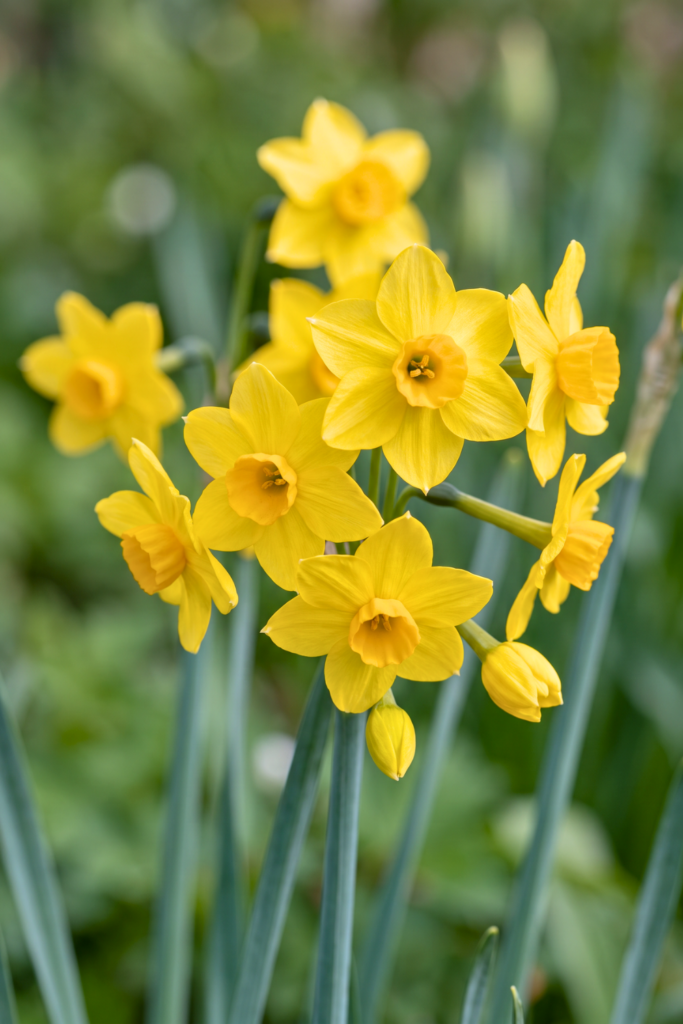
Deer and rodents would consume just about everything else on this list before they would consume a daffodil. The bulb is toxic, making it a hardy pest repellent, and thus explaining much about its survival in American gardens through so many years.
The blossom, first found on the Iberian Peninsula and North Africa before becoming widespread throughout Europe, consists of the common trumpet and petal configuration in yellow, white, orange, and pink colors. This is a true bulb that doesn’t mind any delay when planting it. Unlike tulips, it is completely immune to rotting in warm soil. So, plant it at 6 inches depth during September, either in full sun or partial sun. Hardiness zones 4-8.
4. Atamasco Lily (Zephyranthes atamasca)
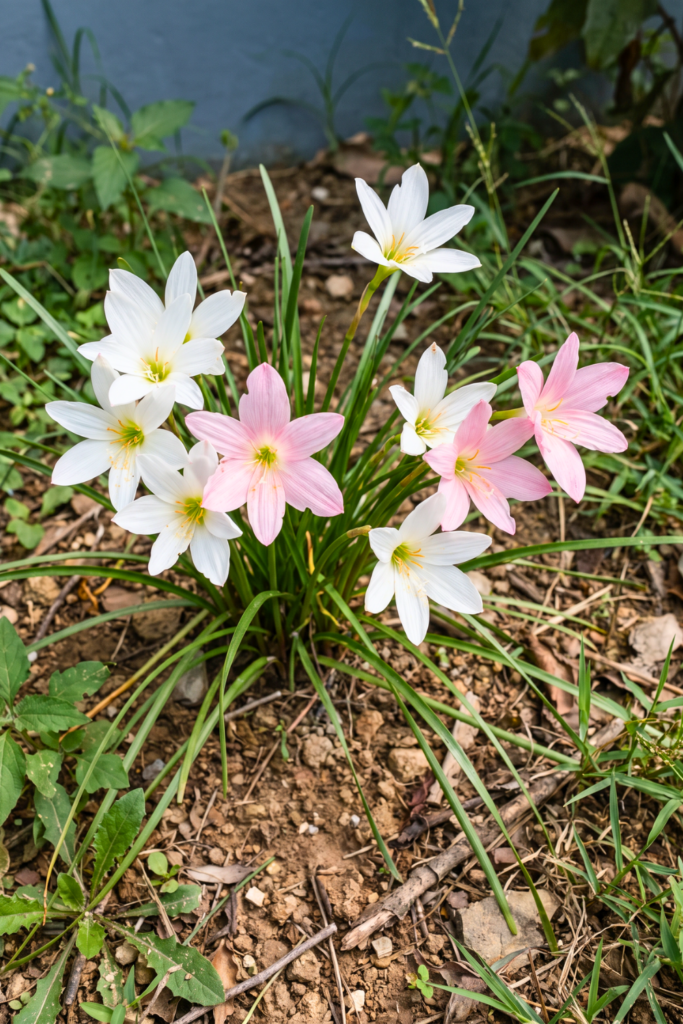
This is a plant with a single flower that is white but blushes with a soft pink color as it matures. This is the complete floral display that makes Atamasco Lily unique among the bulbs featured here. Other spring flowering bulbs tend to grow their flowers in clusters; not Atamasco Lily.
Atamasco Lily is a native of the southeastern states, growing in the wetlands and pine woods of Virginia, Florida, and Mississippi, an area which is largely ignored by most bulb planting information — meant for the drier European climates. It belongs to the amaryllis family and requires conditions similar to those in its natural habitat: moist soil and partial to full sun. Grow it at depths of 3 to 4 inches deep in September. Zones 7-10.
5. Ornamental Allium (Allium giganteum / aflatunense)
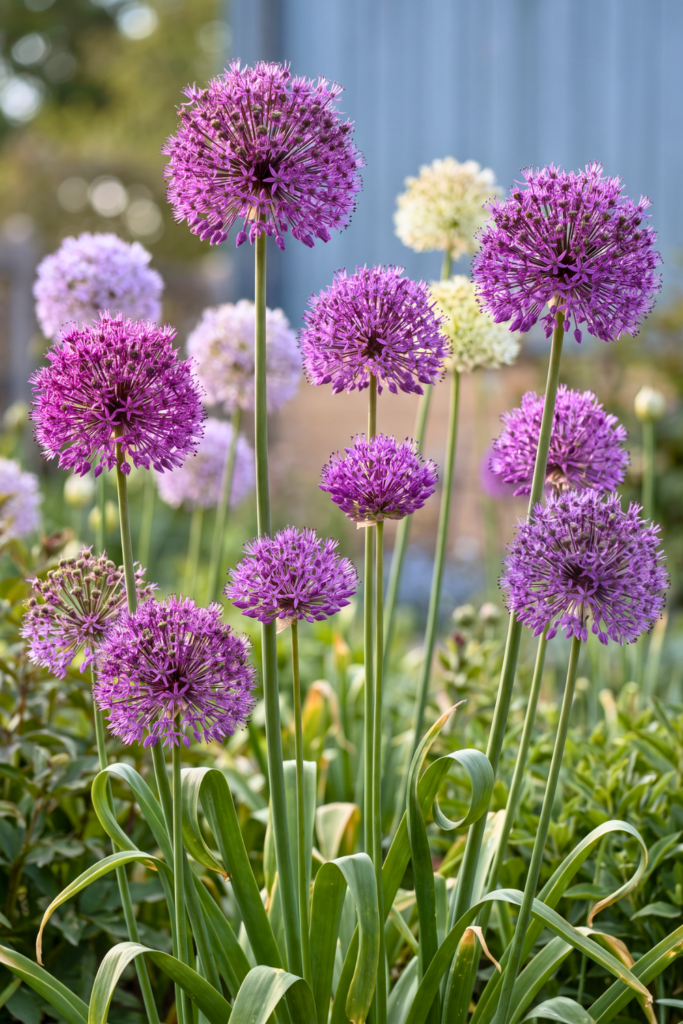
Without its flowers, ornamental allium is nothing but an onion; cultivated not to be cooked but to display one perfect ball-shaped flower head on a stalk without leaves that grows up to two or four feet, usually in colors of purple, depending on variety.
The size and the structure are the whole purpose of this plant, as allium provides vertical interest amid other spring-blooming bulbs that don’t have such effect by themselves. The plant originates from Central Asia, where different wild species of allium were grown as vegetables much earlier than European breeders developed ornamental varieties of it. Plant in September in full sunlight at a depth of 6 to 8 inches. It is hardy in Zones 3–8, and just like onions, it repels deer and rodents because of sulfur compounds contained in it.
6. Trout Lily (Erythronium americanum)
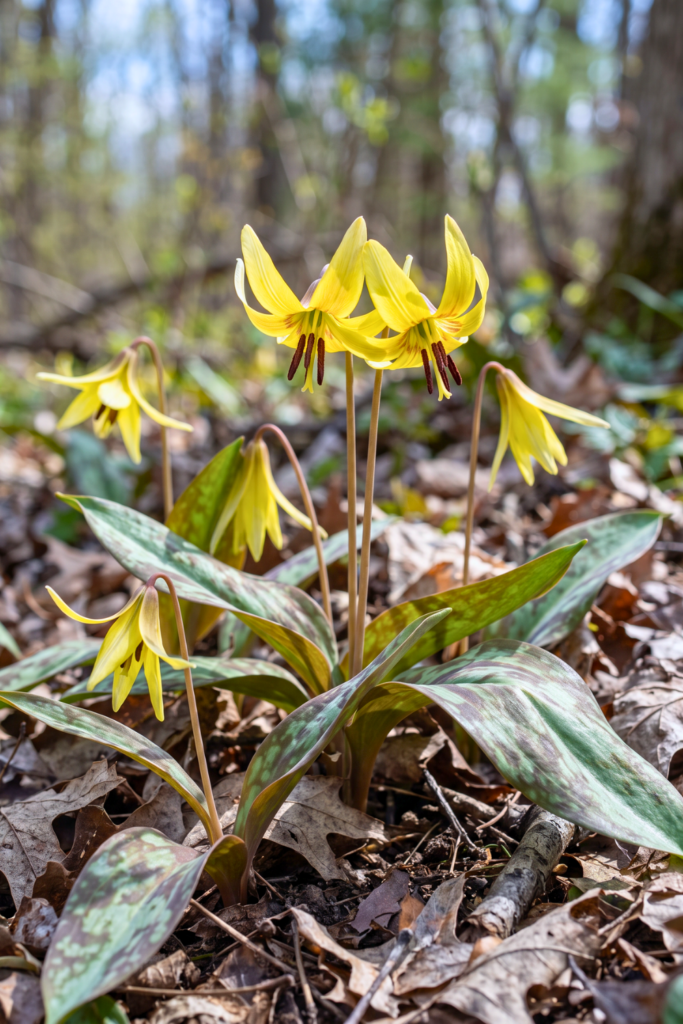
It is known as the Trout Lily because of the brown spots on the leaves, which look like those of a brook trout and may be the only indication that there is a Trout Lily colony in the area for years to come, since the colony requires four to seven years before it blooms for the first time after being planted from a seed.
Trout Lily is native to rich and moist woods in eastern North America and one of the earliest spring ephemerals to bloom. The plant produces one yellow nodding flower with sweeping petals in March or April and disappears by early summer due to closure of the tree canopy above it. This corm should be planted in the fall, three inches deep, in partial to full shade and moist organic-rich soil – the forest soil conditions. Hardiness zones 3-8.
7. Hyacinth (Hyacinthus orientalis)
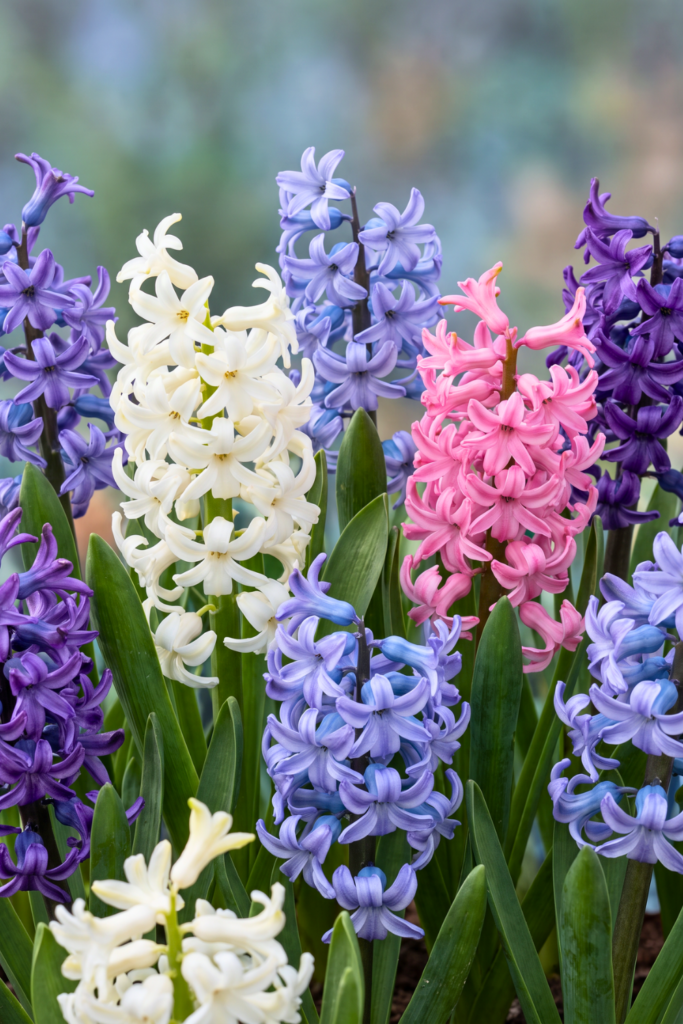
None of these other flowers announce themselves through their scent the way that hyacinth does; just place them near your door or a window and you will be able to tell when they are ready to burst forth.
The flower got its name from Greek mythology in which a murdered youth’s blood was supposedly transformed into a flower. The flower is native to the eastern Mediterranean and Middle East, but it gained popularity among the Dutch people in the 1500s. A hyacinth is known for producing one spike with many waxy, star-shaped flowers that come in shades of purple, pink, blue, white, or yellow. The flowers should be planted 4 to 6 inches below the soil in the month of September.
8. Sego Lily (Calochortus nuttallii)

It wasn’t just beauty that went into selecting the state flower of Utah. In times of famine during the 1840s and ’50s, the Mormons who had moved to the area and the Native American populations used Sego Lilies’ bulbs as an emergency source of food, before it occurred to anyone to cultivate it for ornamental purposes.
The legacy left by these times is a resilient plant adapted to dry conditions – one stem, slender but strong, crowned with a tulip-like flower in white or pale lilac, which has spots of bright yellow and deep maroon color on the base of the petals. It doesn’t really like rich and irrigated soil, which suits better tulips or daffodils – in this case, it’s drainage that comes first. Plant in September, 3–4 inches deep, in sunny spots and poor soil. Hardy Zones 4–8.
9. Grape Hyacinth (Muscari armeniacum)
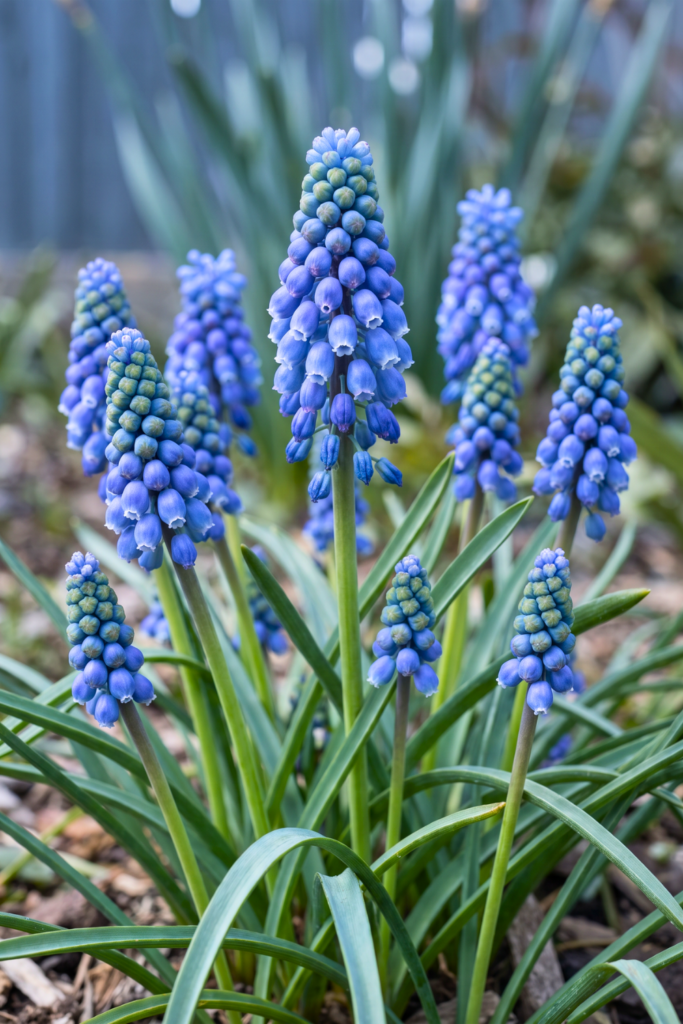
“Grape Hyacinth” truly lives up to its name, as each little flower cluster consists of perfectly rounded purple-blue blossoms, which look just like an inverted bunch of grapes. This is the only one of the common names in this list that is not exaggerated.
A native of the Mediterranean area and southwestern Asia, it has been cultivated in European gardens since the 16th century. Though its height usually does not exceed eight inches, it is grown not for its size, but for the vivid colors it produces. Another great quality of this bulbous plant is that it is one of the most naturalizing varieties. It can be easily planted in low drifts, which will look perfect near a border or among tall bulbs such as tulips or daffodils. September planting, 3–4 inches deep. Zones 3-8, resistant to deer and rodents.
10. Checker Lily / Chocolate Lily (Fritillaria affinis)

But get close enough to Checker Lily, and it will reveal one thing many other spring-flowering bulbs don’t have: an offensive odor. Not a defect but a pollination strategy for attracting flies rather than bees, this is just one of the many qualities that make this flower unique.
Checker Lily is indigenous to woodlands and rocky hillsides in the western United States, from British Columbia down to California, where it used to be harvested by local Indigenous populations for its offset bulblets known as “rice root.” But the real attraction here is the nodding flowers with bells of brownish-purple color and a checkered pattern unique enough to catch your breath. Plant the bulb 4 inches deep in September in partial shade in well-drained soil similar to woodlands. Hardiness zones: 5-8.
11. Crown Imperial (Fritillaria imperialis)
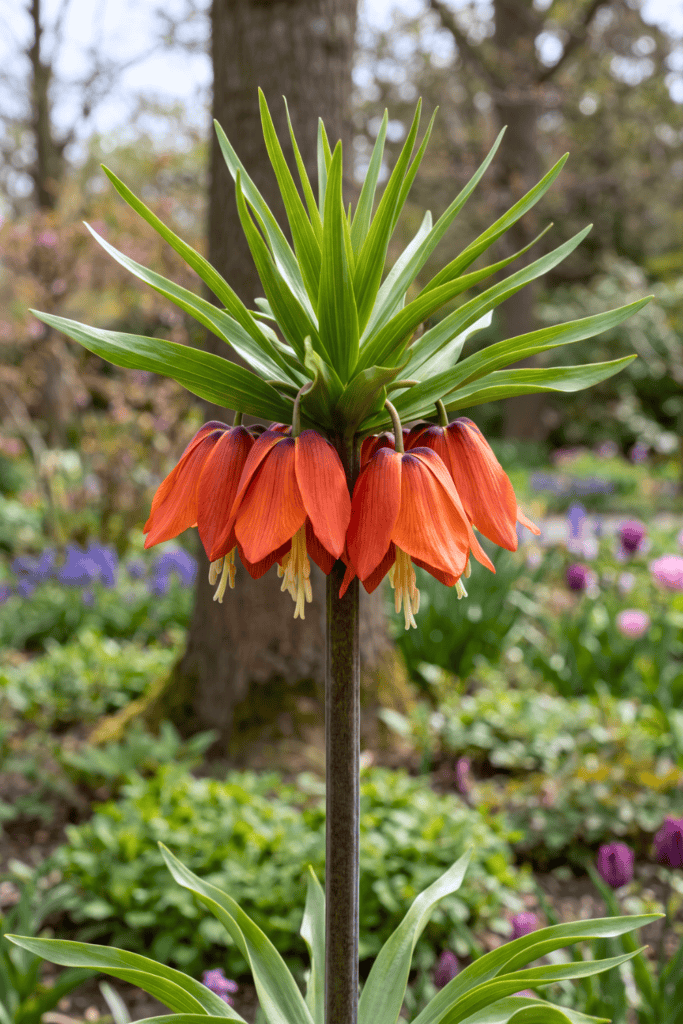
The Crown Imperial smells bad, and it is a virtue, since both its bulb and foliage have a strong skunk-like aroma that deters deer, voles, and mice, which most gardeners can live with.
What you are safeguarding is worth it, as this plant features a stem two to three feet tall adorned with a circular row of large hanging orange, yellow, or red flowers surrounded by a cluster of foliage-like bracts — a unique structure native to the Turkish, Iranian, and Himalayan mountain ranges brought to 16th century Europe among the most sought-after botanicals of the time. Plant bulbs six to eight inches deep in September and plant them horizontally to avoid water collecting and rotting out the hollow central part of the bulb. Hardy Zones 5-8.
12. Fairy Lantern / White Globe Lily (Calochortus albus)
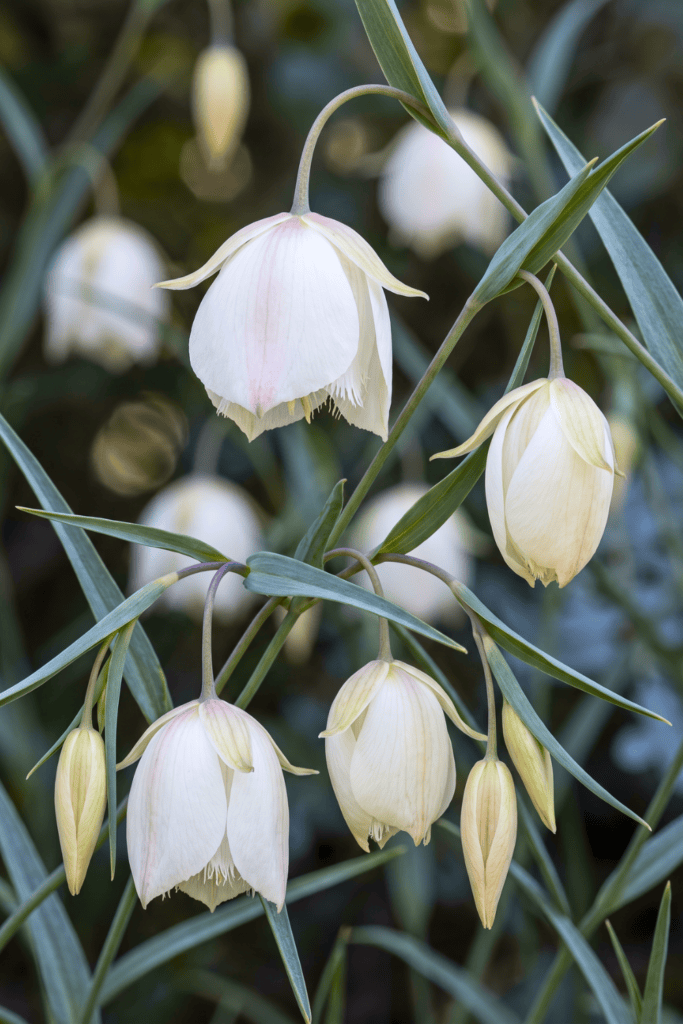
While Sego Lily blooms fully, Fairy Lantern remains mostly closed. The white, bell-like flowers are globular and hang downward, retaining a papery covering and resembling more of a lantern than a flower.
The Fairy Lantern is found growing wild in only a small number of dry hills and shrublands, particularly those of the Sierra Nevada foothills and Coast Ranges. Its flower buds were favored by Native American cultures and used as food sources much like other plants of its genus, but it was also more valued for ornamental purposes after settlers came along. It has the same requirements as its Utah cousin in order to grow well – it must have good drainage and dry conditions during the summer.
13. Siberian Squill (Scilla siberica)
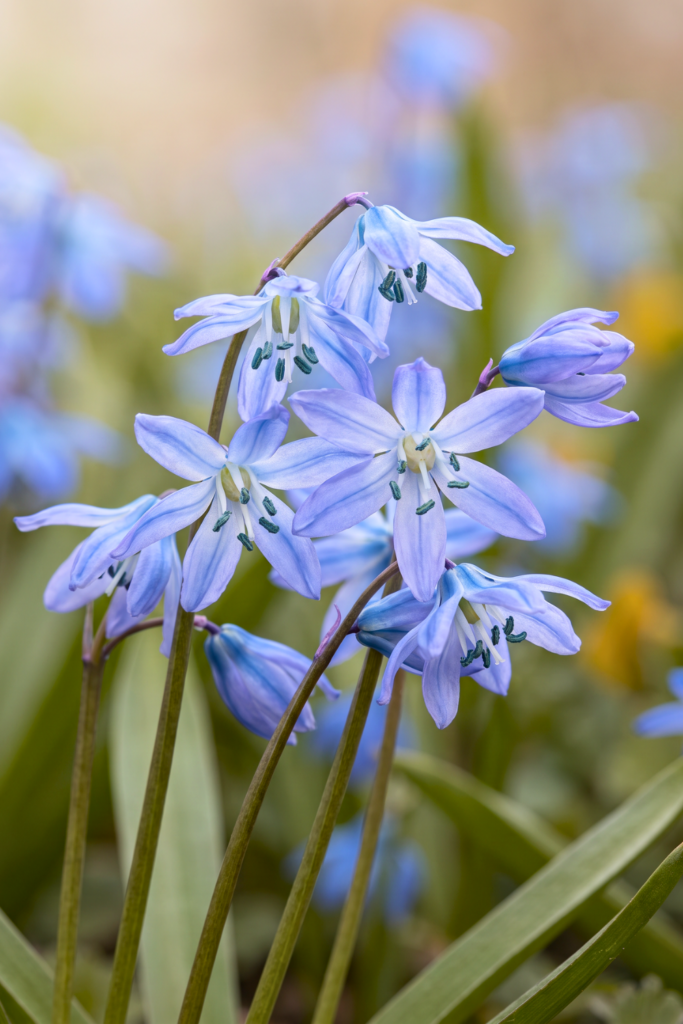
Once you’ve planted Siberian Squill, you’ll probably only need to do it one time because it grows to cover an area in just a couple of seasons. That may be its greatest asset or a bit of a problem, depending upon how much control you like to have over your border.
Though the name would imply something else, the plant actually originates in southwest Russia and the Caucasus region and not from Siberia at all. European gardeners discovered it in the 18th century, precisely because of its ability to spread. The flower itself is tiny, nodding, and star-shaped, a beautiful shade of blue rarely found in other spring bulbs. It can also function as a type of ground cover because of its diminutive height. Planting should take place in September at a depth of 3 to 4 inches, in full sun or partial shade. Hardiness zones 2 through 8.
14. Turk’s Cap Lily (Lilium superbum)
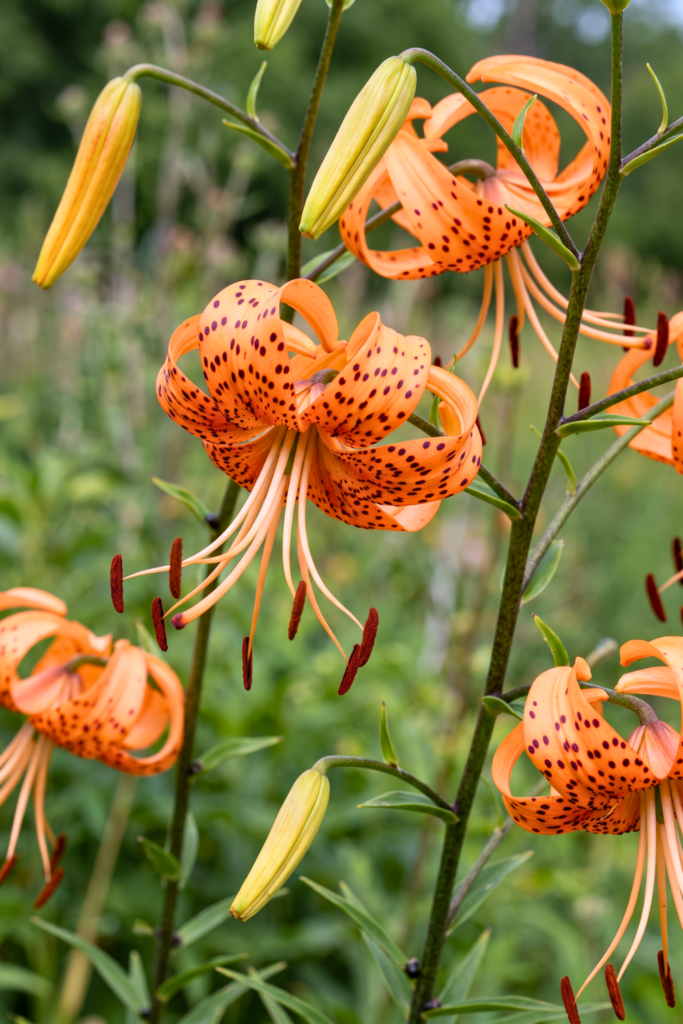
None of the others here are even remotely similar. The petals curve back so far that they almost meet behind the flower, giving rise to the distinctive “Turk’s cap” form mentioned in its name, with anthers dangling below a flower covered with dark maroon dots against an orange and gold background. A mature stem can have up to twenty flowers on it.
It is native to wet meadows, streamsides, and wooded areas in the east US, from New Hampshire to Florida and west to the Mississippi Valley, and is the tallest native lily in North America – established plants grow above six feet tall. Plant the bulbs 5 to 6 inches deep in September, in full sun to partial shade in soil that will stay consistently moist – this is a plant which grows in moist soil, not a dry border. Hardy Zones 5-9.
Just one small thing for the sake of truthfulness among my readers: Turk’s Cap is in flower in July through August, not in May. You are planting it now with flowering well in the future compared to other bulbs here.
15. Lady Tulip / Candy Cane Tulip (Tulipa clusiana)

When most people hear the word tulip, what comes to mind is an individual, broad, and colorful cup with a heavy stem. But not Lady Tulip; this tulip has delicate petals with stripes of dark pink and red, which bloom into a pure white center in daylight and close up at night like it’s protecting its color.
Native to Iran and Afghanistan, it is a true bulb tulip, but it is different from the common hybrid tulips found in garden stores. It is smaller in size, wilder in appearance, and much hardier than the popular hybrid tulips. While the latter tends to become less vibrant after only one or two years of growth, the former has the ability to naturalize and spread without being replanted. Should be planted 4 to 6 inches deep in September, but it doesn’t have to fear rot in warm soil as opposed to hybrids. Hardiness Zones 4 to 8.
