


Why do some lilacs completely steal the show every spring? Is it because of some secret fertilizer? The perfect soil? Or maybe they just like the neighbor’s garden better than yours? Whichever the reason, if your shrub gave you nothing but a quiet mountain of leaves this year, it can feel a bit… frustrating.
To be honest with you, lilacs are incredibly tough plants. They hardly ever fail to bloom once they are established (and they can live for decades!). This is, as long as you don’t make one very common, innocent mistake late in the season.
Everybody loves to tidy up the garden before winter, but there is an actual trick of the trade I want to share with you. If you wait until late summer or autumn to give that sprawling bush a haircut, you are literally cutting off the microscopic flower buds it has already made for next spring. That is why so many of us gardeners end up with zero flowers!
When June comes, and you see those spent, brown blooms hanging awkwardly on the branches, it is time to start thinking about them. We have a strict two-week window right now to get our pruning done safely.
I have a simple 5-step plan for you to make sure that they will give you the most abundant, fragrant blooms ever next year.
Off we go!
1. The ‘Old Wood’ Secret – Why You Must Never Prune in Autumn!

You always hear experienced gardeners throwing around the terms “old wood” and “new wood” – big words, right? To be honest with you, it simply means that some shrubs, like our beloved lilacs, need almost a full calendar year to prepare a blossom. The very moment those traditional, fragrant panicles drop their petals, the plant goes straight back to work. While we are busy enjoying the early summer sun, your shrub is quietly pushing out microscopic flower buds along the exact stems that just finished blooming… the old wood.
And here is exactly where the problem lies. Because these new buds are practically invisible to the naked eye right now, it is incredibly easy to make a fatal mistake. If you decide to wait and tidy up the bush in September, or even late August, you are walking straight into a trap. Even trimming back a mere 6 inches (15 cm) of those awkward, woody stems means you are literally snipping off next year’s blooms. Prune them during an autumn cleanup, and you guarantee yourself a quiet, green monster next spring!
The solution? It is all about shifting your pruning calendar. To keep your shrub tidy without ruining the floral display, you must strictly prune during a tiny, fast-closing window: the two to three weeks immediately after the flowers fade. That is it! By doing your cutting right now, before the plant has a chance to fully set those new buds, you protect next year’s show. And once you know that, your whole approach to these beautiful shrubs changes…
2. Deadheading Comes First: Snip Those Brown Ghosts Right at the Base

Now that you know the window is open, here is the very first job on your list. Those faded, crispy flowers hanging on the branches are not just an awkward eyesore — they are actually causing a hidden problem. Once the beautiful petals drop, the lilac immediately shifts its entire focus to producing seeds. Making seeds requires a whopping amount of energy — energy that should be going into strong root development and pushing out healthy new leaves. If you leave those papery brown clusters on the plant all summer, you are letting it exhaust itself for absolutely no reason.
The solution is simple, and honestly, incredibly satisfying: deadheading. Grab your sharp shears and let’s remove those spent flower panicles. But you must be precise! Don’t just hack away blindly at the branches. You want to follow the brown stem of the faded flower down to exactly where it meets the first set of healthy, rich green leaves — usually just a couple of inches down (5 to 7 cm). Snip it right there at the base.
By removing these tired seed heads, you instantly stop the seed-making process. The plant redirects all that wonderful energy back into photosynthesising and building a stronger, more vigorous foundation for next spring. It is a quick task, but it makes a magnificent difference!
3. Got a Sprawling Monster? It’s Time to Apply the One-Third Rule

Sometimes, simply deadheading just isn’t enough. We all have that one shrub in our garden that has gotten completely out of hand over the years. Left to their own devices, our lovely lilacs can easily turn into towering, sprawling monsters, reaching 10 or even 15 feet tall (3 to 4.5 metres). The oldest wood eventually stops producing those vibrant blossoms, and all the new flowers end up at the very top of the canopy, completely out of sight. Meanwhile, the base becomes a messy tangle of bare, woody trunks.
The solution is a technique called renewal pruning. Now, I know what you might be thinking — “Wait, didn’t you just say cutting old wood is bad?” But here is the key difference. In Step 1, we were talking about never trimming the flowering stems that still carry next year’s invisible buds. What we are doing here is entirely different — we are removing the oldest, most exhausted trunks that have already stopped producing flowers altogether. We are retiring them completely, so the plant can send up fresh, productive new growth from the roots in their place.
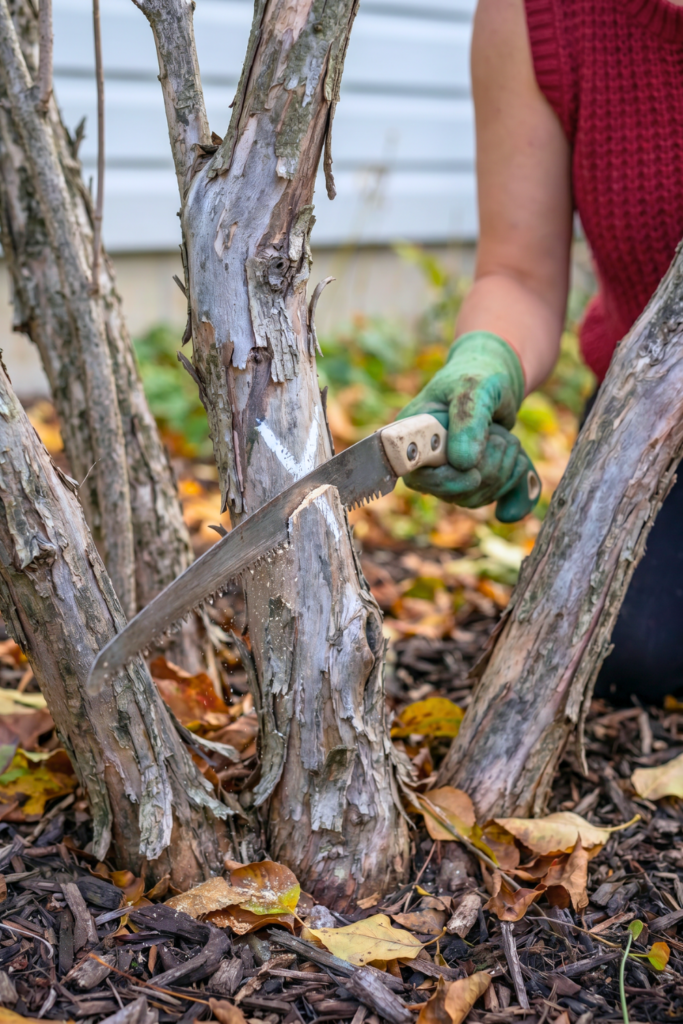
Here is exactly how it is done. Take a good look at the base of your shrub and identify the thickest, oldest, most knobbly trunks. Select roughly one-third of these massive stems and cut them all the way down to the ground, leaving only about 1 or 2 inches (2.5 to 5 cm) above the soil. This instantly opens up the centre of the plant, letting fresh air and bright sunlight reach the base, and prompts vigorous new shoots to push up from the roots. Repeat this every year for three years, and you will completely regenerate your tired shrub into a lush, generous bloomer — without ever sacrificing a season of flowers!
4. Watch Out For Suckers — And Deal With Them Immediately!

Look down at the soil around the main trunk of your shrub. Do you see those skinny, whip-like shoots popping up straight out of the dirt? Many of us gardeners call them “suckers,” and they are exactly what the name implies. While they might look like innocent new growth, they are actually a significant problem. They greedily steal valuable water and nutrients away from the main plant. If left to grow wild, your lilac wastes its strength supporting these awkward little twigs instead of building up energy for next year’s magnificent display.
The fix? Get right in there with your shears and snip those suckers away completely, as close to the soil line as possible. A clean, clear base ensures all that wonderful energy goes exactly where we want it!
5. Feed It Right and Water Wisely — Please, Hold the Nitrogen!

Now that your pruning is completely finished and the early summer heat is kicking in, your plant needs a bit of tender loving care. But beware of a very common trap! People often reach for strong fertilisers packed with nitrogen, thinking it will help the plant recover. Please, hold the nitrogen! If you feed a lilac too much of it, the shrub will enthusiastically regale you with a massive explosion of lush leaves, but absolutely zero flowers next spring. On top of that, casual overhead watering often leads to powdery mildew, a very annoying and persistent issue for these beautiful plants.
Keep it simple and natural instead. A modest 1 to 2-inch layer of rich compost (2.5 to 5 cm) spread around the base is more than enough to feed your plant and keep the roots cool. When it is time for a drink, water deeply directly at the root zone, keeping the foliage perfectly dry. Do this, and your generous shrub will reward you beautifully next year!
Just a Little Reminder Before You Put Away the Shears!
Before you step back to admire your tidy green space, I want to leave you with the absolute basics for our traditional common lilac (Syringa vulgaris). Even with perfect pruning, providing the right foundation is crucial if you want to coax the absolute best out of your plant!
So, grab your sharp shears and get that June deadheading and pruning done right now! Treat your shrubs to this strict early summer schedule, and they will absolutely bless your garden with a magnificent, jaw-dropping floral show next spring!
