

Not a thing in the garden looks as if it is dying yet. And that is how the illusion is created.
The pelargoniums continue to flower. The coleus brags in colors. The salvia is as tall as it has never been, and looking from the fence into the garden, you would think that it has weeks to go before it dies off. It doesn’t. At least not everything in it.
There is something special about tender perennials—they give it all away and then some until literally one night of frost kills them instantly. Abundance in August turns out to be a countdown, and we are not aware of the ticking clock until it stops. It doesn’t have to be this way.
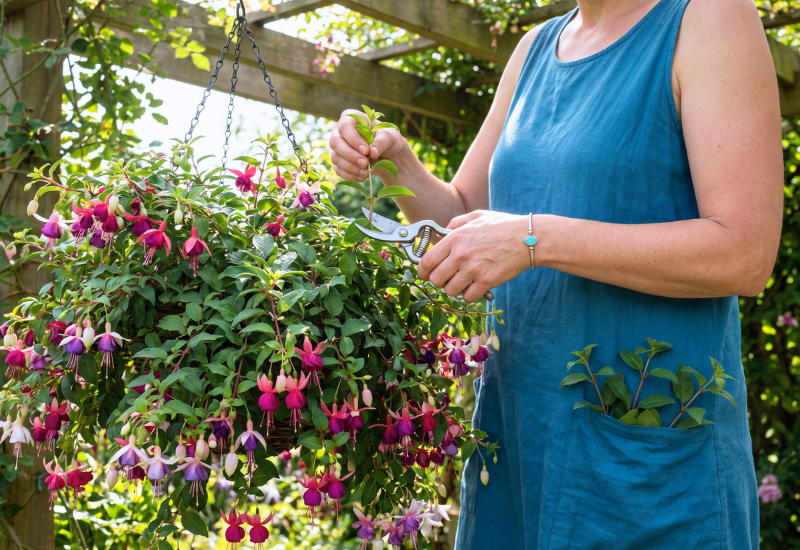
There is something you can do about it, and it does not involve calendars. Pick a stem and feel with your hands—salvia, coleus, whatever is precious enough that you would hate to see it gone—but not its green floppy growth of June, and not even brittle one. There is some flexibility in between; the plant tells you that it is ready to be split in two pieces now.
Wait, wait! Do not think that you can relax until September, especially if you live in zone 7 or colder, where you have less time before first frost than the lush greenery of August can fool you into thinking. And further south, although there is more flexibility in time available to you, you will still be caught in surprise because the frost won’t announce itself.
Nine plants, one hour with your pruners, and the difference between cuttings on your windowsill this winter and an empty pot next spring.
1. Geraniums – (Pelargonium × hortorum)
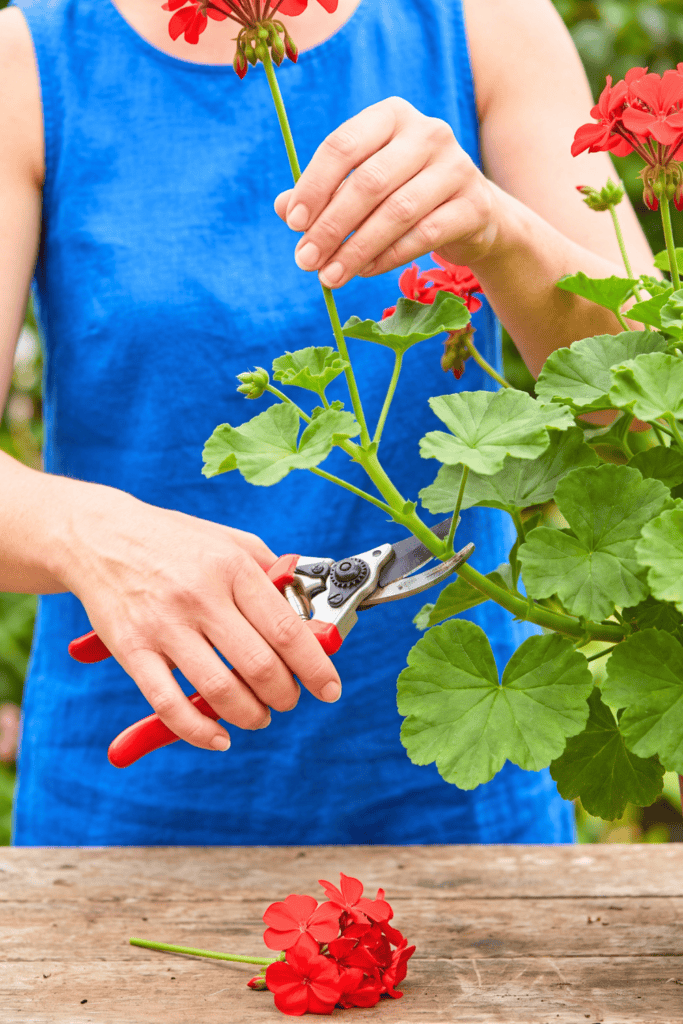
Start here, since the only thing you absolutely need to save from this August besides everything else is these. If treated properly, a healthy pelargonium will flower for ten years, and every single cut you make is an exact duplicate of a plant which costs you $15 in the nearest garden center next spring.
You need a stem four to six inches long with leaves stripped off the bottom (this way it will not rot in the soil), cut under the leaf node. The thing about these flowers is that they prefer to be a bit dried up before being planted. Leave the stem for an hour or two – it will drastically reduce the risk of stem rot. No rooting hormone required. These flowers grow from pure obstinacy.
Plant each one separately; do not put several cuttings in one pot. They do not like crowds even in such a state and this is what half of all cuttings die due to. Water lightly, keep them in a brightly but not hot place, and in three to four weeks, you will see new shoots at the top – that means that the plant is not going to take time any more, but has grown roots of its own.
2. Coleus – (Coleus scutellarioides)
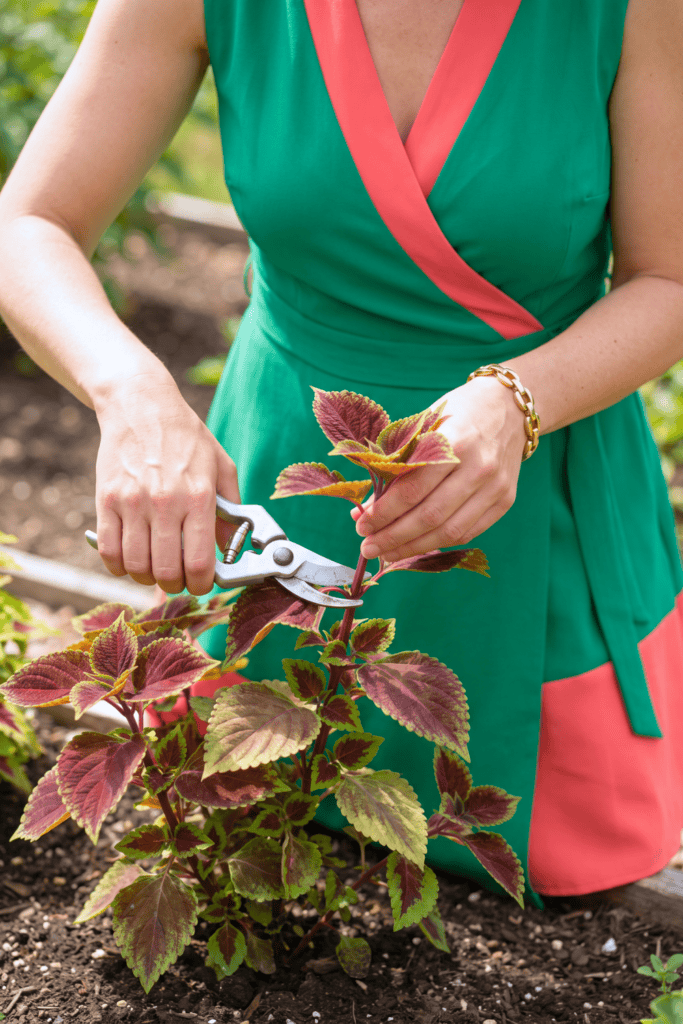
Whereas the plant that rewards patience is the pelargonium, the plant that rewards impatience is the coleus. This is by far the quickest and easiest of all cuttings and the best to give to any nervous beginner who has never grown anything from cuttings.
Take a four-inch cutting from just above a leaf node, remove the leaves from the bottom of the cutting and put it directly into a glass of water on a windowsill. No soil, no bother and no rooting hormones needed. Within a week or ten days the roots will develop as white, fine root hairs will begin growing down through the water. Once the roots reach approximately an inch long, transfer the cutting into a pot with moist soil and it will grow without hesitation.
The only real hazard in growing coleus is the growth becoming too leggy due to lack of sunshine if it is left for too long in insufficient light, so place the pot somewhere bright but out of the hot afternoon sun. If left to its own devices over winter, one coleus cutting will be pinched repeatedly to make a dense bushy plant.
3. Tender Fuchsias – (Fuchsia × hybrida)

Not all fuchsias will need rescuing. There are some varieties that are actually very hardy and do just fine with cold weather. They will not require the effort and care needed to save them from dying at the first frost. You can easily mistake a fuchsia that requires saving as a hardy plant – but since there are some that do not need saving, you can never know which one yours is. Thus, always treat your plant as if it was tender.
Cutting takes ten minutes. If you make a mistake, you might lose your entire plant.
It is advisable to choose a non-blooming cutting. In this way, the plant’s resources will be used for rooting and not for keeping the flowers alive on an unrooted shoot. Cut about 3-4 inches below the node, remove the lower leaves and buds and plant in a small pot with moisture-retentive and well-draining compost. Fuchsias are vigorous rooters, and they tend to wilt significantly if the compost dries even once during the first 2 weeks, so you have to check it daily, instead of leaving it alone.
The clear plastic bag or propagator lid will help you here by keeping the humidity in the environment for the leaves, while the roots still haven’t appeared. It should be kept away from direct sunlight, but with bright shade. Do not try to pull the cuttings to check whether they have already developed roots.
4. Impatiens – (Impatiens Walleriana)
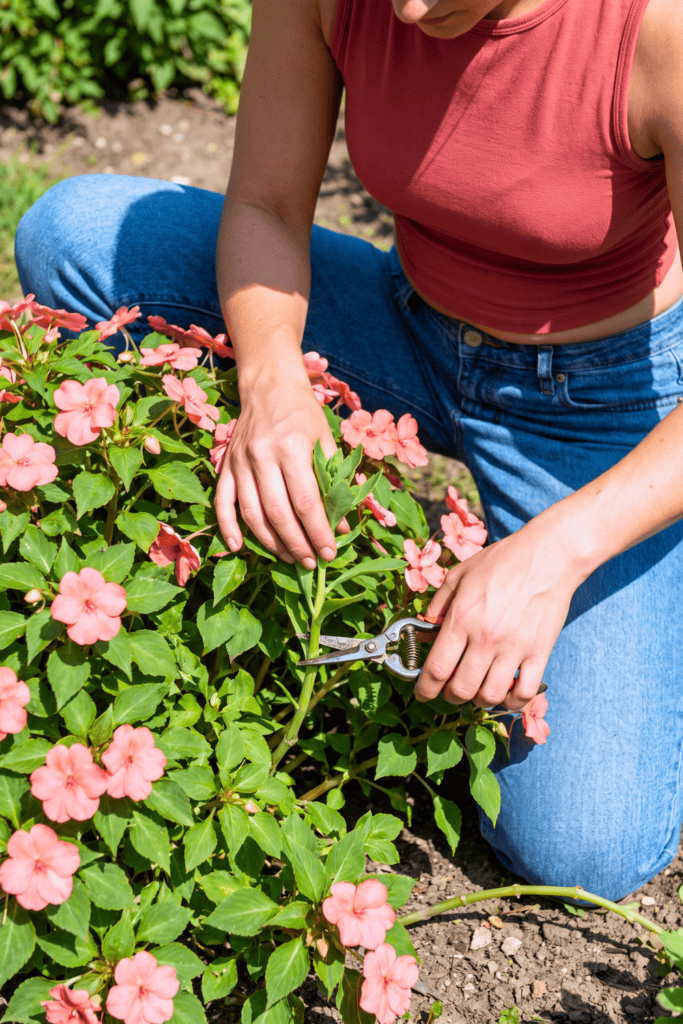
Impatiens are the plants most prone to punish those who assume that they are hard to kill, due to the quick and eager rooting process that convinces people that nothing bad can happen to them and then a few days of watering in a poorly draining container lead to instant destruction of the entire cutting.
The stem should be taken 3-4 inches long from a non-blooming branch, while all lower leaves should be stripped off down to a node. Impatiens have soft and hollow stems that are more prone to rot than woody cuttings and thus need special attention to drainage; use a very light free-draining mix and water moderately – it should be moistened but never wet, otherwise, the entire procedure is useless.
Within 1-2 weeks the roots will become visible, and once rooted the plant should be kept in bright light but no direct sunlight. Higher humidity than in most houseplants is needed, so keeping them near the kitchen or bathroom window could help more than a bright window-sill would. The only thing worth mentioning is the fact that even when well-rooted, the Impatiens cutting will inevitably grow leggy due to the lack of light during the winter time. Pinching off in late winter will solve the problem.
5. Tender Salvias – (Salvia elegans)
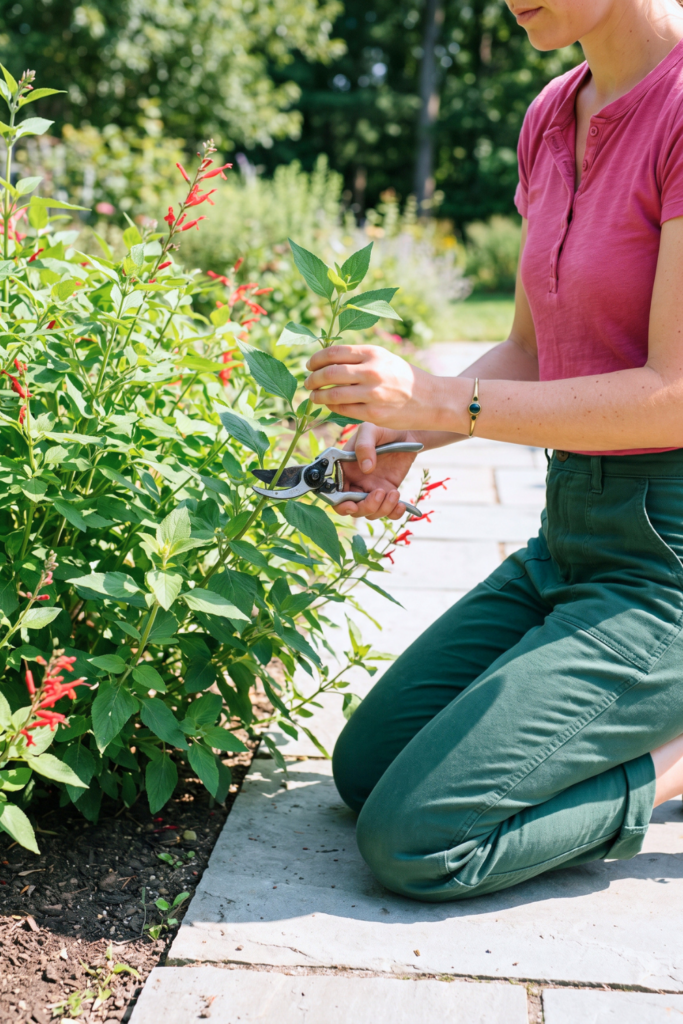
When it comes to salvia, botanical accuracy really matters since there are both a robust perennial withstanding frost well and a delicate one that dies with the first freeze. If you are planting either Salvia elegans or Salvia guaranitica varieties that are not hardy in your region, assume that it is a delicate one and take a cutting right away. Even when you are not sure whether the plant is robust or not, go ahead and take the cutting—it won’t cost you anything to have a spare rooted cutting and lose an original.
Salvias can easily be propagated with stem cuttings from semi-hardwood branches. It is the part of a plant that has passed the stage of flopping, flexible and translucent stems and hasn’t got fully woody. This is exactly that “firm but still bendable” stage that should be checked by touch before you take your scissors. Cut four to six inches of growth under a node, remove bottom leaves and any flowers that could distract the plant.
Salvias will be rooting well in a light, gritty compost soil that should stay just moist enough, as these plants don’t tolerate wet roots neither as adult ones nor as cuttings. They will thrive in bright indirect light rather than direct sunlight at this stage. Rooting will take two to three weeks, after which salvia cuttings grow rapidly and you might need to pinch the grown ones soon after other cuttings on this list.
6. Begonias – (Begonia × tuberhybrida)
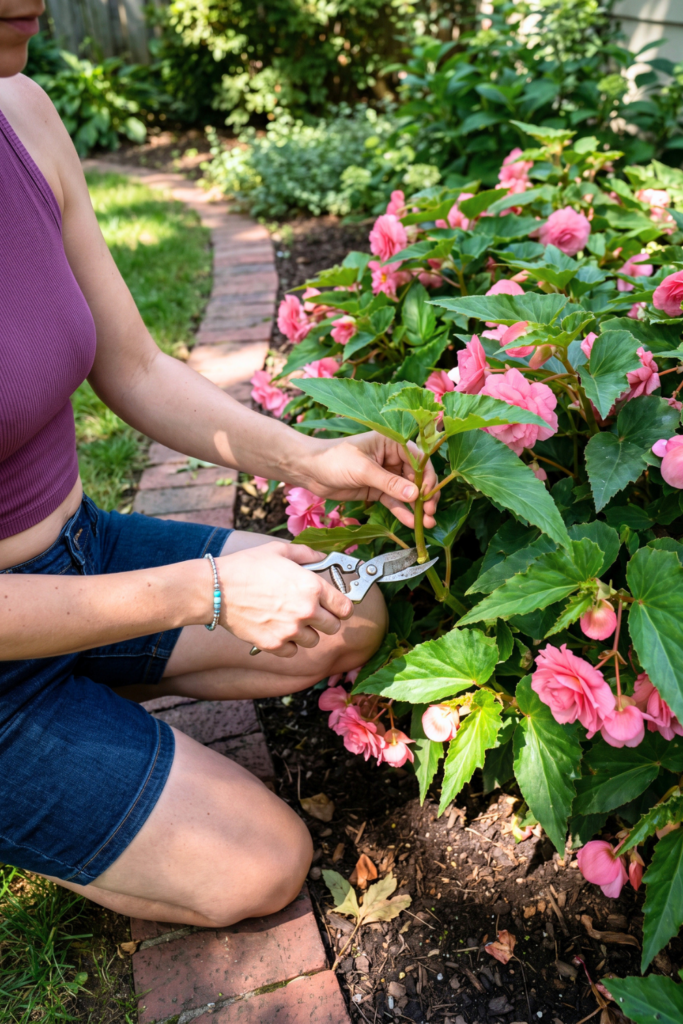
There are essentially two varieties of begonia worthy of your attention in terms of propagation: tuberous begonias that are known for their spectacular blooms and, what is even more important, their extravagance, and the smaller wax or fibrous begonias that have been slowly invading borders across summer. Both are extremely tender in all continental states apart from the warmest ones and are propagated via taking cuttings.
When it comes to wax or fibrous begonias, choose a stem cutting that is three to four inches long, strip off lower leaves, and place into moist and well-draining soil. Both rooting and acclimatization process happens rather fast and does not require many efforts from you—just about two weeks. When it comes to tuberous begonias, some special treatment is needed: stems are rather thick and brittle and tend to snap instead of bend, so it is better to make clean cuts with a sharp knife. Then, let it callus for a while—same way as you would with a pelargonium, since the fleshy nature of stems requires you to prevent rotting.
No matter which variety you choose, be careful about the moisture in the compost—it should be moist but not wet, since begonia stems are soft and store water like succulents do, which makes them highly rot-prone. They also prefer bright, but indirect light and when you notice new leaves growing from the tip, it means that cutting starts living on its own.
7. Lantana – (Lantana Camara)
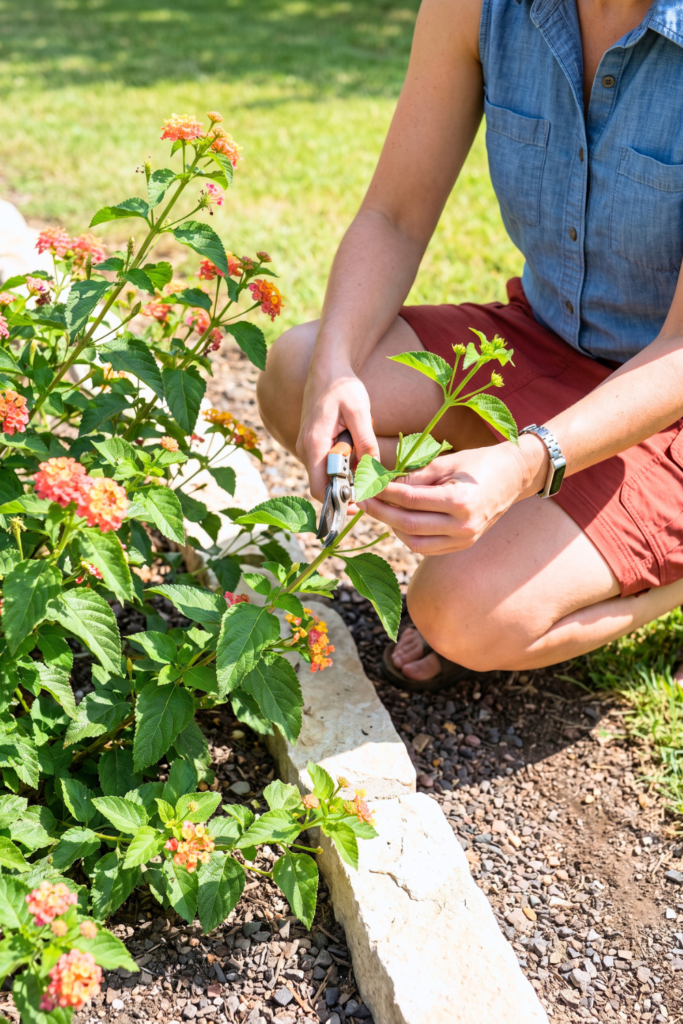
Lantana is one of those plants that even an inexperienced plant propagator can use successfully. This resilient and sun-loving plant takes root from softwood cuttings regardless of your skills, so it would be a good plant to give away to people who have not managed to propagate other plants on this list.
Cut three to four inches long piece of young stem without flowers from the lantana plant. Then strip off the bottom leaves, treat the cut part of the stem with the rooting hormone if you have one (this plant doesn’t require it but this will speed up the process) and plant it in light soil. Keep the soil consistently moist during the first two weeks after planting. Lantana plant becomes lazy and sulky if it had been treated well with the watering in the past when it became a mature plant that should be drought-resistant.
One piece of advice to those who want to propagate the lantana plant: it is considered invasive in some areas of the Deep South, Florida, and Texas where the plant escapes from gardens and competes with native plants there. Therefore, if you live in such area, it would be useful to find out whether lantana is included in the invasive species list of your state before planting them outside of containers.
8. Sweet Potato Vine (Ipomoea batatas)
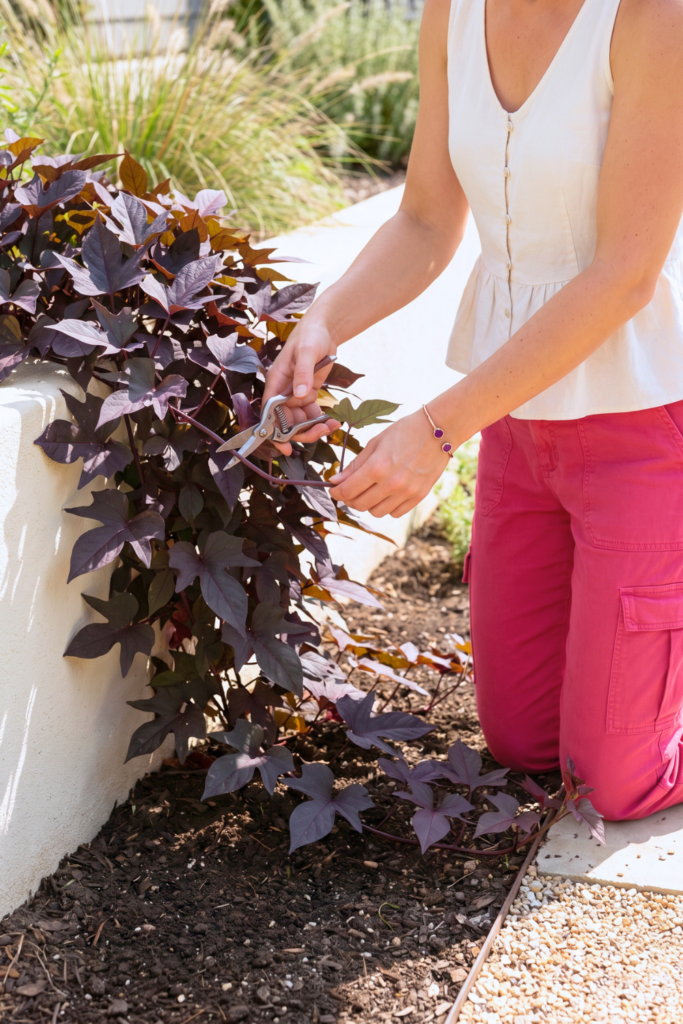
First of all, just so we are clear, this is the decorative plant with showy green leaves or almost black foliage, not the agricultural variety that produces the tubers. Both the same species, but the difference is obvious—they feed your body, while the former fills your garden container from spring till late fall without any reward for the gardener’s efforts.
Easy-going attitude applies to the propagation of sweet potato vines even more than to anything else regarding this ornamental. Take four to six inches long stem cutting, remove the lower half of the leaves, and either plant this cutting directly in the moistened compost, or start rooting it in a jar of water. The sweet potato vine is among those few plants that will root easiest and quickest of all, and roots will emerge in a week or so, if not sooner, and almost invite you to fail!
After planting into the compost, provide regular watering (but no need for too much of it), and a good sunlight exposure—this plant isn’t demanding and is far from being sensitive to small care errors. In case you have used the water method of propagation, it won’t take you long before you have to plant the roots in the soil, as they can’t grow well in the water like real soil roots do. But if it takes you only a day or two of adaptation time, it is perfectly okay!
9. Swedish Ivy – (Plectranthus Verticillatus)
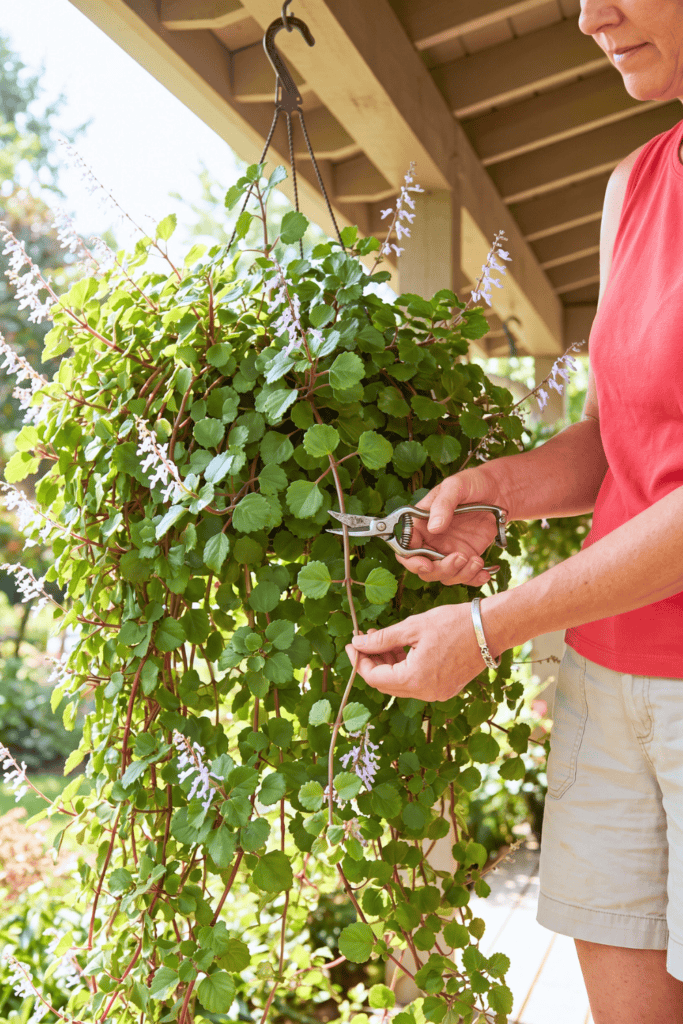
This is also the one most people walk past without even thinking twice about. Plectranthus – known by the name of Swedish Ivy despite the fact that this plant doesn’t belong to the ivy family – has long been decorating porch railings and hanging baskets with its beautiful appearance, and often getting ignored due to the popularity of more colorful species. But this little flower needs more attention, and it’s one of the simplest plants among those described here.
Simply take a 3-4 inches cutting from a healthy stem tip, remove the bottom leaves, and put it into water or moist compost – this time there’s no need to be precise with choosing the way of rooting. Roots should start appearing within 1-2 weeks of planting, with those growing in the water becoming visible through the glass, just like in the case of coleus. These two plants have much in common – their tolerance, their fast-growing ability and the fact that propagation can be an easy experience when it comes to cuttings.
Now plectranthus needs bright but indirect sunlight and slightly moist compost – this one of the few plants described here which tolerate temporary dryness better than others. However, it will reward you with the fastest growing plant of these nine in spring if you provide it with the proper conditions. Pinch back the growth tips once or twice during winter, and what was one lonely plant will soon grow into the lush, trailing plant.
From Cutting to Committed Plant
Successfully propagating each of these cuttings up to this point is tempting because it feels like all the work is behind you, and now everything else should go smoothly. Unfortunately, it does not always do that because the most common reasons why the propagation fails are actually easily avoidable mistakes.
For example, light requirements are crucial. All of these plants require bright and indirect light, rather than either direct sunlight or a dark corner in your house. In case if a place has too little light, you will face leggy growth and stretching, which is particularly frequent for impatiens and coleus. On the contrary, too much direct sun can cause leaf burn due to the inability of a cut to regulate water loss.
It may be surprising to hear, but temperature has an impact as well. Almost all of these cuttings should be kept in temperatures from 60 to 75 degrees Fahrenheit. The reason is that too low temperatures will stop root development in the same way as it would outdoors.
Humidity is the factor where most of the tender perennials fail without anyone even realizing it. Impatiens, fuchsias, and begonias require more humidity compared to what an average heated room offers when autumn arrives. Therefore, placing a plastic bag over the pot or keeping the cuttings in groups increases humidity level of their surroundings without using any additional tools.
Finally, there is a point of failure that everyone makes at some point in the process: overwatering. Instead of being overly moist, compost should be merely damp in order to prevent the development of the type of rot that causes collapsing of the stems and turns them black almost overnight. As a rule of thumb, if you have doubts about whether or not it is time to water the cuttings, just wait until tomorrow.
