


Fig trees in New Jersey and New York backyard can boast of a perfect looking plant all summer long, but unfortunately cannot provide more than a handful of ripe fruit before autumn frosts… The leaves are enormous and the sprouts come out very rapidly during growth… And you wait patiently for the fruit to grow into big and juicy dark purple fruits, but instead they remain as hard, little and green fruits hanging on the branches till first frosts of October kill them! It is frustrating after taking care of this poor thing since spring!
In most cases, the real trouble started long ago, back when the weather hit its coldest point. Indeed, very low temperatures kill branches above ground and force the tree to develop new wood from scratch. As a result, although this vegetation seems very healthy and flourishing, it simply does not have enough time to mature and ripen fruit during summer!
But the Italian families that brought this fantastic tree species to America 100 years ago perfectly knew about this risk, and were determined to save them! In November, after all leaves fell from branches, grandpas covered each branch in burlap, protected it by putting the sheet of tar paper and covering it with the old buckets, or bending it into trenches and leaving buried until Easter day! Even if this was funny to watch… These amazing plants kept giving fruit year after year…
Why Your Fig Comes Back Every Spring but Never Fruits

The fig is a Mediterranean tree after all, and its wood certainly does not tolerate the harsh conditions in January in the Northeast region, right? Well, the University of Maryland Extension says that damage occurs around 20°F! Indeed, if temperatures drop lower for several hours or days, all above ground stems freeze! However, the case of Chicago Hardy, which can withstand root freezing to -20°F, still has only its stems hardy up to 10°F… So how does this tree survive?!
Because it regrows from the bottom! See, figs ripen their primary harvest on stems that developed within the current year, and those will already be growing on the tree trunk. But those that emerge directly from the roots will start later, put all the effort into recovery, and run out of summer time before completing the ripening process. Moreover, the breba figs develop on last year’s stems and disappear!
A single freeze during what would normally have been a mild winter means that there goes this season! In addition, it appears that your Brown Turkey purchased from the local big box store might not be so resistant to freezes…
A Backyard Ritual Carried Over From Southern Italy

As Italians came into Brooklyn in the beginning of 1900’s, most of them came with fig cuttings, part of the homeland that they wanted to carry along into their journey. Indeed, the trees soon started to be planted in small gardens in Carroll Gardens, Bensonhurst, and Dyker Heights, in Trenton’s Chambersburg in New Jersey and, above all, endured winter weather much tougher than in their native provinces of Calabria and Sicily.
So they adapted… And many natives of these areas recall how unusual structures they could spot during late autumn month: high bundles made of burlap covered in black tar paper, with buckets hanging upside down at the top. There is even more extreme method of saving trees used by some grandparents: total burial underground! A local grower from Abruzzo recalls his younger brother digging long trenches, and people nearby thought that he was hiding something illegal…
But when Easter came, everything returned to normal, literally.
When to Wrap (Timing Matters More Than Materials)
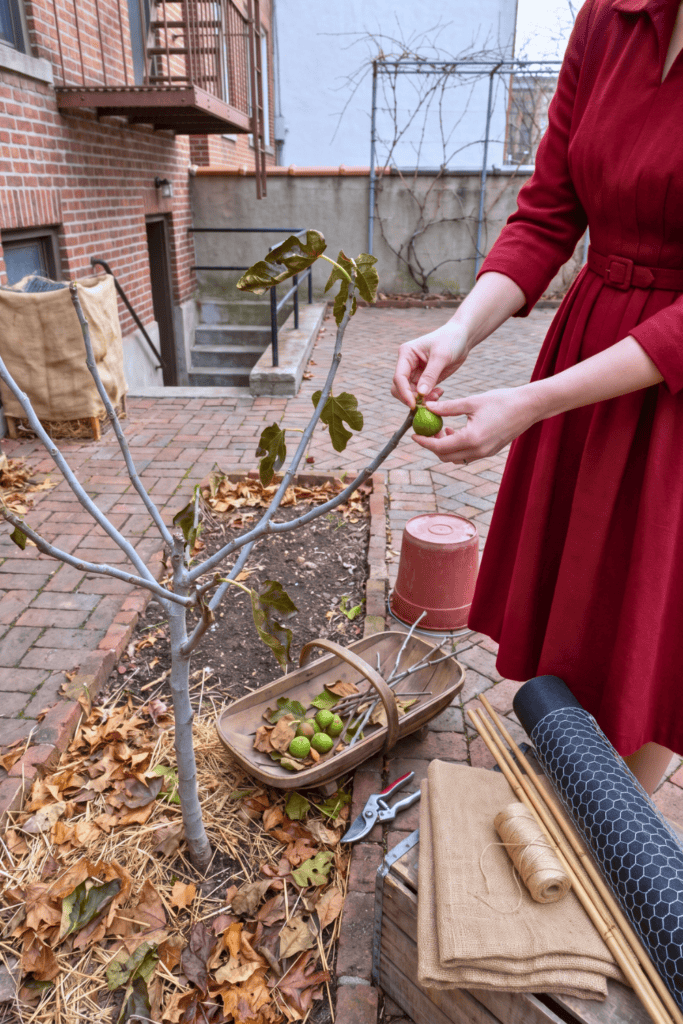
Wrap prematurely, and your tree will end up inside when it is still in full activity! Better wait till it drops its leaves, and several freezes happen, preferably between -4 °C / 25 °F and -2 °C / 28 °F. According to New Jersey’s Rutgers Master Gardeners, Thanksgiving Day marks this point! Experienced gardeners might wait for a little longer period until temperatures reach those levels.
Burying requires slightly different timing – watch out to ensure that trenches for planting can be made prior to the soil freezing!
Prior to wrapping, remove any left fig leaves and hard green figs, which otherwise might decompose in the wrapping material, and prune overly long branches.
Method One: The Burlap Wrap
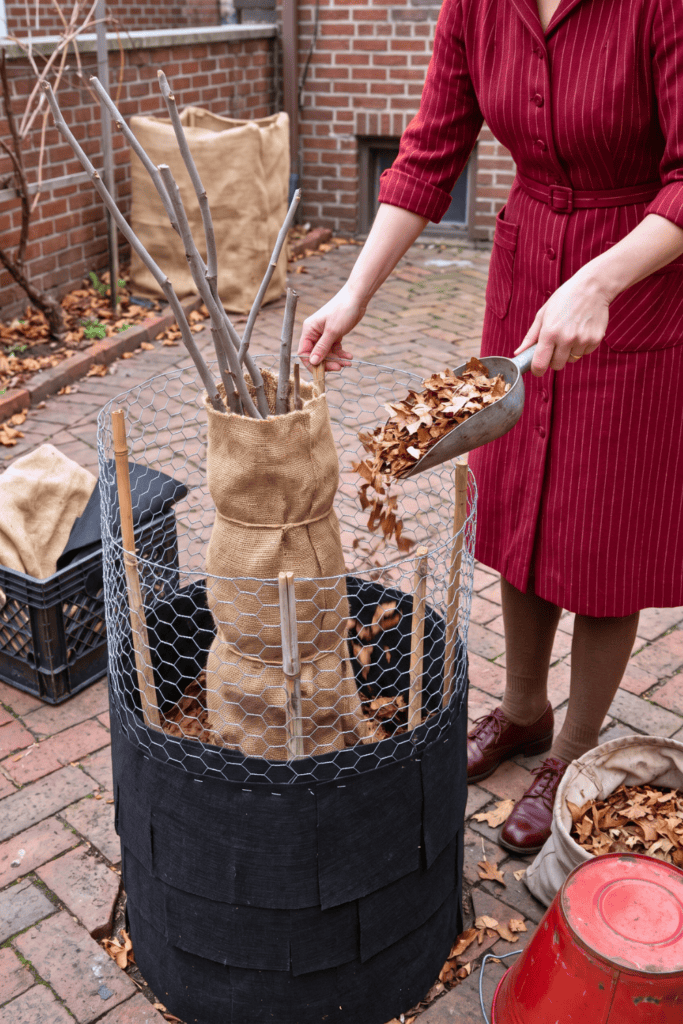
Indeed, it must be the most popular technique of protecting figs from winter frost damage – at least it is what the Brooklyn Botanic Garden adopted after their plants suffered severe damage for two consecutive years when temperatures dropped far below freezing point.
What you’ll need:
- Jute twine
- Burlap (roughly 60 square feet for an 8-foot tree)
- Chicken wire, enough to circle the tree
- Shredded leaves (about one lawn bag per tree; running a mower over raked leaves does the job)
- Tar paper or roofing felt
- An old bucket
- A staple gun
The process starts by placing a thick mulch layer under the plant, which consists of composted leaves or straw, to cover the roots. The branches should then be tied together upwards with the help of jute twine. Please note that figs bend much better than expected! Next, wrap the bunch with burlap material, fastening tightly where necessary.
Following this step, install a cylinder made out of chicken wire around your plant and pack the space between the branches and chicken wire with composted leaves. Cover this frame with tar paper, wrapping the material nicely around the branches. The reason behind this is the fact that while it sheds rainwater effectively, it does allow some airflow as well. Finally, place an inverted bucket on top and secure edges under it using the tar paper layer. To finish everything properly, place burlap material once again.
As mentioned above, most likely this will be sufficient enough protection for most winters, although dieback might occur occasionally.
Method Two: Bury It the Way Nonno Did
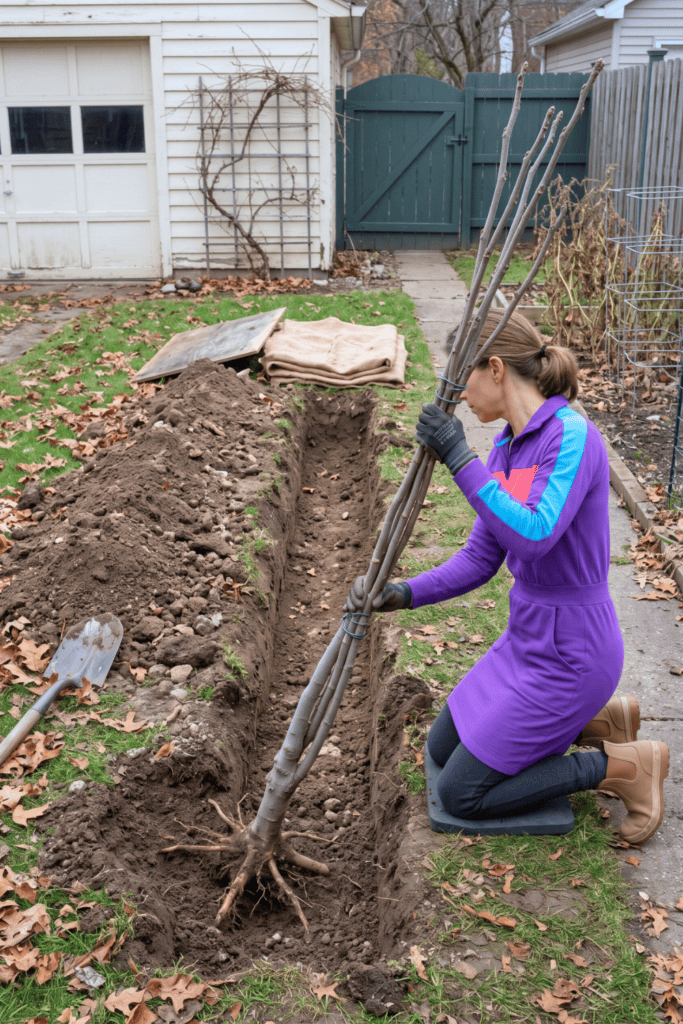
Planting takes effort but that is what the experienced gardeners used, as explained so wonderfully by Mary Menniti from The Italian Garden Project: only the specimens buried underground survived throughout winters when temperatures went low enough!
Firstly, dig a hole starting at the base of the tree and extend it horizontally according to its height; it must go deep enough – about 2 feet is recommended here. Secondly, tie the branches tightly together; Michele Vaccaro, a grower from Calabria, showed NPR News Service Team his procedure using the help of an electrical wire left after work. Thirdly, prune rootlets on the opposite side of the hole and then gently tip it inside; this action will cause breaking of some smaller roots, which is acceptable but main roots should stay connected!
The whole process involves wrapping up the specimen in breathable material and then covering the latter with sheets of plywood, topped up by soil, mulch and even leaves or straws – Michele Vaccaro covered his plantings with waste materials from last year gardening season.
All in all, it works great on young and thin stemmed trees because they tend to bend easily rather than break under pressure.
The Mistakes That Kill a Wrapped Fig
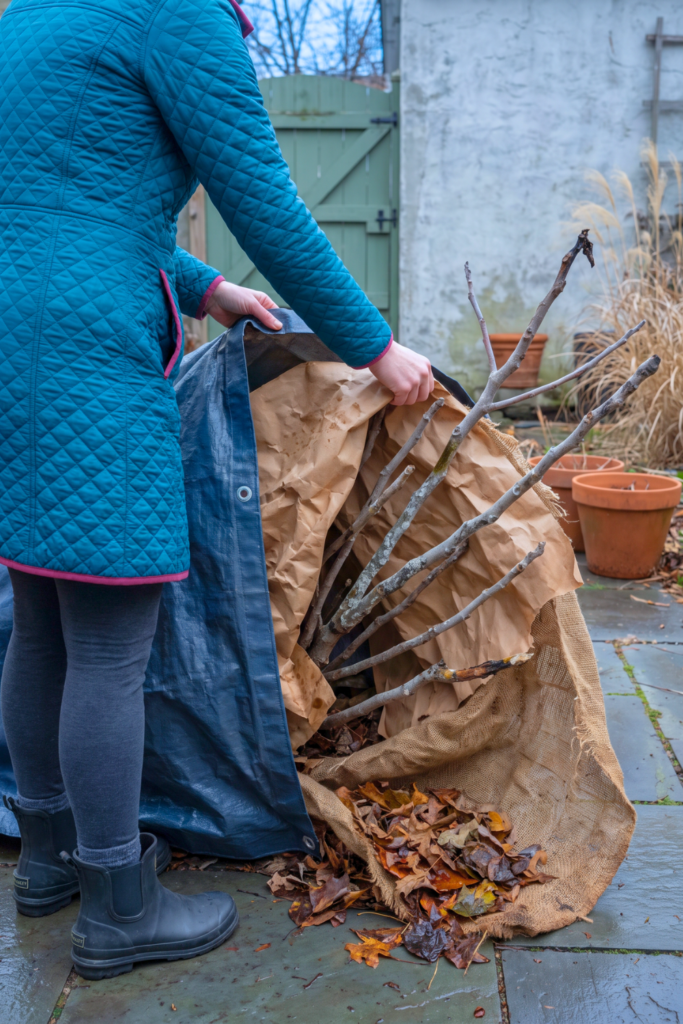
The most popular material used is definitely plastic… It appears to make perfect sense in terms of keeping the figs safe from moisture. However, the thing is that this method keeps all the humidity inside the wrapping and when it starts getting warm… That is where troubles begin! A grower in Philadelphia used burlap, brown paper and tarp to cover his/her Brown Turkey. Unwrapping took place in early March. The result was a shocking discovery: fungus covered all branches; trees were literally dead! As Penn State says: use only breathable materials!
And wet stuffing materials lead to similar problems. Any leaves put inside the figs in such conditions remain wet, which eventually causes the development of fungi that harm not only the stuffings themselves, but also the branches. Make sure you gather all the stuff in dry weather.
Last, but not least: there are also mice… A nice comfy heap of mulch becomes their favorite winter nest, and next thing you know – they start eating the bark! One fig grower from Virginia recommends against applying mulch before late December to solve this issue!
Unwrapping in Spring Without Losing It to a Late Frost

Wrapped fig trees become available towards late March, when harsh winter temperatures have already started fading away! On such occasion, choose the cloudiest possible day because those specimens that remain inside the protective wrapping until that moment appreciate shade conditions. Meanwhile, buried fig trees are raised later and appear somewhere during late April or early May!
Do not worry too much if new sprouts appear whitish or pale; a grower who removes wrapping around Easter reports that his/her figs become fully green after just a couple of days.
Wait for the swelling buds before making any pruning move and then remove only the parts which have definitely died… The healthy branches are carrying next summer’s delicious fruits anyway!
A Living Heirloom Worth the Trouble
Well, Mary Menniti has preserved her grandfather’s last fig until now. And indeed, this plant can become a sort of a legacy, because that is the essence of this whole tradition. Just one day spent in November will get you a plant that comes alive again in springtime with all its branches healthy, bearing its fruits ripe in August. Old people are already pruning them in Brooklyn at the moment… So go ahead and join them…
