


For every gardener with a dog stretched out in the sun or a cat weaving through the borders, there’s a question no seed packet ever answers: what happens if they take a bite? It’s the kind of worry that shrinks a garden down before it’s even planted, ruling out anything with real presence in favor of whatever feels safest by default.
The good news: safe and stunning were never actually opposites. There are perennials built for exactly this life — tolerant of curious paws, some even better for the traffic, and every one of them completely non-toxic from root to bloom. This isn’t the usual spider-plant-and-plain-daisy shortlist, either. Think the towering purple spikes of Blazing Star, or foliage that shifts through ruby red, fiery crimson, and bright gold across the seasons. A pet-friendly yard was never meant to be a barren one.
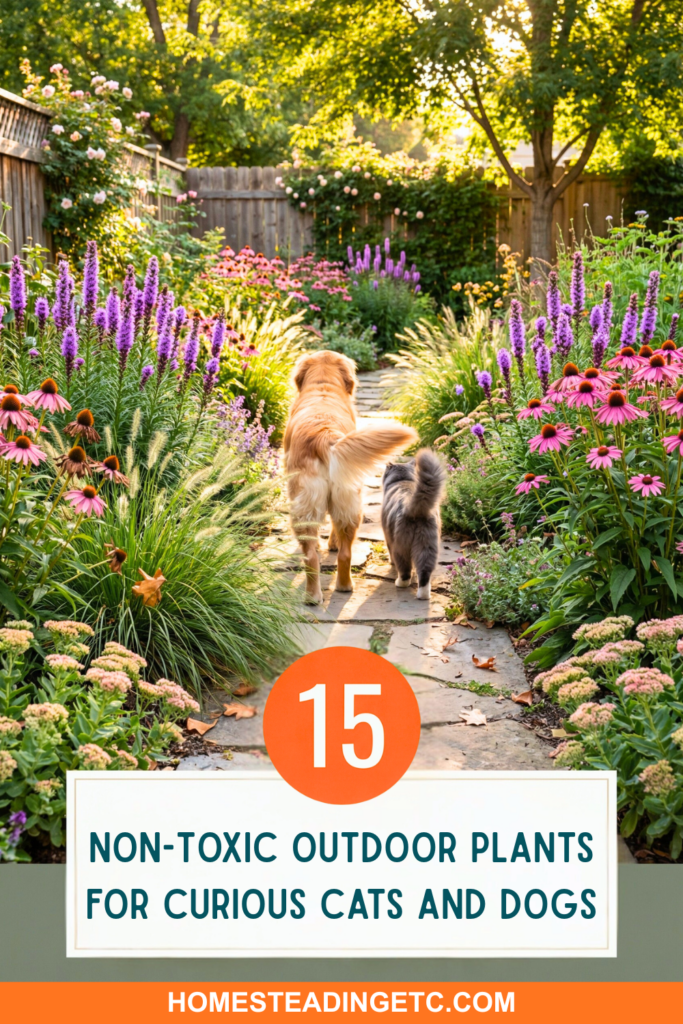
Let’s be honest, though: most “safe” plant lists feel basic and uninspired, the same handful of plants turning up in yard after yard. These 15 perennials are different. They bring real texture, structure, and color to your beds, while finally letting you relax in your own backyard.
We’ll start with one of the more unexpected finds on the list.
1. Pink Turtlehead (Chelone lyonii)

Look closely at the blooms and you’ll see exactly where the common name comes from: vibrant pink flowers shaped like little snapping turtle heads, adding a totally unique, architectural shape to your garden beds. Even if your curious dog or cat decides to take a playful bite out of the leaves or flowers, you can relax knowing this plant is completely free of harmful compounds. It thrives in moist soils and brings a high-end, boutique feel to those tricky wet spots in your yard without causing you a single moment of anxiety.
- USDA Hardiness Zones: 3 – 8
- Sun Exposure: Full sun to partial shade
- Water Needs: Prefers consistently moist soil
- Pet Safety: Unlike many ornamental garden flowers, this plant is completely free of harmful alkaloids, meaning a chewed leaf or bloom won’t cause mouth irritation, vomiting, or stomach upset for your pets.
2. Blanket Flower (Gaillardia × grandiflora)

Tiny sunsets scattered across the border — that’s the effect of this cheerful, sun-loving perennial’s warm, two-toned daisy blooms in fiery red and gold, bringing bold color to even the driest, most neglected corners of your yard. It thrives on heat and neglect where fussier perennials give up, blooming in relentless waves from early summer clear through fall. Your dog can wander through the blooms and your cat can settle in nearby without any real cause for concern, though the fuzzy leaves and stems are worth knowing about.
- USDA Hardiness Zones: 3 – 10
- Sun Exposure: Full sun
- Water Needs: Low; highly drought-tolerant once established
- Pet Safety: This isn’t a toxic plant, but the hairy leaves and stems can mildly irritate the mouth or skin of a pet that chews on or rubs against them directly — a quick rinse clears it up, and it’s nothing like the systemic risk posed by true toxic ornamentals.
3. Sea Thrift (Armeria maritima)

Bright pink pom-poms hover on delicate stems above tight, grassy green mounds — an adorable, whimsical look with just enough structure to anchor a bed. Your dog or cat can happily roll around or sniff these charming coastal natives without you worrying about sudden illness or skin irritation. They are incredibly tough against harsh climates and poor soils, making them a low-maintenance, high-end dream for rock gardens and modern edging.
- USDA Hardiness Zones: 3 – 9
- Sun Exposure: Full sun
- Water Needs: Low; requires well-drained soil
- Pet Safety: You won’t find the toxic glycosides or harmful essential oils typical of many spring-blooming bulbs here; both the grassy foliage and the pink flowers are perfectly safe for curious chewers.
4. Creeping Phlox (Phlox subulata)

Bare slopes and tired retaining walls practically beg for this one: a native groundcover that cascades into a literal carpet of star-shaped flowers, transforming dead space into a massive splash of spring color. Your dogs can confidently sprint right over this durable groundcover, and your cats can lounge in it all afternoon, without you ever having to stress about dangerous sap or toxic foliage. It establishes quickly to suppress weeds and provides that sought-after, designer-level texture to your landscape edges while asking for almost nothing in return.
- USDA Hardiness Zones: 3 – 9
- Sun Exposure: Full sun
- Water Needs: Moderate; thrives in well-drained soils
- Pet Safety: It lacks the dangerous saponins found in aggressive, toxic groundcovers (like English Ivy), so it won’t trigger gastrointestinal distress or skin rashes if your pets dig through the flowering mats.
5. Blue-Eyed Grass (Sisyrinchium angustifolium)

Don’t let the name fool you; this miniature iris relative produces stunning, star-shaped purple-blue flowers that add a delicate, meadow-like texture to your yard without looking unruly or messy. As your feline and canine companions patrol the yard, they can safely brush against or nibble these clump-forming beauties without you worrying about the dangerous bulb compounds found in many other spring bloomers. It delivers that highly sought-after, naturalistic boutique vibe to your borders and rock gardens while keeping your outdoor sanctuary entirely stress-free.
- USDA Hardiness Zones: 4 – 9
- Sun Exposure: Full sun to partial shade
- Water Needs: Moderate; prefers consistently moist but well-drained soil
- Pet Safety: Although it is related to the iris family, it does not contain the high concentrations of toxic irisin found in traditional iris rhizomes, making it a safe alternative for dogs that love to dig.
6. Foamflower (Tiarella cordifolia)

Shady corners are usually where gardens go to die, but this woodland native thrives there, offering beautifully textured, maple-like leaves and delicate spikes of frothy white blooms. You won’t have to panic if your cat decides to bat at the fluffy flower stems or your dog lounges in the foliage, as it lacks the dangerous compounds found in many popular shade lovers. It creates a lush, high-end carpet under trees and shrubs, proving that you don’t need to rely on basic, unsafe options to brighten up the darker areas of your landscape.
- USDA Hardiness Zones: 3 – 8
- Sun Exposure: Partial to full shade
- Water Needs: Moderate; prefers consistently moist, rich soil
- Pet Safety: This plant is completely devoid of the dangerous cardiac glycosides found in toxic shade favorites like Lily of the Valley, ensuring zero risk of heart issues if your pet takes a bite.
7. Tennessee Coneflower (Echinacea tennesseensis)

Once found only in a handful of Tennessee cedar glades, this rare native now brings its distinctive, upturned pink petals and dark, spiky centers to sunny borders everywhere. You can let your dogs romp through the garden and your cats brush against the sturdy stems without a second thought, as the entire plant is completely free of dangerous toxins. It brings a highly sought-after, sophisticated prairie aesthetic to your landscape while enduring fierce summer heat and demanding absolutely zero compromises on pet safety.
- USDA Hardiness Zones: 5 – 9
- Sun Exposure: Full sun
- Water Needs: Low; highly drought-tolerant once established
- Pet Safety: This native prairie flower does not produce the irritating saps or toxic pyrrolizidine alkaloids found in many daisy-like wild plants, keeping your pet’s liver and digestive tract totally safe.
8. Blazing Star (Liatris spicata)

Think fireworks frozen mid-launch: this native prairie perennial sends up dramatic, dense purple spikes that give your border a vertical drama nothing else on this list attempts. Butterflies and bees can’t resist the tall blooming wands, and neither can your eye. Best of all, if your dog brushes past the spikes or your cat bats at a fallen bloom, there’s nothing here to worry about — this is one of the rare garden flowers the ASPCA names directly on its own list of pet-safe options.
- USDA Hardiness Zones: 3 – 8
- Sun Exposure: Full sun
- Water Needs: Moderate; prefers well-drained soil, tolerates some drought once established
- Pet Safety: Blazing Star is one of the few garden perennials the ASPCA calls out by name as non-toxic, so a curious nibble from your dog or cat won’t trigger a trip to the vet.
9. Hardy Ice Plant (Delosperma cooperi)
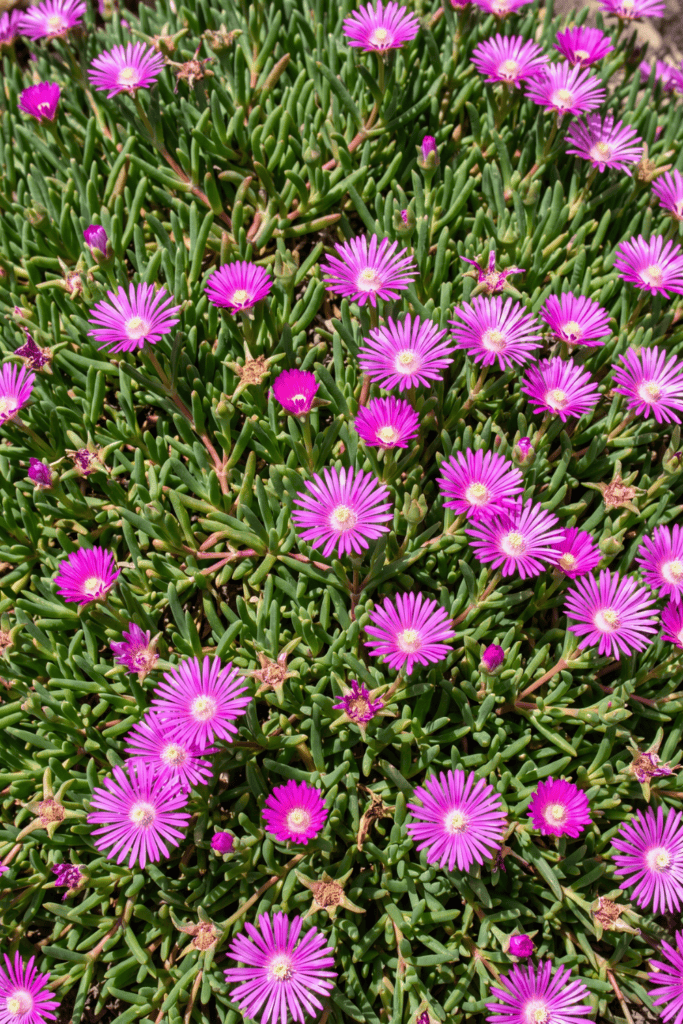
Drought-tough doesn’t have to mean dull — this succulent perennial explodes with neon, daisy-like flowers, delivering a massive, eye-catching splash of color to any sunny spot. Its fleshy leaves and iridescent blooms are entirely free of the toxic saps found in many other succulents, making it perfectly harmless if your dog or cat takes a curious nibble. It thrives in intense summer heat and creates a brilliant, textured carpet for your rock gardens while letting your furry friends explore without any risk.
- USDA Hardiness Zones: 6 – 10
- Sun Exposure: Full sun
- Water Needs: Low; highly drought-tolerant once established
- Pet Safety: Unlike several popular succulents that carry dangerous calcium oxalates capable of burning a pet’s mouth and throat, this fleshy groundcover has no documented toxic compounds — it belongs to the same succulent family as the ice plants on the ASPCA’s non-toxic list, and shares their harmless chemistry.
10. Scarlet Bee Balm (Monarda didyma)

Hummingbirds find this one before you even notice it’s blooming: a vibrant, tubular flower in fiery red that brings a striking pop of color and a high-end, structural look to summer borders. Even if your dog excitedly plows through the fragrant foliage or your cat takes a curious bite of a fallen bloom, you can breathe easy knowing the entire plant is harmless. It delivers that wild, architectural boutique aesthetic you crave while thriving in the summer heat without ever making your backyard a hazard for your furry family members.
- USDA Hardiness Zones: 4 – 9
- Sun Exposure: Full sun to partial shade
- Water Needs: Moderate; prefers consistently moist, well-drained soil
- Pet Safety: While some aromatic plants (like pennyroyal) contain strong essential oils that can cause liver damage in dogs and cats, the oils in this specific mint relative are entirely non-toxic.
11. False Goat’s Beard (Astilbe biternata)

Feathery, massive, and unmistakably elegant, the white plumes of this towering native perennial bring a soft texture to shaded landscapes that few shade plants can match. If your dog loves to nap under its lush, fern-like foliage or your cat bats at the fluffy blooming spires, you can relax knowing the entire plant is entirely non-toxic. It provides that highly desirable, sophisticated woodland look without forcing you to rely on dangerous shade plants that threaten your pets’ health.
- USDA Hardiness Zones: 4 – 8
- Sun Exposure: Partial to full shade
- Water Needs: Moderate to high; requires consistently moist soil
- Pet Safety: It poses no threat of severe poisoning or sudden heart arrhythmias because it completely lacks the deadly chemical compounds found in other feathery shade plants like Foxglove.
12. Creeping Thyme (Thymus serpyllum)

Crush a leaf between your fingers and you’ll catch the fragrance before you even notice the flowers — this durable, low-growing groundcover forms a dense mat that explodes into a sea of purple-pink blooms come early summer. Your dog can happily sprint right over it along a stone walkway, and your cat can lounge in the sun-warmed foliage without you having a single moment of panic. It acts as a brilliant, high-end alternative to traditional grass, giving your yard that sought-after cottage garden aesthetic while standing up beautifully to heavy pet traffic.
- USDA Hardiness Zones: 4 – 9
- Sun Exposure: Full sun
- Water Needs: Low; highly drought-tolerant once established
- Pet Safety: This fragrant herb is free of the dangerous triterpenoid saponins that cause intense vomiting and abdominal pain, making it a perfectly safe, walkable carpet for paws.
13. Hens and Chicks (Sempervivum tectorum)

Stack a handful of these fleshy, geometric rosettes into a rock garden or along a stone wall, and the whole space suddenly looks intentional and modern. You can let your curious pets sniff and explore these tight clusters without a second thought, as they are completely free of the dangerous compounds found in other popular succulents. They multiply effortlessly to fill in bare, rocky gaps, giving your landscape that high-end, boutique desert aesthetic without causing you a moment of worry.
- USDA Hardiness Zones: 3 – 8
- Sun Exposure: Full sun
- Water Needs: Low; requires excellent drainage
- Pet Safety: These geometric rosettes completely lack the toxic principles and harmful saps found in dangerous household succulents like jade plants, aloe, or string of pearls.
14. Lanceleaf Coreopsis (Coreopsis lanceolata)

Golden-yellow waves are the whole point of this cheerful native wildflower, brightening sunny borders and meadow gardens with a wild, high-end prairie aesthetic. You can let your dogs run freely through the swaying stems and your cats lounge nearby without a single worry, as the entire plant is completely free of hidden toxins. It thrives in poor, rocky soils and blooms profusely all summer long, proving you don’t need fussy, dangerous plants to achieve a vibrant, magazine-worthy landscape.
- USDA Hardiness Zones: 4 – 9
- Sun Exposure: Full sun
- Water Needs: Low to moderate; highly drought-tolerant once established
- Pet Safety: It entirely lacks the blistering agent ranunculin found in toxic yellow bloomers like buttercups, so a chewed petal won’t cause excessive drooling or painful mouth ulcers.
15. Cinnamon Fern (Osmundastrum cinnamomeum)
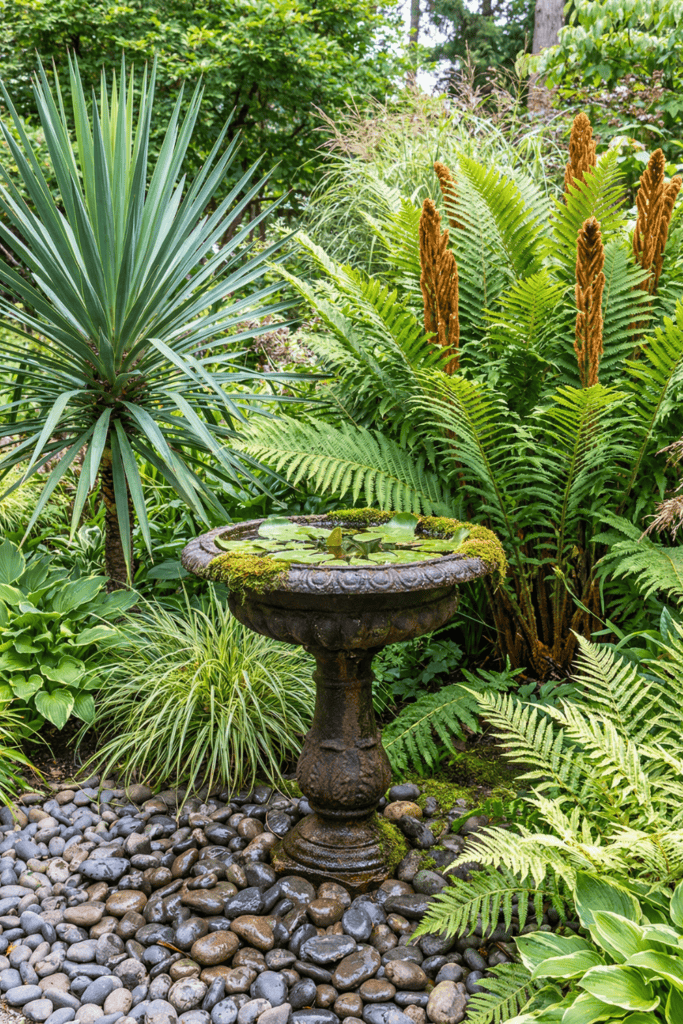
There’s something almost prehistoric about this towering native fern, its dramatic cinnamon-colored center fronds bringing a lush, ancient texture to the shaded, wet corners of your garden. If your cat loves to bat at the fuzzy fiddleheads in the spring or your dog enjoys napping under the massive green canopy all summer, you can completely relax knowing the entire plant is harmless. It delivers that highly sought-after, high-end woodland aesthetic to your shady borders and water features without forcing you to rely on dangerous, toxic foliage to achieve it.
- USDA Hardiness Zones: 3 – 9
- Sun Exposure: Partial shade to full shade
- Water Needs: High; thrives in consistently wet or boggy soils
- Pet Safety: Unlike the toxic Bracken Fern, this majestic native plant completely lacks carcinogenic ptaquilosides and thiaminase enzymes, preventing severe poisoning or sudden vitamin B1 deficiency in your animals.
So, Which One Goes In First?
That’s 15 ways to stop wondering and start planting. None of them ask you to fence off a corner of the yard or watch the door every time your dog wanders outside. A garden and a pet were never meant to compete for the same space — and now, whichever of these makes it into your beds first, you already know the answer to that question from the very beginning: nothing to worry about, no matter how curious the nose or paw.
