


There must be such a gardener somewhere near your place who gets his/her mums every year back in fall – growing stronger, fuller and healthier than ever before! Without any trips to a local nursery! While yours end up at the curb side come November, like roasted toast on stakes! Frustrating, right? Because, chances are high that you got the same kind of mums last year, from the same display rack as well!
But no one at the cashier line told you that! That brown mess sitting now inside a bag? Chances are higher again, that it is still a very much alive plant, just waiting to start its life anew next year! You just have to pull those dry stalks apart slightly and peek down underneath them… See that circle of green sprouts there?
Now, what makes your neighbor different from everyone else? Not just that he/she is an expert gardener, with a magic touch for growing plants; but, mostly, the fact that there are several tasks that can save your mums’ lives – if done in the coming weeks, before the ground freezes for good. Once this opportunity goes away…
Of course, not every mum is worth saving, that is certain… Some are best left alone, for the waste basket; others – you must take action with immediately.
First, the Part the Garden Center Leaves Out
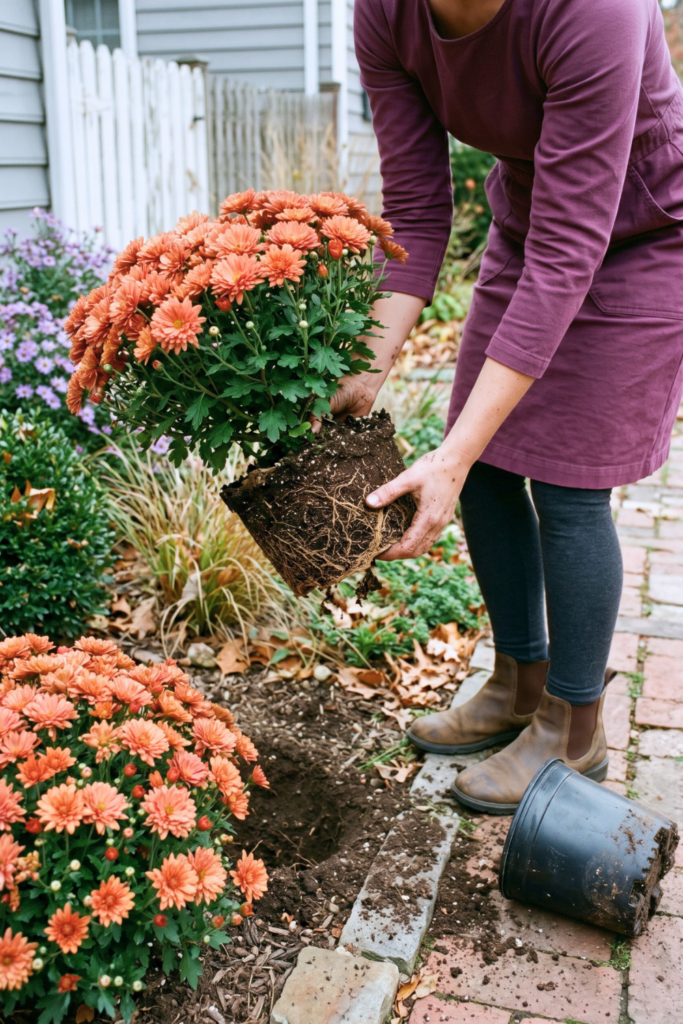
Well, before jumping right in with our tips and recommendations, it might help to learn why these plants rarely make good returns year after year, even when treated nicely! Indeed, it turns out it has little to do with how diligent you were while caring for these pretty flowers!
Fall blooming chrysanthemums sold everywhere by the thousands at stores in September are already fully developed and in bloom. A blooming flower simply doesn’t put much effort in developing its root system! According to Virginia Cooperative Extension, such plants – those whose peak moment of blooming occurred in late autumn, and which are then put to earth right away – rarely survive winter. Roots should form prior to freezing soil, which would put the planting period at end of August or early September. When do people buy them, anyway? Not usually!
Therefore, if your mums were potted in late October, or if they’re still staying put in their nursery containers… they already start off winter disadvantaged. Don’t get upset – it does not mean anything bad about yourself, and that’s why it makes it necessary to consider our next advice very carefully!
1. Work Out Which Kind of Mum You Have
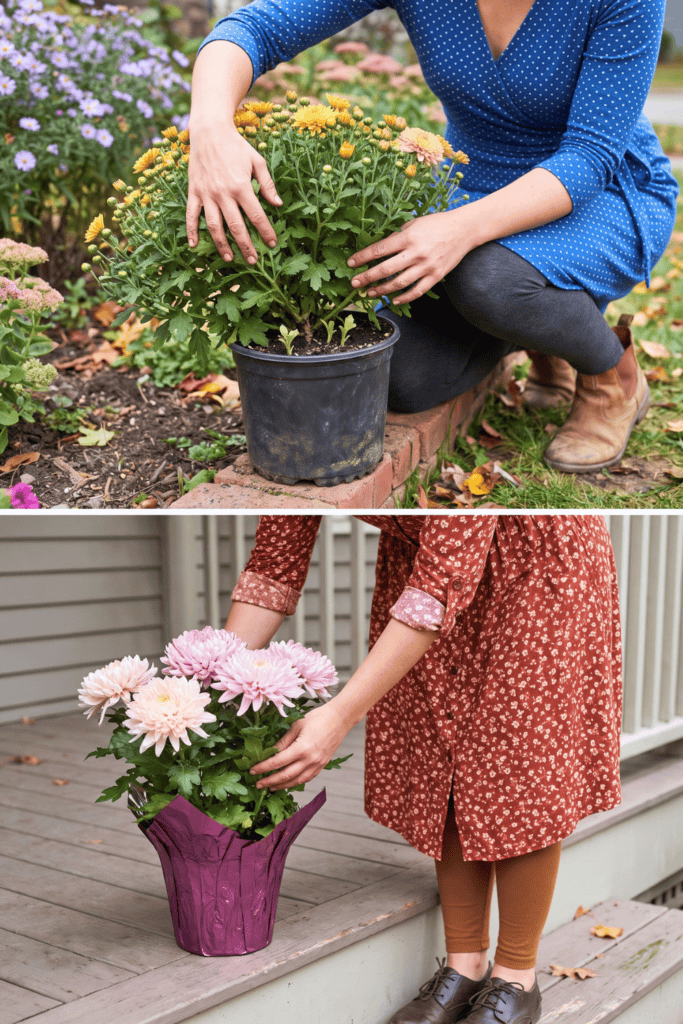
These mum plants all seem alike, but two are entirely different – and only one is really worth getting!
There are hardy garden mum plants, and then there are florist mums: Both are named mums but couldn’t be more different! Garden mums appear every autumn at your local nursery center, lined up in dozens. You might know them better as “hardy.” On the contrary, florists’ types come from florists: Wrapped into beautiful foils and placed among those huge blooms in stores’ florals sections. They are all grown differently. Florists’ types never tolerate the cold weather anyway; they were created to decorate indoor spaces, so their root system remains delicate and shallow.
So how do you choose? Well, if the label got lost along the way, you may look inside your plant and observe its stem ends, which should reveal whether or not it survives outdoors! If you spot new buds growing from the surface of soil, your plant lives! Otherwise, without a label, buds, roots already dead and wrapped up nicely for you, you can throw it away as soon as frost kills it…
2. Keep Watering Until the Ground Freezes
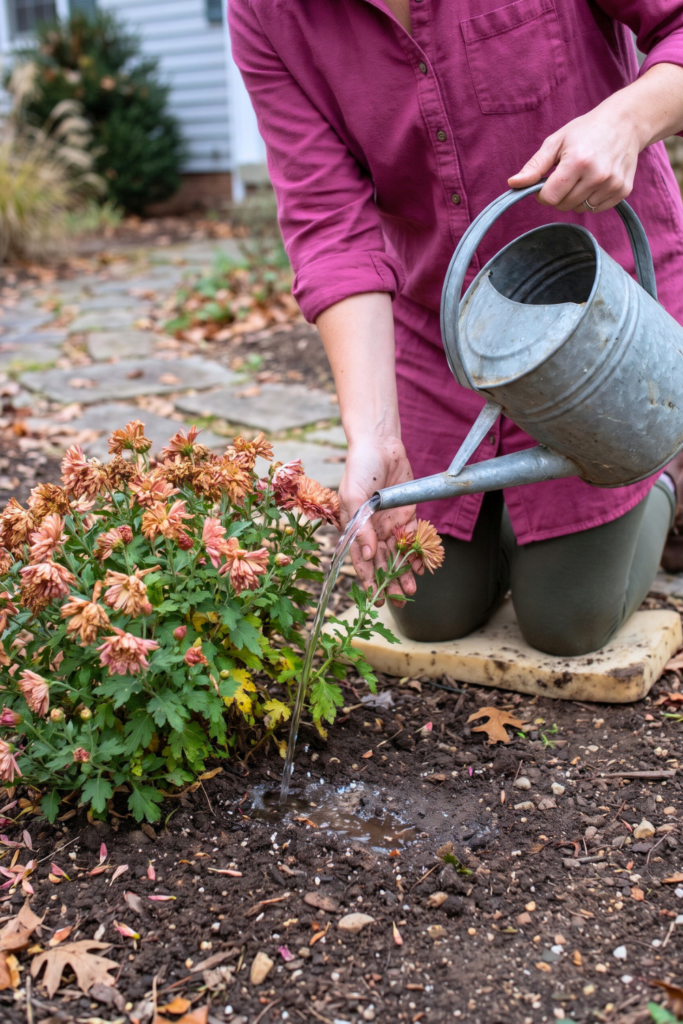
Mums should be watered again until there is the first killing frost of winter since once the flowers brown most people store away their watering can, and at this point many mum plants die unnecessarily. The weeks after bloom matter more than most people expect, which is just as true when you care for alliums after flowering.
Although the foliage of mums dies down in autumn, the roots remain very active while the plant remains alive and thriving inside its container or planting hole. The soil surrounding these roots tends to be very tightly compacted with root material, thus causing all excess irrigation water to simply drain out of it quickly.
According to advice offered by Virginia Cooperative Extension, irrigation should continue until the first frost, after which water application should gradually lessen until winter arrives. Entering the winter season with absolutely dry root zones is a serious risk factor, thus during dry weather periods irrigation must take place.
No schedule is necessary here since checking soil dryness manually with fingers is sufficient enough to determine whether irrigation should occur or not. Ensure the plant is watered until it is saturated, without being oversaturated, as both extremes are harmful to the mum plant’s crown.
3. Leave the Stems On
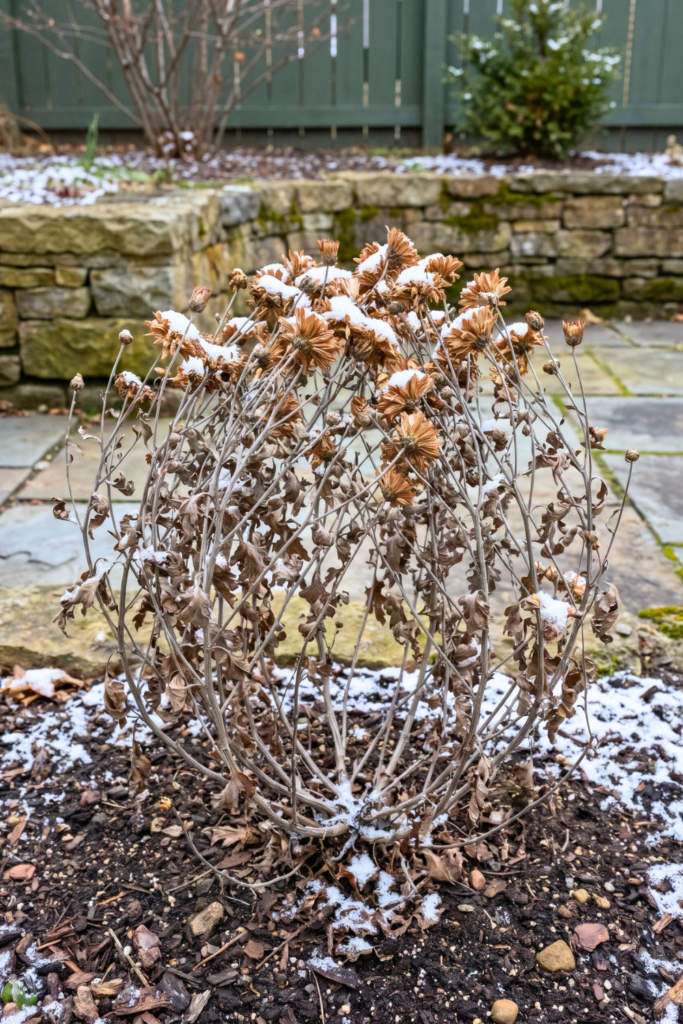
It goes against all logic and tidiness instincts, but trust me when I say that you don’t need to chop down that brown mess immediately after winter starts. This couldn’t be further from the truth for mums planted that year. The reason is quite simple – those dead stalks aren’t simply there to look unsightly but actually protect your plant. These dead stalks act almost as an enclosure, collecting fallen leaves and snow on the crowns of your plants.
Research backs this theory. The largest mum breeder in America did field testing and discovered that plants with dead stalks pruned early in spring survived harsh winters better than fall-pruned plants.
The conflicting advice is easy enough to find. University of Missouri extension service advises pruning mums once leaves turn brown, due to potential infection risk from fungi.
Plenty of plants do want a fall haircut, and I’ve covered the perennials to cut back in October separately, but a mum facing its first winter isn’t one of them.
However my own guidelines would be this – where winters are harsh and snowy, allow the stalks to remain untouched. For mild rainy climates, pruning to four-six inches might be done.
The true pruning session happens in spring.
4. Mulch, but Only After the Ground Freezes
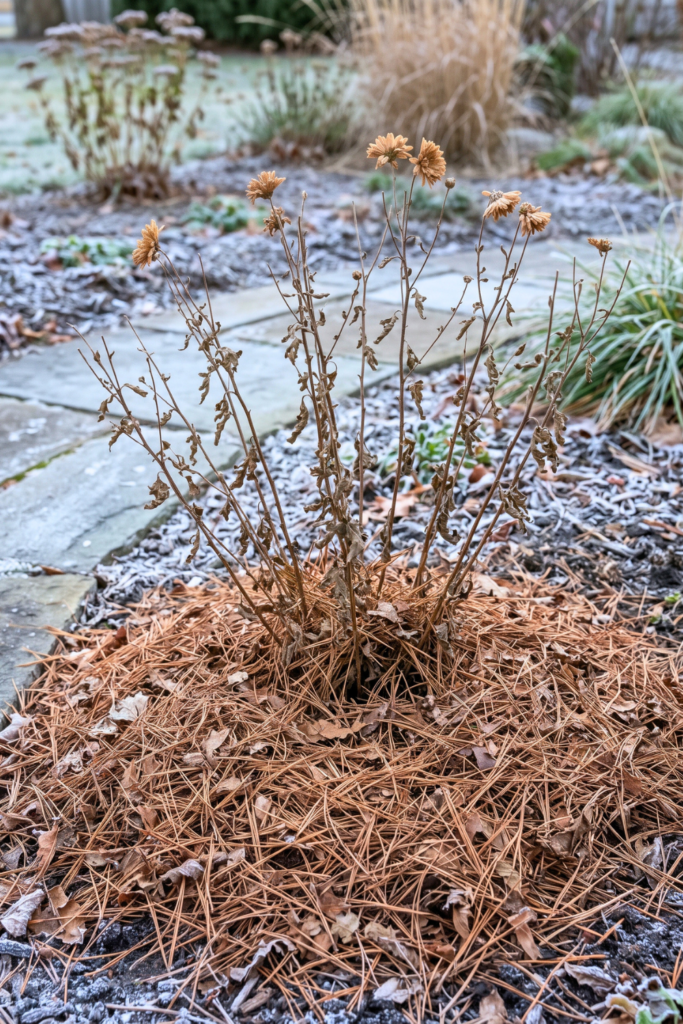
Timing is vital when mulching mums for winter protection, and most people will go about it incorrectly. Your instinct tells you to cover the mum immediately when the weather turns chilly because you imagine wrapping up a little kid in bed. However, winter mulching on a mum is not meant to insulate like a quilt; instead, you want to ensure the ground remains frozen through the winter months.
Cold isn’t always the enemy in a garden. Some native wildflower seeds need a cold winter before they’ll sprout at all.
What will eventually kill the mum is not the cold itself, rather it will be thawing periods midwinter followed by refreezing of the ground. This freeze-thaw cycle will continue until the rootball lifts out of the soil and sits aboveground. This phenomenon is known as heaving. Mulching late in the season prevents this by maintaining consistent temperatures within the ground.
You should mulch after the first frost occurs, which will likely be sometime after Thanksgiving across the Midwest and Northeast regions. Apply four to six inches of material in such a way as to cover both plant and stem. Good mulches include straw, pine needles, shredded leaves, or evergreen boughs. You want materials that retain airspace even when wet.
Avoid materials that will mat into layers when wet like entire maple leaves and cut grass.
5. Move Potted Mums Into an Unheated Garage
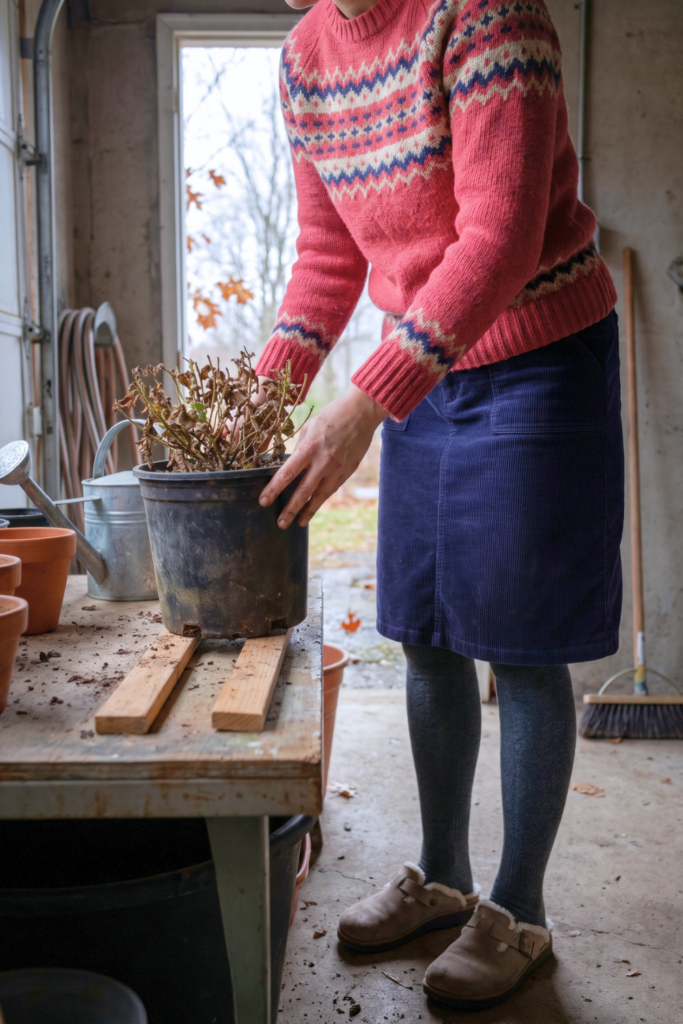
However, Chrysanthemum in pots face a more severe struggle compared to those planted directly into garden soil, and understanding why explains this phenomenon.
Placing your mum outside means the plant is placed into a small ball of soil in the middle of nothing but cold air. Garden soil acts as large bodies which hold constant temperature underground, whereas pots suffer rapid freezing at night and thawing during daytime hours.
This explains why those plants placed on porches or stoops die by March, despite surviving harsh winters without difficulty.
Saving the mums over the winter months can be accomplished easily enough, as long as several considerations are taken into account. Place your pots into the garage after they have been cut down to prevent damage from freezing weather. An unlit garage with a temperature range of 32-50℉ will suffice. As no foliage remains on these cuttings, you may trim the plant down to several inches in length.
It’s the same thinking behind taking cuttings from tender perennials before frost: get the living part under cover and let it wait for spring.
Here’s where gardeners fail. The most common cause for loss of potted Chrysanthemum plants occurs as dehydration rather than freezing damage. As a gardener once wrote in to the Toronto Master Gardeners, forgetting about his plant resulted in complete death. On the contrary, a comment left under Mike’s Backyard Nursery website described losing the single plant pot that held standing water while freezing. Therefore, remember to water your potted mums every three or four weeks, ensuring that the soil remains only slightly wet.
If no garage or storage space is available, you may bury the pots underground until spring arrives.
6. Give Them a Proper Spring Wake-Up
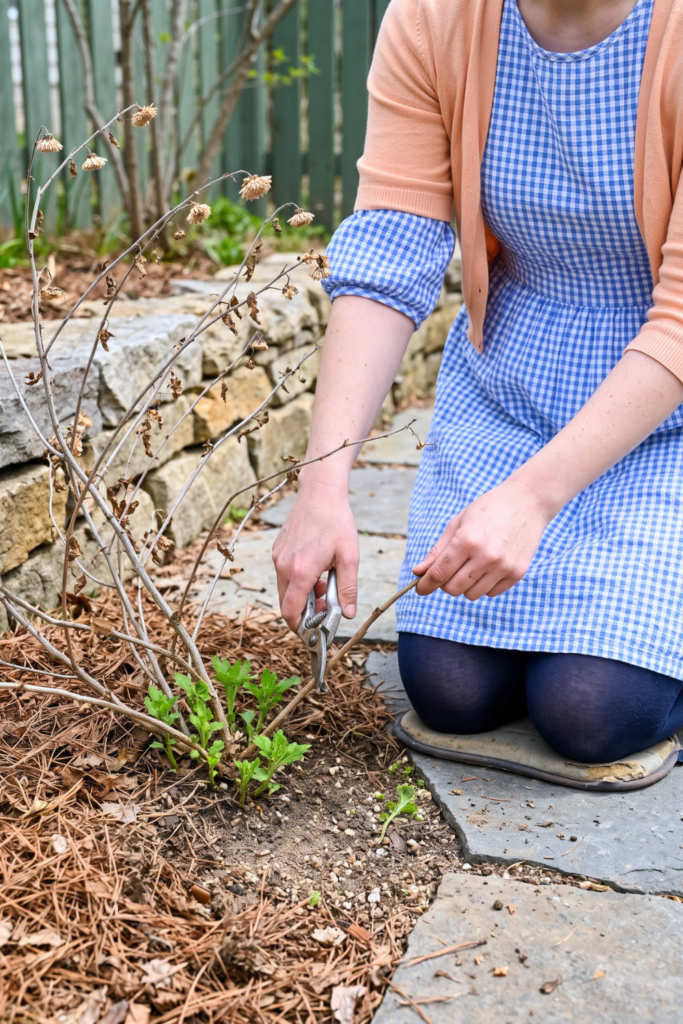
In April, when passing by the dead-looking mound of hay, you will observe little green shoots pushing up. Believe me – there is nothing like watching those shoots emerge compared to going out and buying a replacement. Your mums need you once again!
Start by gradually pulling away the layer of mulch covering the crown. By now, the new shoots have grown tall enough and require plenty of sun and fresh air. Once the mulch is off, cut off the old brown shoots completely, since they are done working for you.
It is now time to move the mum from garage pots and transplant it to sunny beds with proper drainage. Remember that planting the mum out this spring provides her with the entire growing season ahead, which she did not have last autumn. This advantage explains why the mums your neighbor has planted survive.
If you want company for them in that bed, these perennials for fall color and winter interest make good neighbors.
Finally, one habit will transform how your mum looks in autumn. Pinch off the first inch of growth from each shoot throughout May-July. This process feels cruel, but the result will justify your actions – instead of several weak stems bending under flower weight in September, you obtain a nice round mound covered with buds!
Next Fall, Be the Neighbor Everyone Asks
Many of these plants will perish anyway, and while it might hurt your pride knowing that now rather than wondering in May why yours didn’t work out – getting such mature mum plants in late planting season is always a gamble.
However, those that succeed will make up for all the trouble along the way because you will get bigger flowers next year and pay zero dollars for it. Next autumn, it will be your neighbors asking where you got such beautiful mum plants!
Fall Mum Questions Gardeners Ask Every November
Should I cut back mums after they finish blooming?
Not in fall if your winters are cold. Leave the brown stems standing to protect the crown, and cut them to the ground in spring once new shoots appear
Will potted mums come back next year?
Garden mums can, as long as the roots never freeze solid in the pot. Move the pot into an unheated garage or shed for winter, or sink it into a garden bed up to the rim.
Is it too late to plant fall mums in the ground in November?
It’s late, and the odds are lower because the roots have little time to settle before the soil freezes. Keeping the plant in a garage over winter and planting it out in spring is the safer choice.
How often should I water mums stored in the garage?
Check the soil every three to four weeks and give a small drink if it’s dry. You want it barely moist, never soggy and never bone dry.
How do I know if my mum is dead or only dormant?
Part the stems and look at the base for small green shoots near the soil. If you see none in fall, wait until late spring before giving up, because some plants wake slowly.
When should I remove winter mulch from mums?
Pull it back gradually in spring once the hard freezes are over and green growth shows underneath. Taking it off too early exposes the new shoots to a late cold snap.
